

In The Media
Kevin Jianjun Tu
{
  "authors": [
    "Kevin Jianjun Tu"
  ],
  "type": "legacyinthemedia",
  "centerAffiliationAll": "dc",
  "centers": [
    "Carnegie Endowment for International Peace",
    "Carnegie China"
  ],
  "collections": [],
  "englishNewsletterAll": "ctw",
  "nonEnglishNewsletterAll": "",
  "primaryCenter": "Carnegie Endowment for International Peace",
  "programAffiliation": "SCP",
  "programs": [
    "Sustainability, Climate, and Geopolitics"
  ],
  "projects": [],
  "regions": [
    "East Asia",
    "China",
    "North America"
  ],
  "topics": [
    "Climate Change",
    "Nuclear Policy",
    "Nuclear Energy"
  ]
}
Source: Getty
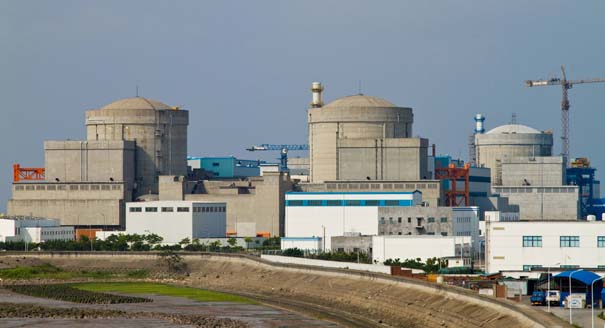
China’s leadership should consider the recent Wenzhou train crash a warning of the need to reevaluate the safety risks of the country’s ambitious nuclear power construction targets.
Source: China Dialogue

High-speed rail and nuclear power appear unconnected but in fact have many similarities. Both are considered to be among the largest and most complex commercialised engineering projects. Both win attention and support from senior leaders on account of their role in economic development. And both impose safety risks that are too significant to be ignored.
In response to increasingly serious environmental challenges and energy-security concerns, Chinese policymakers have decided to pursue large-scale nuclear development as a technological solution. Although China only had 10.82 gigawatts of installed operational nuclear capacity at the end of 2010, a development plan drawn up by the National Reform and Development Commission – China’s top economic planner – in 2007, says that figure will climb to 40 gigawatts by 2020. There have been widespread reports that the government may raise the above target to between 70 gigawatts and 86 gigawatts, while some industry experts even claim 100 gigawatts is achievable. In other words, prior to the Fukushima crisis, China’s nuclear industry, backed by nuclear interest groups, was preparing for a great leap forward in nuclear power development.
But Fukushima sounded warning bells with the Chinese government and gave policymakers another chance to reconsider plans for 2020. At a March 16 meeting chaired by premier Wen Jiabao, the State Council decided to call a temporary halt to approval of new nuclear-power plants pending new safety rules, and to adjust mid- and long-term nuclear power plans. This indicated a more cautious national strategy for nuclear power development.
Unfortunately, due to a lack of effective checks and balances on nuclear interest groups, there are signs that the great nuclear leap forward is reemerging. This is clear in the National 12th Five-Year Plan on Science and Technology Development, released by the Ministry of Science and Technology in July, which sets out plans to indigenise the untested Westinghouse AP1000 reactor model, and also to complete a demonstration plant for China’s own CAP1400 reactor by 2015. In comparison to China's “high efficiency”, a nuclear developer in an OECD country might not be able to obtain permission to build a new, technologically mature plant in the same amount of time.
The technological route taken for nuclear power and high speed rail is identical in China: key technologies have been imported from overseas in “technology for market” swaps. Since China’s first domestically designed and constructed pressurised water reactor was built in 1991 (CNP300 at Qinshan Phase I), China has imported the M310 (French 2nd generation technology), CANDU 6 (Canadian, 2nd generation), AES-91 (Russian, 2nd generation), AP1000 (US, 3rd generation) and EPR (French, 3rd generation).
It is extremely dangerous – in terms of standardisation of design, operational safety and ease of maintenance – for any nation to run so many different types of reactor simultaneously. China’s leaders should immediately limit further diversification of nuclear reactors and concentrate the nuclear sector’s human and financial resources on the research, development and commercialisation of just one or two types of standardised design.
To meet the needs of rapid high-speed rail construction and to ensure operational safety, the Ministry of Railways oversaw development of the state-of-the-art Chinese Train Control System (CTCS). Theoretically, two trains equipped with CTCS, travelling on a track with other safety systems in place, could not possibly collide. But the Wenzhou collision – and nuclear accidents of the past – show that no technological innovations can completely eliminate the risk of human error in infrastructure design, construction, operation, maintenance and decommissioning. This is particularly important when it comes to nuclear safety.
In response to the safety challenges raised by Fukushima, the Chinese government is reportedly considering abandoning construction of second-generation reactors at existing nuclear-power stations, opting instead to import more advanced technology. That includes more modern “passive” safety features that do not require operator actions or electronic feedback in order to shut down safely in the event of a particular type of emergency. This is a logical development, but Chinese decision-makers should avoid being overly confident about untried safety technologies. No matter how sound newer-generation nuclear technologies appear, such technologies may never have been sufficiently tested in any part of the world. All newer-generation nuclear technologies still impose significant risks in terms of design experience, construction safety and operational reliability.
Considering energy demand increases due to economic growth, burgeoning air pollution, increasingly vulnerable energy security and mounting political pressure to mitigate climate change, the Chinese government cannot easily resolve these simultaneous challenges. It is trying to balance the following types of energy: coal, with its emissions and pollution; oil, which pollutes the environment and raises energy security concerns; natural gas, which is scarce and requires huge investment; large hydropower projects, which have a disastrous impact on the environment; nuclear power, with its technological risks; and renewable energies, which are expensive and often unstable.
If China is to meet its energy and environmental challenges, the expansion of nuclear power seems unavoidable. But the Chinese government must understand that giving due attention to safety is crucial to realising these ambitions – without consistent and moderate mid- and long-term plans for nuclear expansion, ideas such as energy-saving and emissions-reduction, sustainable development and sector upgrades will come to naught.
Too many uncertainties over the technological roadmap for nuclear power mean that, in the short term, China's nuclear expansion plans should focus on stability. The target of 40 gigawatts of installed operational nuclear capacity by 2020, set in 2007, should not be increased in the near future. If technology transfer of third-generation nuclear technologies is successful, the 2020 target can be adjusted during the 13th Five-Year Plan period accordingly.
Former Senior Associate , Energy and Climate Program
Tu was a senior associate in Carnegie’s Energy and Climate Program, where he led the organization’s work on China’s energy and climate policies.
Recent Work
Kevin Jianjun Tu
Kevin Jianjun Tu
Carnegie does not take institutional positions on public policy issues; the views represented herein are those of the author(s) and do not necessarily reflect the views of Carnegie, its staff, or its trustees.
Our new report offers a path forward for local officials and future policymakers.



Joe McCannon, Jenny Keroack, Lauren Jensen, …
Present and future policymakers seeking to address climate-related health challenges can draw lessons from the successes and failures of the Biden administration.
Joe McCannon, Jenny Keroack, Lauren Jensen, …

Powerful lobbyists and inertia led to Russia’s coal-mining sector missing an excellent opportunity to solve its structural problems.
Alexey Gusev
Although Ukrainian strikes have led to a noticeable decline in the physical volume of Russian oil exports, the rise in prices has more than made up for it.

Sergey Vakulenko
Five problems—and solutions—to make it actually work as a tool of great power competition.

Afreen Akhter