
Ashley J. Tellis
{
"authors": [
"Ashley J. Tellis"
],
"type": "testimony",
"centerAffiliationAll": "dc",
"centers": [
"Carnegie Endowment for International Peace",
"Carnegie Russia Eurasia Center"
],
"collections": [],
"englishNewsletterAll": "ctw",
"nonEnglishNewsletterAll": "",
"primaryCenter": "Carnegie Endowment for International Peace",
"programAffiliation": "SAP",
"programs": [
"South Asia"
],
"projects": [
"Eurasia in Transition"
],
"regions": [
"South Asia",
"Afghanistan",
"Pakistan"
],
"topics": [
"Security",
"Military",
"Foreign Policy"
]
}Source: Getty
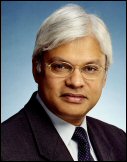
Negotiations Cannot Solve Afghanistan's Problems
The United States should stop emphasizing talks with the Quetta shura and the Haqqani network as the solution to Afghanistan’s problems. The insurgency has virtually no incentive to negotiate when its adversaries are headed for the exit.
Source: November 3

U.S. Policy Recommendations for Afghanistan:
- Forget reconciliation: The United States should stop emphasizing talks with the Quetta shura and the Haqqani network as the solution to Afghanistan’s problems. The insurgency has virtually no incentive to negotiate when its adversaries are headed for the exit.
- Postpone the withdrawal of U.S. forces: Washington should delay the withdrawal of surge troops beyond 2012 to consolidate security gains in the south and east.
- Expand supply networks: As a hedge against continued reliance on Pakistan, the United States should expand its network of air and ground lines into Afghanistan.
- Secure basing rights: The United States should ensure that the strategic partnership agreement currently being negotiated with Kabul provides sufficient U.S. basing rights to conduct counterterrorism operations and support the Afghan National Security Forces over the long term.
U.S. Policy Recommendations for Pakistan:
- Reduce equipment transfers: Washington should stop transfers of military equipment that have no relevance to Pakistani counterinsurgency and counterterrorism operations.
- Reform security aid: To ensure tax dollars are not wasted, the United States should gradually replace Coalition Support Funds with direct counterterrorism assistance tied to specific counterterrorism targets.
- Reform civilian aid: Washington should condition future civilian aid to Pakistan on Islamabad’s support for accelerated South Asian economic integration and structural changes in its capacity to mobilize domestic resources.
- Stand up for the civilian government: The Pakistani security services exercise disproportionate control over key national decisions within Pakistan. The United States should more forcefully support the civilian government in Islamabad, despite its serious weaknesses.
Tellis concludes, “None of these policy changes by themselves will suffice to transform Pakistan into a successful state or to shift the Pakistani military’s current strategies in more helpful directions. But they will signal the limits of American patience and spare the American taxpayer the indignity of having to subsidize Pakistani state actions that directly threaten American lives and interests.”
About the Author
Former Senior Fellow
Ashley J. Tellis was a senior fellow at the Carnegie Endowment for International Peace.
- Multipolar Dreams, Bipolar Realities: India’s Great Power FuturePaper
- India Sees Opportunity in Trump’s Global Turbulence. That Could Backfire.Commentary
Ashley J. Tellis
Recent Work
Carnegie does not take institutional positions on public policy issues; the views represented herein are those of the author(s) and do not necessarily reflect the views of Carnegie, its staff, or its trustees.
More Work from Carnegie Endowment for International Peace
- The New Revolution in Military AffairsArticle
How Ukraine is driving doctrinal change in modern warfare.

Andriy Zagorodnyuk

- What’s Having More Impact on Russian Oil Export Revenues: Ukrainian Strikes or Rising Prices?Commentary
Although Ukrainian strikes have led to a noticeable decline in the physical volume of Russian oil exports, the rise in prices has more than made up for it.

Sergey Vakulenko

- The U.S. Export-Import Bank Was Built for a Different Era. Here's How to Fix It.Commentary
Five problems—and solutions—to make it actually work as a tool of great power competition.

Afreen Akhter
- Russia Is Meddling for Meddling’s Sake in the Middle EastCommentary
The Russian leadership wants to avoid a dangerous precedent in which it is squeezed out of Iran by the United States and Israel—and left powerless to respond in any meaningful way.

Nikita Smagin
- Three Scenarios for the Gulf States After the Iran WarCommentary
One is hopeful. One is realistic. One is cautionary.

Andrew Leber, Sam Worby