

In The Media
John Judis
{
  "authors": [
    "John Judis"
  ],
  "type": "legacyinthemedia",
  "centerAffiliationAll": "",
  "centers": [
    "Carnegie Endowment for International Peace",
    "Malcolm H. Kerr Carnegie Middle East Center"
  ],
  "collections": [],
  "englishNewsletterAll": "",
  "nonEnglishNewsletterAll": "",
  "primaryCenter": "Carnegie Endowment for International Peace",
  "programAffiliation": "",
  "programs": [],
  "projects": [],
  "regions": [
    "Middle East",
    "Syria",
    "Levant"
  ],
  "topics": [
    "Security",
    "Military",
    "Foreign Policy"
  ]
}
Source: Getty
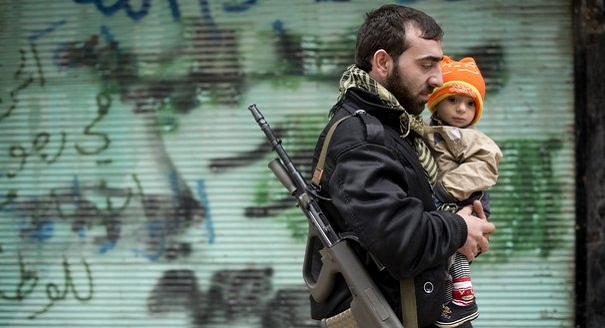
In Syria, the United States should plan a military action that would discourage Assad—or any other government under attack—from ever using chemical weapons again.
Source: New Republic
If Bashar al Assad’s use of chemical weapons in a rebel-controlled suburb of Damascus is “undeniable,” as Secretary of State John Kerry declared today, the United States should retaliate forcefully. It should recruit whatever allies it can—France and Great Britain have already volunteered—but it would be nice to have a nation or two that wasn’t once an imperial power in the Middle East. And it should plan a military action that would discourage Assad–or any other government under attack—from ever using chemical weapons again.
There is, of course, an argument to be made for a more sustained American intervention in Syria’s Civil War, but that is not relevant here. The reason to go after Assad is because he violated a Geneva Protocol, signed by the League of Nations and United States in 1925, and by Syria in 1968, against the use of chemical or biological weapons. Other weapons may be more deadly than poison gas, but what distinguishes it or germ warfare from other kinds of weapons is that they are primarily for use against civilian and not against opposing troops. They are weapons of terror. And if the Syrian government used chemical weapons against a Damascus suburb, then weapons of terror is exactly what it intended them to be.By punishing Syria for their use, the United States and other countries would be enforcing an eminently worthwhile provision of international law. By not punishing Syria, the U.S. would indicate to Assad and other dictators in peril that they need not fear reprisals for using these weapons. That’s why it’s important to do something.
Here, however, are some counter-arguments that I’ve heard:
First, wouldn’t a strike by the United States and other countries bring Assad’s biggest supporters, Russia and Iran, deeper into the conflict and broaden the proxy war already occurring? Maybe, but not necessarily in a bad way. By showing that they were willing to take action against Assad, the U.S. and its allies might make Russia and Iran more amenable to getting the Assad government to negotiate with the rebels. By not taking action—particularly after Obama repeatedly declared that the use of chemical weapons was a “red line”—the United States and its allies would lead Assad and his supporters to believe that they can safely ignore the United States.
Second, wouldn’t a significant military strike commit the United States to a more protracted intervention in Syria? No, because American intervention would be to enforce the 1925 protocol, not to help the rebels overthrow Assad. I have thought in the past that the United States and its allies should commit themselves to defeating Assad, who seems bent on destroying his own country in order to remain in power, but my impression is that the situation on the ground has deteriorated to the extent that an outright rebel victory—such as occurred in Libya—could lead to unpleasant consequences. The advantage of a one-time strike against Assad’s use of chemical weapons is that it would cut short Assad’s march to victory and might lead to negotiations, but not commit the United States to long-term intervention.
When I wrote last spring, after the first time that Assad was reported to have used chemical weapons, recommending that Obama act on the “red line” that he had established, several people accused me of resorting to the kind of arguments about American credibility that the Nixon administration used to prolong American intervention in Vietnam. I think a nation’s credibility is important, but alone it is not enough to justify an intervention. In this case, what’s at stake is America’s willingness to enforce an international norm that is of benefit to the entire world. That’s a cause on which America should rest its credibility.

Former Visiting Scholar
As a visiting scholar at Carnegie, Judis wrote The Folly of Empire: What George W. Bush Could Learn from Theodore Roosevelt and Woodrow Wilson.
Recent Work
John Judis
John Judis
Carnegie does not take institutional positions on public policy issues; the views represented herein are those of the author(s) and do not necessarily reflect the views of Carnegie, its staff, or its trustees.

Closer EU-UK ties could help address urgent European concerns. But is the EU ready for rapprochement with the United Kingdom?

Rym Momtaz, ed.

In the Philippines, Duterte-era discourse emphasizing sovereignty, anti-Western skepticism, and strongman diplomacy mirrors tenets of populist foreign policy around the world.

Aries A. Arugay

Unless Beirut lowers expectations, any setbacks will end up bolstering Hezbollah’s narrative.

Mohanad Hage Ali
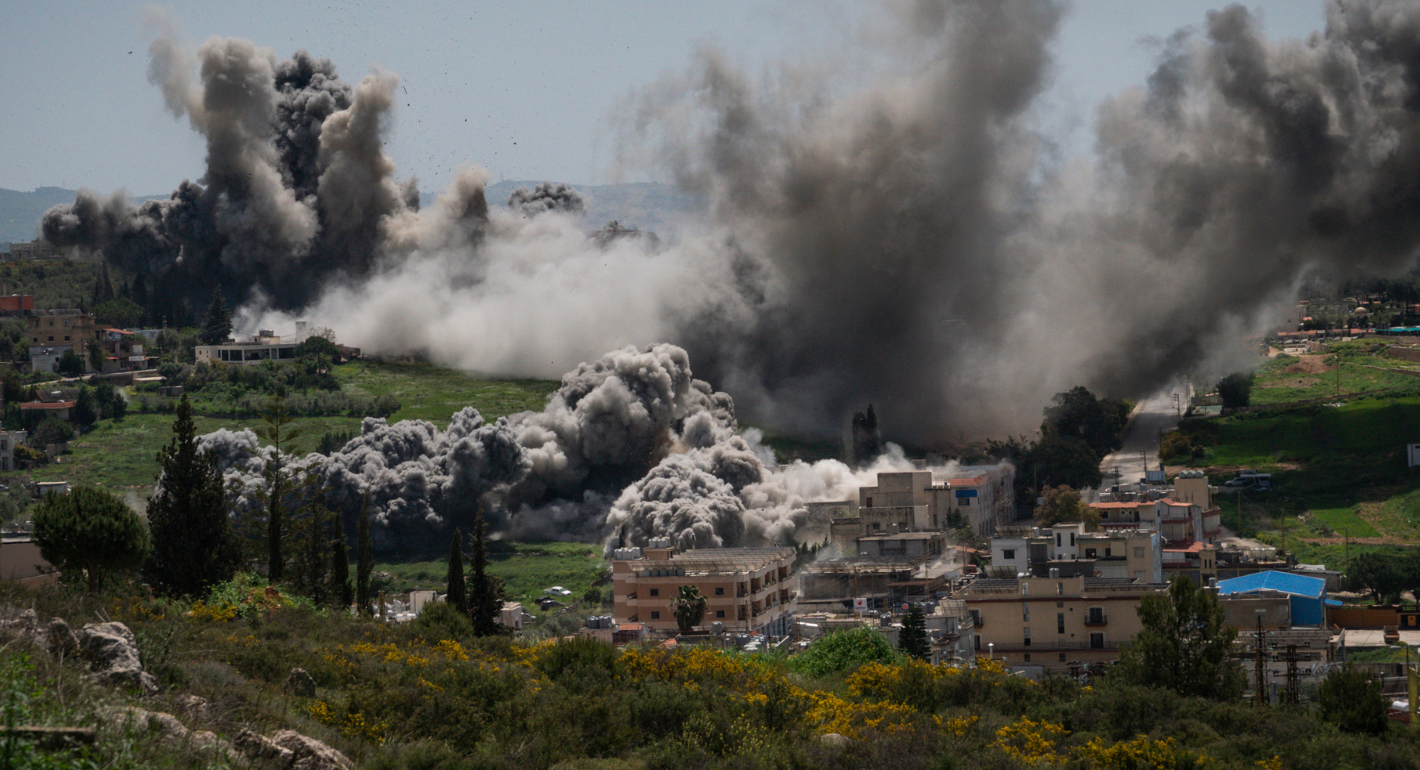
Europe has been standing by while its Southern neighborhood is being redrawn by force. To establish a path to peace between Israel and Lebanon, it’s time for Europeans to get involved with hard power.
Rym Momtaz

After four years of war, there is no one who can stand up to the security establishment, and President Vladimir Putin is increasingly passive.

Tatiana Stanovaya