

Commentary
Bayram Balci
{
  "authors": [
    "Bayram Balci"
  ],
  "type": "other",
  "centerAffiliationAll": "dc",
  "centers": [
    "Carnegie Endowment for International Peace"
  ],
  "collections": [],
  "englishNewsletterAll": "ctw",
  "nonEnglishNewsletterAll": "",
  "primaryCenter": "Carnegie Endowment for International Peace",
  "programAffiliation": "russia",
  "programs": [
    "Russia and Eurasia"
  ],
  "projects": [],
  "regions": [
    "Afghanistan",
    "Pakistan",
    "Central Asia"
  ],
  "topics": [
    "Security"
  ]
}
Source: Getty
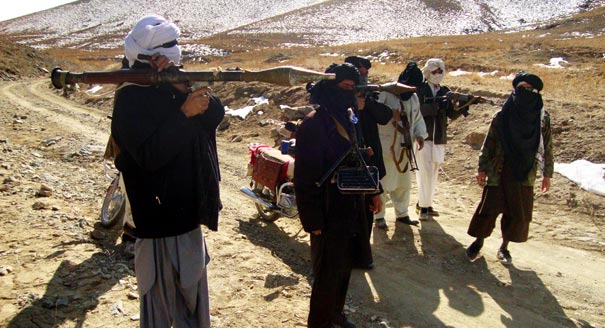
In many cases, the threat posed by Central Asian jihadist groups has been exaggerated by local authorities for both domestic and foreign political purposes.
Source: World Politics Review
For months the most debated issue in Central Asia has been the U.S. withdrawal from Afghanistan and the many destabilizing forces it might unleash on the region—among them trafficking in drugs, arms and humans, but also Islamic radicalism. Local leaders and many analysts predict that a severe deterioration of the situation in Afghanistan after the U.S. departs would encourage Central Asian jihadists who had fled their home countries to return and destabilize local regimes. But assessing the current role of Islam and Islamism in Central Asia, and the evolution of Central Asian jihadist groups themselves, reveals that the threat has been overwhelmingly exaggerated by local authorities, for both domestic and foreign political purposes.
There are sound reasons for concern about Islamic radicalism in Central Asia. Three of the five Central Asian republics—Uzbekistan, Tajikistan and Turkmenistan—border Afghanistan, and their people share long-standing cultural, religious and linguistic affinities with their Afghan brethren. The risk of jihadist spillover from Afghanistan is compounded by the fact that most jihadist movements once active in Central Asia took refuge in Afghanistan after being expelled by state security forces, and some found safe haven in Pakistan’s Federally Administered Tribal Areas (FATA) after the U.S. invasion of Afghanistan.But several decades of Soviet domination north of the Amu Darya River and Afghan rule south of it have driven apart the Uzbek, Tajik and Turkmen communities on either side. Although they speak the same language and have the same religion, the Soviet secular legacy in Central Asia and the very Islamic atmosphere in Afghanistan have erected cultural and ideological barriers. In Central Asia, both the elites and the ordinary population consider themselves more “civilized” and Europeanized than their southern neighbors, toward whom they have cultivated a superiority complex. Local media in Central Asia fuel negative perceptions of Afghanistan, further deepening differences and strengthening barriers. Uzbekistan provides a good example of this disdain and disinterest: Tashkent has never cultivated strong relations with Uzbek minorities abroad because doing so would contradict its strongly nationalistic state policy based on the territorial borders of the former Soviet Uzbekistan.
The second reason not to be overly concerned about the threat of radical Islam from Afghanistan is the position of Islam in Central Asian society and the nature of its relationship to the state. All Central Asian states continue to adhere to a strong secularism inherited from Soviet ideology. However, since independence, all of them have progressively adopted a more balanced attitude toward Islam. To be sure, the Central Asian states pursue very combative, and even excessively repressive, policies toward radical Islam. But at the same time those states have encouraged the development of an official, national and ethnic interpretation of Islam to bolster a sense of national identity. The trick worked: People have come to adhere to this interpretation of Islam in less than two decades since the end of the Soviet rule.
In the case of Uzbekistan, for instance, where the jihadist threat has been the most tangible, the government has promoted Islamic practice, symbols and values in everyday life in order to contain radicalism, creating Islamic institutions and establishments, renovating places of worship and pilgrimage and rehabilitating figures from Islamic history. Admittedly, the state’s policy on Islam is not universally embraced, and some groups do not recognize the official Islam imposed by the government. But these groups are numerically marginal and do not necessarily adhere to a more radical Islamic ideology.
Finally, it has been less than two decades since Central Asia became exposed to modern globalization, and religious globalization in particular. Among many sources of religious inspiration, moderate Islam has attracted the most support in Central Asian communities. Foreign fundamentalism should not be denied, but moderate Islamic movements, mostly from Turkey, enjoy far more success in Central Asia than do radical organizations originating from the Middle East. Some Central Asian religious leaders consider Turkey’s ruling moderate Islamist Justice and Development Party (AKP) to be a model. The Islamic Rebirth party of Tajikistan, the only registered party in all Central Asia representing political Islam, chose to follow in the AKP’s footsteps.
Meanwhile, the Central Asian jihadists based in Afghanistan and FATA pose a relatively minor threat to Central Asia’s security for at least two reasons. First, the Islamic Movement of Uzbekistan (IMU)—the most violent Central Asian jihadist organization, which previously posed real challenges to Uzbek, Kyrgyz and Tajik security forces—has completely changed. After the death of its two leaders—Juma Namangani, who died in 2001, and Tahir Yoldashev, who died in 2009—and because of its deep cooperation with al-Qaida and the Taliban, the IMU has grown less interested in activism in its homeland and has lost its Central Asian character. According to many experts the IMU, which previously sought to topple Central Asian governments, has been absorbed by its hosts in the Pakistani tribal agency of Waziristan, and is now more focused on global jihad. Moreover, contrary to widespread alarming rumors, Central Asian jihadists have not moved back to Afghanistan’s borders with Uzbekistan, Turkmenistan and Tajikistan. Even though the Afghan government faces difficulties in containing the Taliban and their foreign jihadist supporters, it will be some time before the latter are able reach Afghanistan’s northern borders with the Central Asian republics.
The comeback of the IMU and other militant Islamic groups to Central Asia after the U.S. departs the region is in large part a myth concocted for political purposes. Central Asian governments have raised the specter of radical Islamism to justify harsh domestic police repression, muffle public opposition and postpone long-overdue and indispensable reforms. The myth also serves foreign policy purposes for Central Asian governments, which have used it to attract attention from and forge special relations with the U.S. and Europe. Playing on Islamophobia and keeping the radical Islamism myth alive ensures international support for oppressive and undemocratic regimes, even as ongoing corruption, poverty and repression of social and political change fuel more opposition than ever.
This article was originally published in the World Politics Review.
Former Nonresident Scholar, Russia and Eurasia Program
Balci was a nonresident scholar in Carnegie’s Russia and Eurasia Program, where his research focuses on Turkey and Turkish foreign policy in Central Asia and the Caucasus.
Recent Work
Bayram Balci
Bayram Balci, Daniyar Kosnazarov
Carnegie does not take institutional positions on public policy issues; the views represented herein are those of the author(s) and do not necessarily reflect the views of Carnegie, its staff, or its trustees.
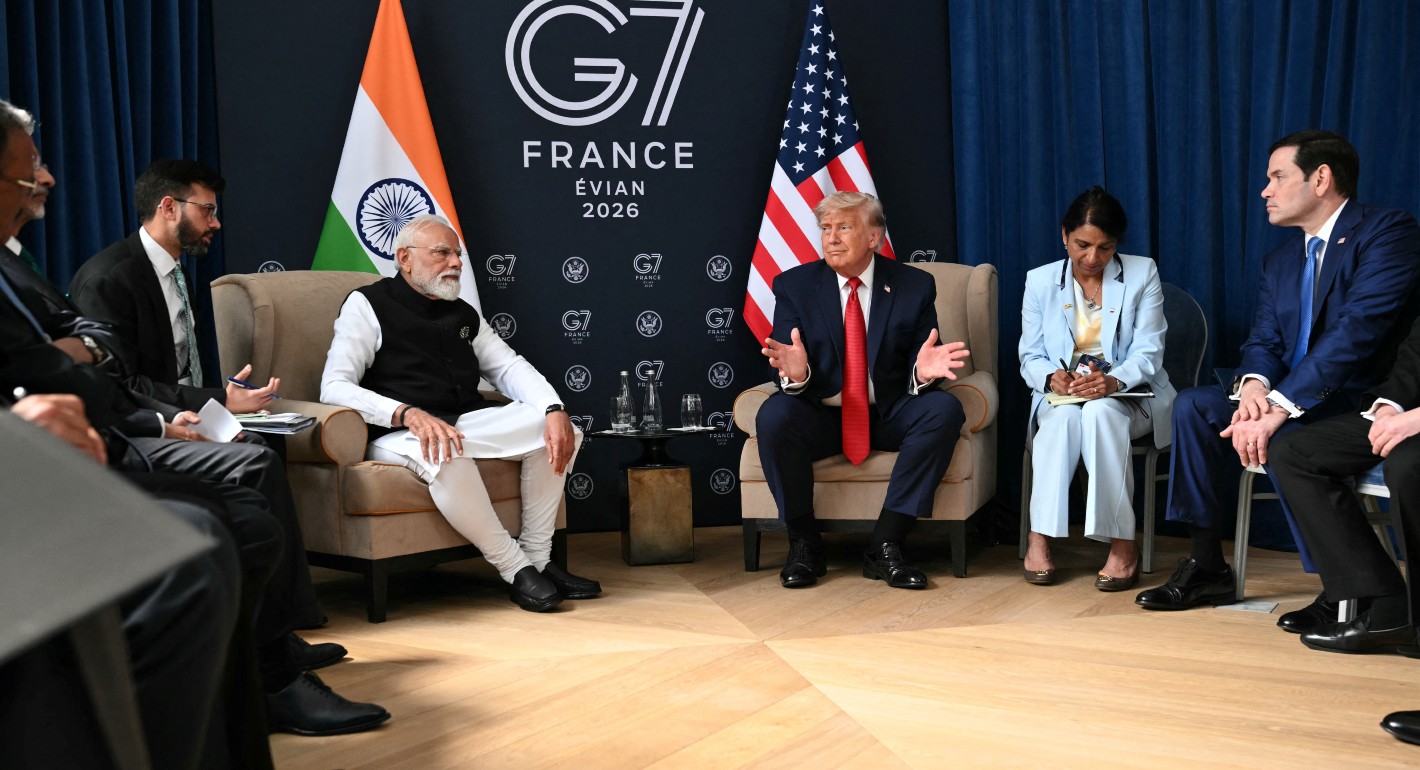
Despite public disputes over trade and immigration, the strategic partnership’s foundations remain sturdy.

Sameer Lalwani
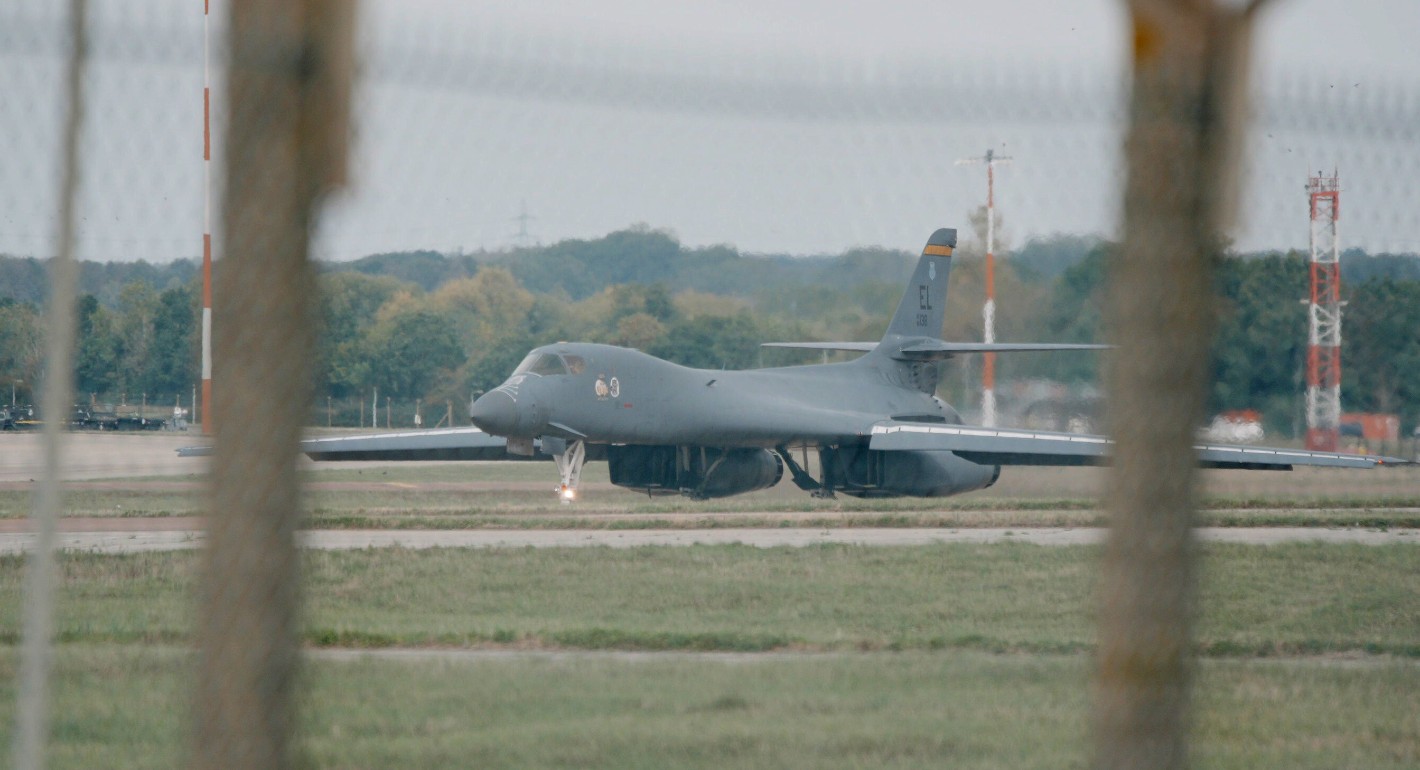
It signals a new era of tech diffusion and warfare.

Steve Feldstein

With its public finances in shambles, the far right polling at 35 percent ahead of the 2027 presidential election, and a growing protest movement, is France’s crisis a threat to the EU’s geopolitical awakening?

Rym Momtaz, ed.

Russia’s AI-driven propaganda campaigns operate in a fragmented, chaotic, and often illogical manner. That’s not necessarily a problem for the Kremlin, though: It’s much easier to mimic genuine public debate that way.

Ilya Klishin

Russian strikes are weakening the economy sustaining Ukraine’s war effort. Closing the growing funding gap will require more European support and politically contentious reforms in Kyiv.

Balázs Jarábik