

Commentary
Bayram Balci
{
  "authors": [
    "Bayram Balci"
  ],
  "type": "legacyinthemedia",
  "centerAffiliationAll": "dc",
  "centers": [
    "Carnegie Endowment for International Peace"
  ],
  "collections": [],
  "englishNewsletterAll": "ctw",
  "nonEnglishNewsletterAll": "",
  "primaryCenter": "Carnegie Endowment for International Peace",
  "programAffiliation": "russia",
  "programs": [
    "Russia and Eurasia"
  ],
  "projects": [],
  "regions": [
    "Middle East",
    "Iran",
    "Caucasus"
  ],
  "topics": [
    "Foreign Policy"
  ]
}
Source: Getty
A nuclear deal with Iran would bring about change in the neighboring South Caucasus and Central Asia, where ostracized Iran failed to become a major actor after the end of the Soviet Union.
Source: Silk Road Reporters
The recent Iran and P5+1 agreement over a nuclear deal draft is a major game changer for the whole Middle Eastern region. If this deal is confirmed next June – and there are plenty of reasons to be optimistic – it will pave the way for Iran’s reintegration into the international community. The geopolitical consequences of such a comeback will be tremendous for the whole of the Middle East, and might precipitate a complete transformation of the power structure there. Not only will it impact the Middle East, but it will also bring about change in the neighboring South Caucasus and Central Asia, where ostracized Iran failed to become a major actor after the end of the Soviet Union.
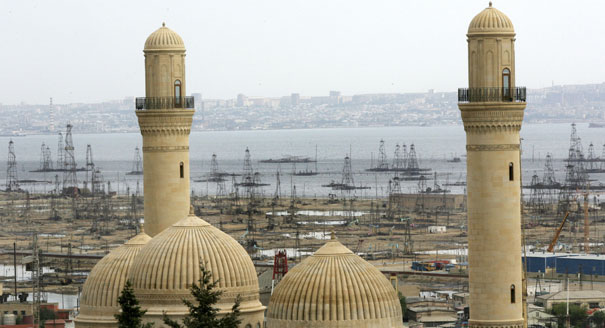
Yet Iran and the Persian Empires before that have always been strong in both Central Asia and the South Caucasus. A large part of the South Caucasus, especially contemporary Azerbaijan was, for many centuries, a province of the Persian Empires. It was only in 1828 with the signing of the Turkmenchay treaty that the Qajar dynasty and the Russian Empire agreed to set the border on the Arax River, leaving the South Caucasus under Russian rule and dividing Azerbaijan homeland in two. Strong historical ties remain. Iran’s ethnic and Turkic-speaking Azeris constitute almost a quarter of the country’s population. Some minorities in Azerbaijan speak a Persian dialect, like the Talish, who live across the Azerbaijani Iranian border. Because of the geostrategic disputes between Baku and Teheran, one forgets that Iranians and Azeris follow the same religion, Twelver Shia Islam.
In Central Asia the Iranian legacy is also noticeable. Before they fell under Russian control in the 1860s and 1880s, the Emirate of Bukhara and the Khanates of Kokand and Khiva were perfectly balanced bicultural and bilingual – Turkic and Persian – states and societies. The Tajik population belongs ethnically to the Persian family, language and culture groups. Even in Uzbekistan, the Persian legacy is considerable. Several Persian dialects are still spoken in Samarkand, Bukhara, and even in the south of the country near Termez, or in some villages in the Fergana Valley, like Kassansoy or Rishtan.When the former Soviet republics became independent in 1991, Iran saw an opportunity to become influential again in the region. Ankara did too, but somehow Turkey had relative successes where Iran failed. Historical and cultural assets didn’t compensate for contemporary challenges. Some serious obstacles hindered Tehran’s ambitions. First, except Tajikistan, all of these republics prioritized building a new national identity based on ethno-nationalism at the expense of the Turkic and Persian elements in their culture. Uzbekistan is a good example of this policy. The Uzbek government ditched centuries-long multi-cultural harmony for rigid Uzbek nationalism, banning any reference to and rejecting any influence from Turkey and Iran. The former Soviet elites are still in power and they remained secular strongly anti-religious and suspicious about any kind of Islamic model of development. Therefore the Islamic Republic, de facto, held no appeal for them.
There is another fundamental reason why these new countries were reluctant to develop strong relations with Iran: as a pariah cut off from the international community, the country had nothing to offer in terms of openness to the world market and globalization. Furthermore, US pressure and propaganda against the Iranian regime created a prevailing negative image, associating Iran with darkness, radical Islam and even terrorism. From the early 1990s, long before Iran’s nuclear situation emerged, the US exerted diplomatic pressures on Central Asian and Caucasian states to demonize and marginalize Iran so they would not develop close relations with Iran and thus help keep it isolated. The strongest example for that is the 1994 signing of the multilateral “Contract of the Century” for the construction of the Baku-Tbilisi-Ceyhan pipeline designed to transport Caspian oil to Europe. Initially, Iran was to be indirectly part of it, in association with the Azeri government. But because of pressure from Washington, Iranian companies were eventually excluded from the deal. Similarly, Kazakhstan negotiated the renovation of Aktau seaport on the Caspian shore with Iranian authorities and companies. However, under pressure from the U.S., Astana decided not to pursue the project with Tehran.
Therefore, since 1991, Iranian diplomacy and business have not achieved much progress in the former Soviet Union. The question now is whether the Lausanne agreement, possibly coming into effect by June, will open a new era for Iranian soft power in these regions; marking a turning point for Iran both in diplomatic and domestic term.
The deal will inevitably mark a turning point for Iran both in diplomatic and domestic term. In turn, this will affect Central Asia and the Caucasus as well. US negative interference in Iranian relations with these two regions might be weakened. Moreover, lifting the sanctions will bring about a positive economic boom, especially with Kazakhstan and Azerbaijan in the energy field. It is premature to bet on new pipeline and transportation routes for Caspian oil and gas, but the nuclear deal might offer the promise of better economic and political relations with Central Asia and the Caucasus, from which all parties will benefit.
But the most important gain for Iran in Lausanne’s negotiations is the possible improvement in the coming weeks of its image. Iranian diplomacy has proved its strength and ability to go up against the European Union and the US ,the biggest and strongest countries in the world. In the Middle East as well as in the former Soviet Union, this display of strength and skill has many admirers, as it is not very common that a country like Iran can challenge Western supremacy in international affairs. Moreover, with the end of Western demonization, Iran is becoming a respectable country. In other works, the prestige and efficiency that Iranian negotiators have achieved in their long years of discussions with the international community will change Iran’s image abroad.
However, there is yet another reason why Iran’s image will improve in the coming weeks and months. In the Middle East, North Africa, the South Caucasus and Central Asia, the new nightmare for the current governments is the ‘Islamic State’ organization and the attraction of and seduction by this terrorist group on young candidates for jihad. In Syria and Iraq, it is Iranian diplomacy and military forces – and not that of other Islamic countries – that are seriously involved in the struggle against this new jihadist threat more powerful than al Qaeda. In combating ISIS, Iran is shifting its identity. From a country supportive of Islamism and terrorism, it will now be perceived as the best bulwark against the most violent jihadist organization ever seen in the Muslim world.
Of course, it is a little bit early to predict a complete transformation of Iran’s image and capacity of influence in its post-Soviet neighborhood. However, the nuclear deal is a first step for a new and more confident foreign policy in this region.
This article was originally published in the Silk Road Reporters.
Former Nonresident Scholar, Russia and Eurasia Program
Balci was a nonresident scholar in Carnegie’s Russia and Eurasia Program, where his research focuses on Turkey and Turkish foreign policy in Central Asia and the Caucasus.
Recent Work
Bayram Balci
Bayram Balci, Daniyar Kosnazarov
Carnegie does not take institutional positions on public policy issues; the views represented herein are those of the author(s) and do not necessarily reflect the views of Carnegie, its staff, or its trustees.
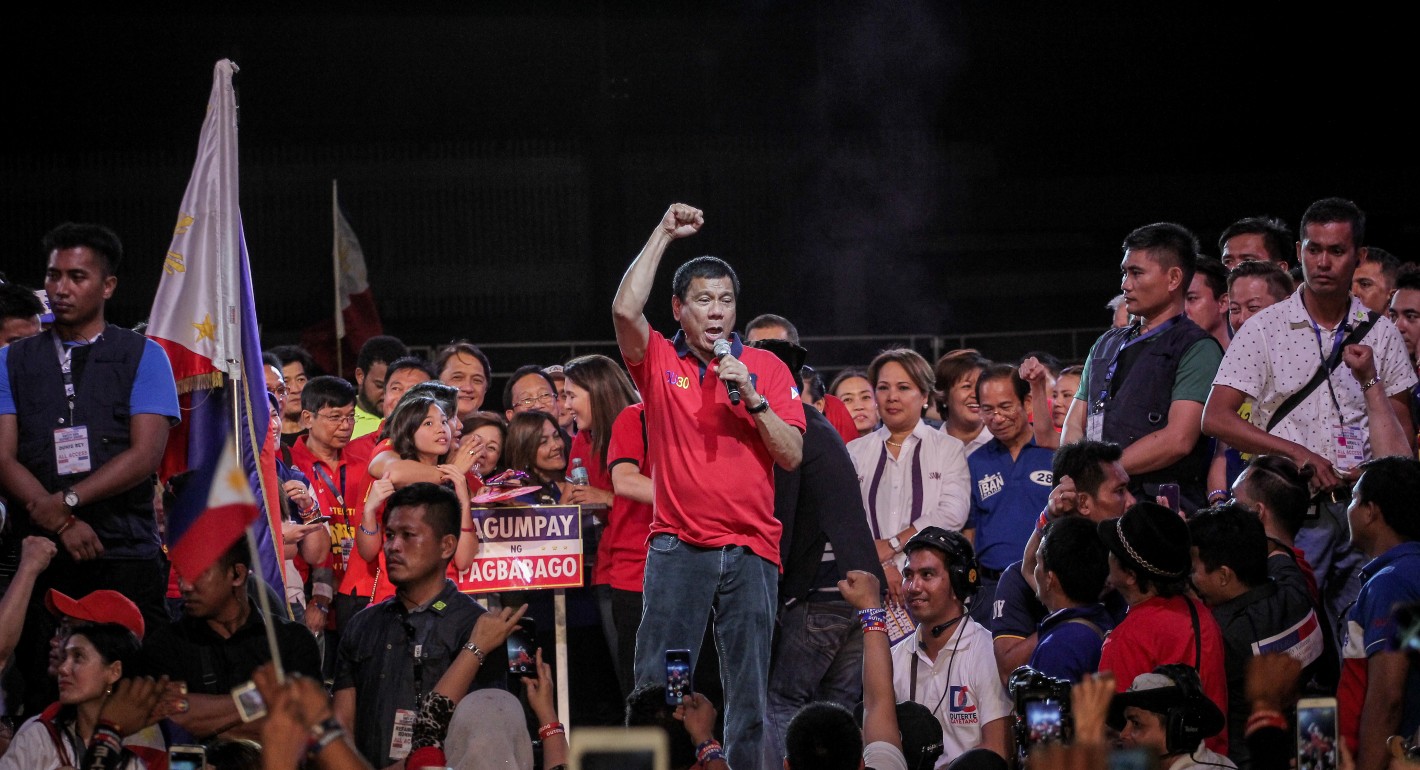
In the Philippines, Duterte-era discourse emphasizing sovereignty, anti-Western skepticism, and strongman diplomacy mirrors tenets of populist foreign policy around the world.
Aries A. Arugay
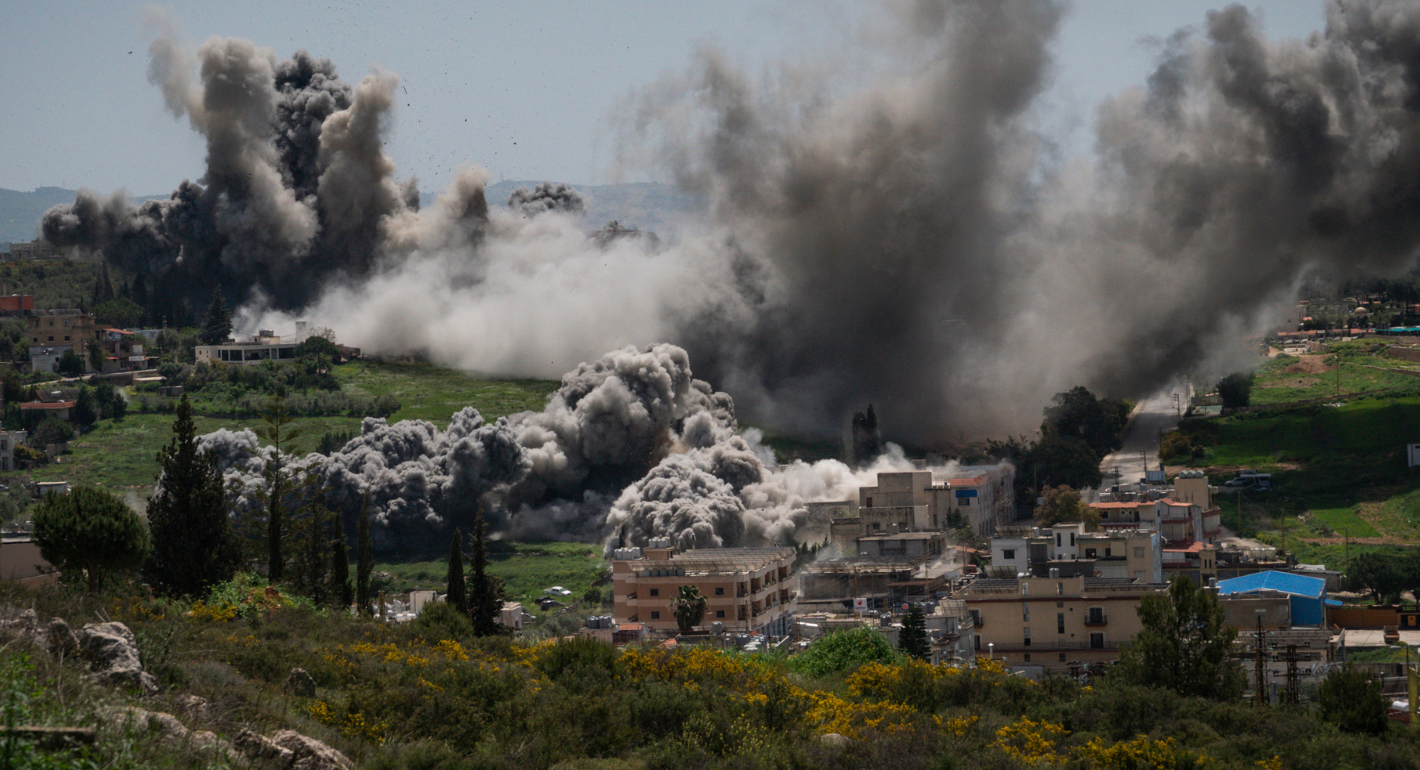
Europe has been standing by while its Southern neighborhood is being redrawn by force. To establish a path to peace between Israel and Lebanon, it’s time for Europeans to get involved with hard power.

Rym Momtaz
Although Ukrainian strikes have led to a noticeable decline in the physical volume of Russian oil exports, the rise in prices has more than made up for it.

Sergey Vakulenko
Five problems—and solutions—to make it actually work as a tool of great power competition.

Afreen Akhter
The Russian leadership wants to avoid a dangerous precedent in which it is squeezed out of Iran by the United States and Israel—and left powerless to respond in any meaningful way.

Nikita Smagin