

Commentary
Yukon Huang, Isaac B. Kardon, Matt Sheehan
{
  "authors": [
    "Yukon Huang"
  ],
  "type": "legacyinthemedia",
  "centerAffiliationAll": "dc",
  "centers": [
    "Carnegie Endowment for International Peace",
    "Carnegie Russia Eurasia Center",
    "Carnegie China"
  ],
  "collections": [],
  "englishNewsletterAll": "asia",
  "nonEnglishNewsletterAll": "",
  "primaryCenter": "Carnegie China",
  "programAffiliation": "AP",
  "programs": [
    "Asia"
  ],
  "projects": [],
  "regions": [
    "East Asia",
    "China"
  ],
  "topics": [
    "Economy"
  ]
}
Source: Getty
China’s economy has numerous hurdles to overcome. Paradoxically, the nature of these hurdles has led some to predict continuing strong growth and others to predict a further slowdown.
Source: Financial Times
Never have views on China’s growth prospects been so tentative. For Beijing — and a shrinking share of optimists — the country can grow at about 6-7 per cent annually in the coming five years. But for the more hardened pessimists, a collapse to 3-4 per cent or even lower is coming.
For a country subject to so much scrutiny¸ one would think a consensus would emerge. In this case, however, the divergence comes from both sides seeing China as a highly distorted economy. The optimists see the distortions as a source of increased productivity, if addressed; while the pessimists see them leading to economic demise. How does one reconcile this paradox?
The pessimists see a country where excessive state involvement has led to multiple emerging risks, from surging debt levels to a runaway property market. Even one such predicament can break an economy — dealing with several would seem to be an impossible undertaking.For the optimists, the potential destabilising factors are exaggerated. After rising sharply since the global financial crisis, China’s debt-to-GDP ratio of about 250 per cent is judged to be excessively high. But this number puts China in the middle of the pack — higher than most developing countries but lower than most developed — about where one would expect.
Most of the increased leverage financed a surge in asset prices, notably an eightfold dollar increase in property prices when housing was privatised more than a decade ago. The debt cum property price surge is a risk that needs managing; but it is also a consequence of “financial deepening” — a good thing as markets sought to establish values for an undervalued asset. However, an increasing share of the more recent rise in debt levels has gone into propping up zombie industries and servicing the debt of state agents, both local governments and companies, which is intensifying risks.
China’s property market is overbuilt and it will take another year or so for the excess stock to be fully absorbed, especially in the secondary cities. Thus a near-term rebound in GDP growth is not in the cards but neither is a hard landing. In the medium term, China still has options that most other faltering economies do not have to re-establish a moderately rapid growth path without relying so much on indiscriminate credit expansion. Those holding this more charitable view see a country that has consistently defied expectations by gradually but steadfastly addressing the many glaring distortions that have hampered its transition to a more efficient growth process.
The challenges, however, are more difficult now than a decade ago, when the need was almost exclusively on the “supply” side of the equation: to increase the productive capacity of the system. These days sustained growth also means solving the problem of inadequate demand, brought on by weakening global markets for China’s exports and tepid investment needs at home. In the past, Beijing was successful in implementing reforms that led to the productivity increases that solved the supply problem, notably the trade liberalisation measures that led to World Trade Organisation membership and the initial round of enterprise and banking reforms launched amid the Asian financial crisis.
In dealing with today’s demand and supply concerns, Beijing can draw on its 2013 Third Plenum reform policy statement, specifically that the market should play a “decisive” role in allocating resources. Priority reforms include a more efficient urbanisation process that would allow workers to move freely to where the more productive jobs are by removing the barriers to settling in the largest cities. This would increase demand for urban services and related investment returns. Big productivity gains would also be realised by narrowing the gap in rates of return between private and state-owned enterprises. More radical approaches are needed than the ownership diversification measures being promoted, including allowing more bankruptcies to free up resources and opening entry to private competition in services such as education, health, finance, telecoms and energy.
In dealing with the demand problem, the low share of consumption in GDP is partly a structural issue. Since household consumption has been growing at globally high 8 per cent annually in real terms for more than a decade, it cannot be solved by simply encouraging households to consume more. Instead, attention needs to focus on restructuring the budget. As a socialist economy, the state controls almost all of China’s most important assets; and the returns, in the form of rents and profits, accrue largely to the state rather than directly to households. Short of privatising ownership of such assets, buoying up overall consumption demand depends on increasing the share of services and transfers provided to households through the fiscal system.
Unlike the EU and US, where one can reasonably question whether social welfare expenditure is excessive, China’s social expenditure as a share of GDP are about half that of other upper middle income and OECD economies. Fiscal reforms that result in a stronger revenue base and higher social and environmental expenditure would offset any decline in investment and solve the demand problem. Add to this effort the productivity related reforms, and China could achieve its five year plan growth target of 6.5 per cent, bridging the gap between what the optimists and pessimists have in mind. Whether such actions will be taken, however, is still a question — even among the optimists.
This article was originally published by the Financial Times.

Senior Fellow, Asia Program
Huang is a senior fellow in the Carnegie Asia Program where his research focuses on China’s economy and its regional and global impact.
Recent Work


Yukon Huang, Isaac B. Kardon, Matt Sheehan
Yukon Huang, Genevieve Slosberg

The conflict has sent economic and political shock waves through a country with no representation at the negotiating table—and Kenya is not alone.

Georgia Schaefer-Brown, Jane Munga

China’s banking crisis in the 2000s was resolved by transferring the costs to households through financial repression—a decision that recapitalized the banks while exacerbating the structural imbalances that continue to shape the Chinese economy today.

Michael Pettis

Japan’s revision of its three strategic documents reflects an intention to keep the United States engaged in the region while Japan fills any vacuums of U.S. power to preserve the Indo-Pacific order.
Ryo Sahashi

Chinese biotech companies have been on the receiving end of U.S. economic coercion. Yet their responses have differed significantly because firm and state interests are not uniformly aligned. For Washington, treating all Chinese tech firms the same, irrespective of their actual interests, risks pushing them farther into Beijing’s corner.

Xue Gong
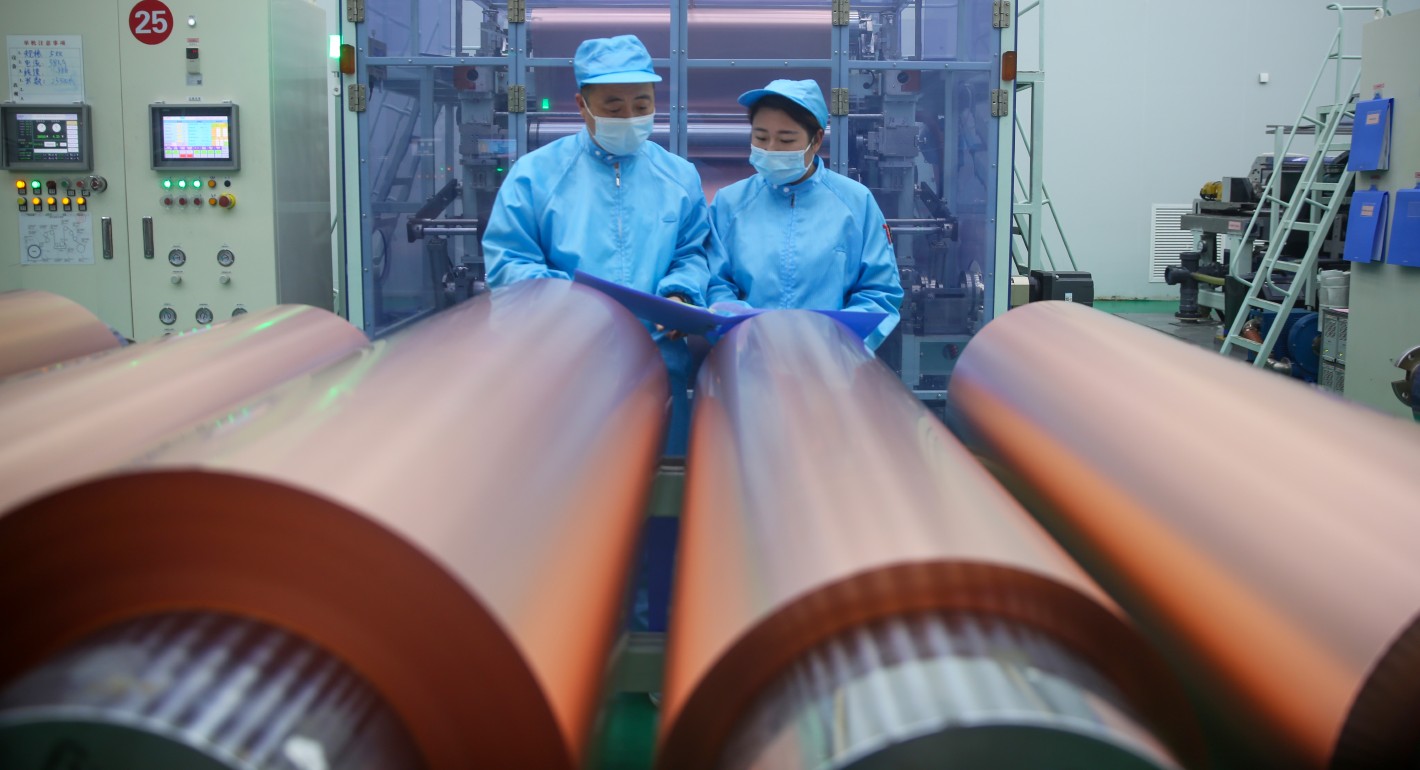
Over the past decade, China has moved from marginal player to major producer of all things batteries. The United States, Europe, and others are aiming to balance the market.

Milo McBride