

Paper
Christopher S. Chivvis, Rohan Mukherjee, Milan Vaishnav
{
  "authors": [
    "Milan Vaishnav"
  ],
  "type": "legacyinthemedia",
  "centerAffiliationAll": "dc",
  "centers": [
    "Carnegie Endowment for International Peace"
  ],
  "collections": [],
  "englishNewsletterAll": "ctw",
  "nonEnglishNewsletterAll": "",
  "primaryCenter": "Carnegie Endowment for International Peace",
  "programAffiliation": "SAP",
  "programs": [
    "South Asia"
  ],
  "projects": [],
  "regions": [
    "North America",
    "United States",
    "South Asia",
    "India"
  ],
  "topics": [
    "Political Reform",
    "Foreign Policy"
  ]
}
Source: Getty
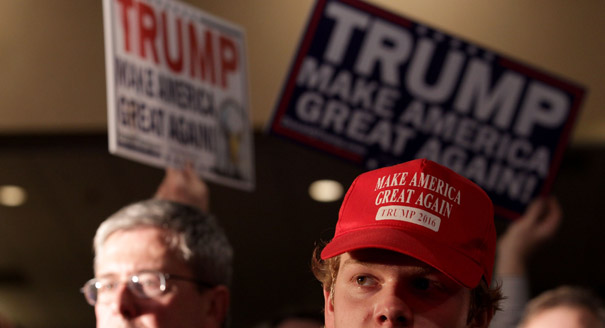
Much of the India-U.S. relationship functions through their respective bureaucracies. But reassuring America’s friends abroad will be an uphill climb for Trump.
Source: NDTV
In a stunning turn of events that marks the end of one of the most bizarre and bitterly contested American presidential contests in memory, real estate mogul Donald Trump defeated former Secretary of State Hillary Clinton in an election that sent shockwaves throughout the country and the world.
While Clinton narrowly leads the popular vote (for now), Trump triumphed in the byzantine Electoral College-handing him the keys to the White House come January.
The contest featured two of the most unpopular presidential candidates in history, with both major party contestants trading accusations about corruption, links to sexual impropriety, and mental unsuitability for the country's highest office. In the end, Clinton's proximity to power over the last two decades cut against the mood for "change" among the voting public. And her penchant for privacy and the self-inflicted wound of her private email server raised serious doubts about her judgment.
Trump, a billionaire showman who lacks governing experience but boasts a knack for connecting with the man on the street, forged an unlikely path to power. Notwithstanding his popular appeal, Trump's jingoism, xenophobia, and dilettantism have sparked existential questions about the future of American democracy.
These are difficult questions the country will now have to confront. A dinner party companion wondered aloud Monday night about the need for the next president to establish a Department of National Reconciliation; reflexive laughs around the table were swiftly replaced with positive nods of affirmation.Sadly, this is likely not in the cards.
The Republicans had a good night across the board and they will press their advantage. Going forward, the party will control the White House and both houses of Congress. President Trump will also be in a position to select the justice who will cast the pivotal tie-breaking vote in a currently deadlocked Supreme Court.
This nasty, brutish, and interminable campaign has revealed many uncomfortable truths about American democracy. These truths-the widespread prevalence of economic nationalism, white nativism, and anti-government rage-are not new, but Trump's populist campaign provided them with a steady supply of oxygen.
How did we get here? The fact is that the America of 2016 is bitterly polarized. A recent Pew study found that "Republicans and Democrats are more divided along ideological lines-and partisan antipathy is deeper and more extensive-than at any point in the last two decades." To make matters worse, divisions are greatest among those citizens who actively engage in the political process. Perhaps it then comes as no surprise that this heightened state of polarization also resides within government. The U.S. House of Representatives is more polarized today on ideological grounds than at any time since 1879, the first year for which data is available. Even the more genteel U.S. Senate is approaching levels of political polarization that have not been seen since the turn of the 20th century.
This polarization is, in part, driven by economic dislocation. It is no coincidence that congressional districts which have the greatest exposure to trade competition with China have suffered the greatest political polarization, leading to the demise of centrist elected representatives. But simple dollars and cents can only take us so far in explaining the current anti-establishment surge.
For starters, a massive Gallup study of more than 70,000 voters found that Trump supporters were actually richer and more likely to be gainfully employed than non-supporters. Here is where racism and xenophobia enter the picture. There is a compelling case to be made that the white nationalist rise in the United States is linked to similar far-right movements in other parts of the world, where a once-dominant racial or ethnic group grows ever more reactionary in the face of rapid demographic change.
Whatever is motivating these underlying currents of discontent, the government seems to be a primary target. In 1958, 73 percent of Americans stated that they could trust the government always or most of the time. Today, that share stands at a meager 19 percent. A quarter-century ago, almost three in four Americans exuded confidence in the presidency, but today that proportion is more than halved. This breakdown in trust fueled Trump's anti-establishment rise.
Opinion polls revealed that more than two-thirds of survey respondents found Clinton fundamentally dishonest. Let that sink in. According to Politifact, Trump has told more lies and half-truths than any presidential candidate in the last three election cycles (Clinton has told the second least, trailing only President Barack Obama), yet Trump's honesty ratings actually surpassed Clinton's in recent weeks.
What are the immediate ramifications of a Trump presidency?
First, the markets have already expressed their displeasure at the prospect. World markets immediately slumped, Dow futures are sharply down, and the Mexican peso's value (measured against the U.S. dollar) has tumbled. Given the ambiguity surrounding Trump's policy vision, the nascent American economic revival that is underway could be at risk. After all, markets abhor uncertainty. If this revival were to falter, it could have serious adverse global repercussions.
Second, social tensions in the United States are at a simmer. The big question before the election was how Trump supporters would react to a defeat. Little thought was given to how Clinton supporters, primarily college-educated whites and minorities, might behave. Given the under-currents of anti-immigrant, anti-Muslim, anti-woman rhetoric espoused by Trump and his supporters, there is still a real risk of simmering social tension boiling over.
Finally, what do the results mean for India? The good news is that much of the bilateral relationship functions through the respective bureaucracies, which means that changes at the very top have diminishing impacts. But this should not obscure the fact that Trump's nationalist rhetoric has worried many of America's friends and allies abroad. Trump's top foreign policy priority will be to reassure frayed nerves in world capitals, which will be an uphill climb. But what will reassure friends abroad the most is America's ability to get its own house in order, something that is-frankly-a question mark under a President Trump.
America's credibility has come under intense fire during this election. But what hurts even more? So has its character.
Director and Senior Fellow, South Asia Program
Milan Vaishnav is a senior fellow and director of the South Asia Program and the host of the Grand Tamasha podcast at the Carnegie Endowment for International Peace. His primary research focus is the political economy of India, and he examines issues such as corruption and governance, state capacity, federalism, and electoral behavior. He also conducts research on the Indian diaspora.
Recent Work


Christopher S. Chivvis, Rohan Mukherjee, Milan Vaishnav

Sophia Besch, Eric Ciaramella, Steve Feldstein, …
Carnegie does not take institutional positions on public policy issues; the views represented herein are those of the author(s) and do not necessarily reflect the views of Carnegie, its staff, or its trustees.

Despite its flop at the box office, the film raises important questions for the climate community to answer.

Leonardo Martinez-Diaz
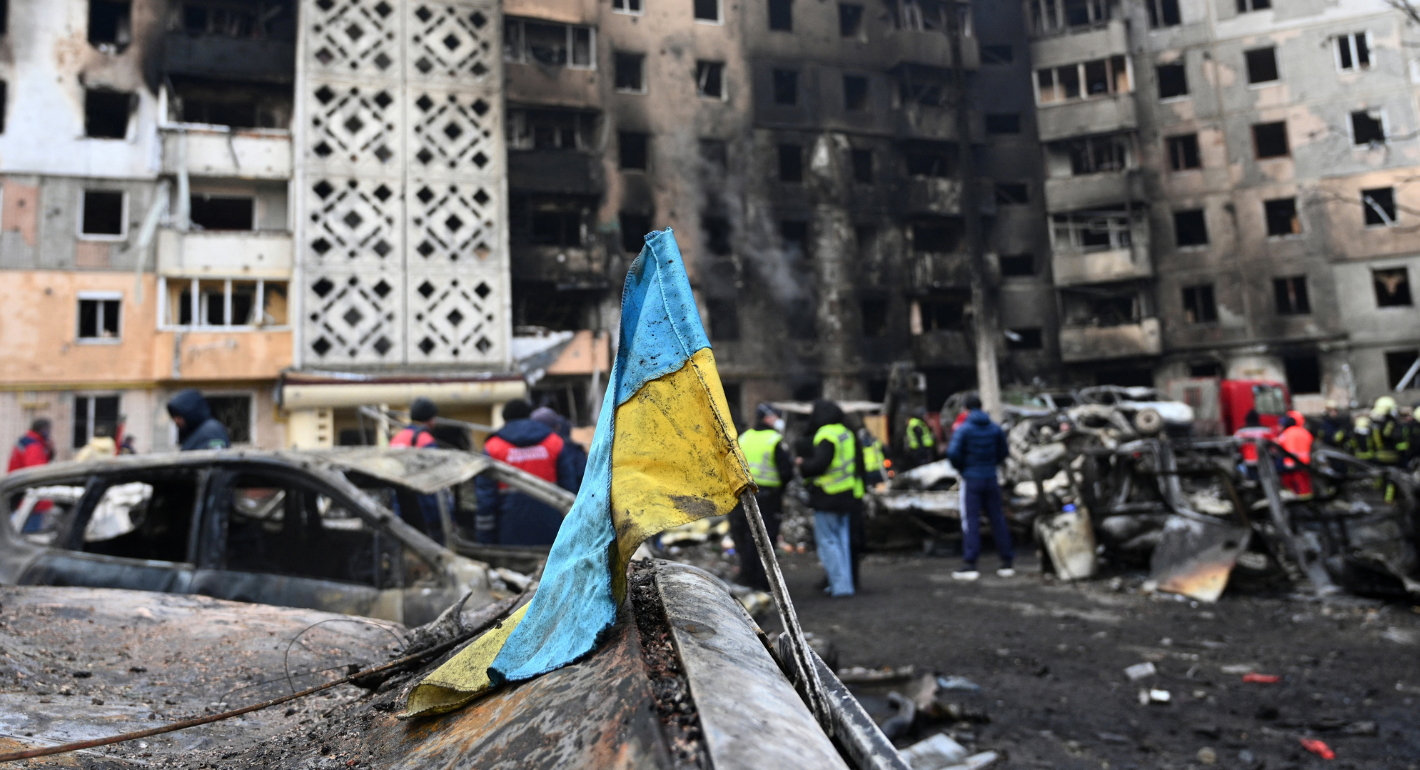
Funding Ukraine remains a priority for European leaders. As Russia’s war of aggression heads into another winter, two feasible options to mobilize support for Kyiv should be fast-tracked.

Vladyslav Rashkovan, Gregory P. Wilson
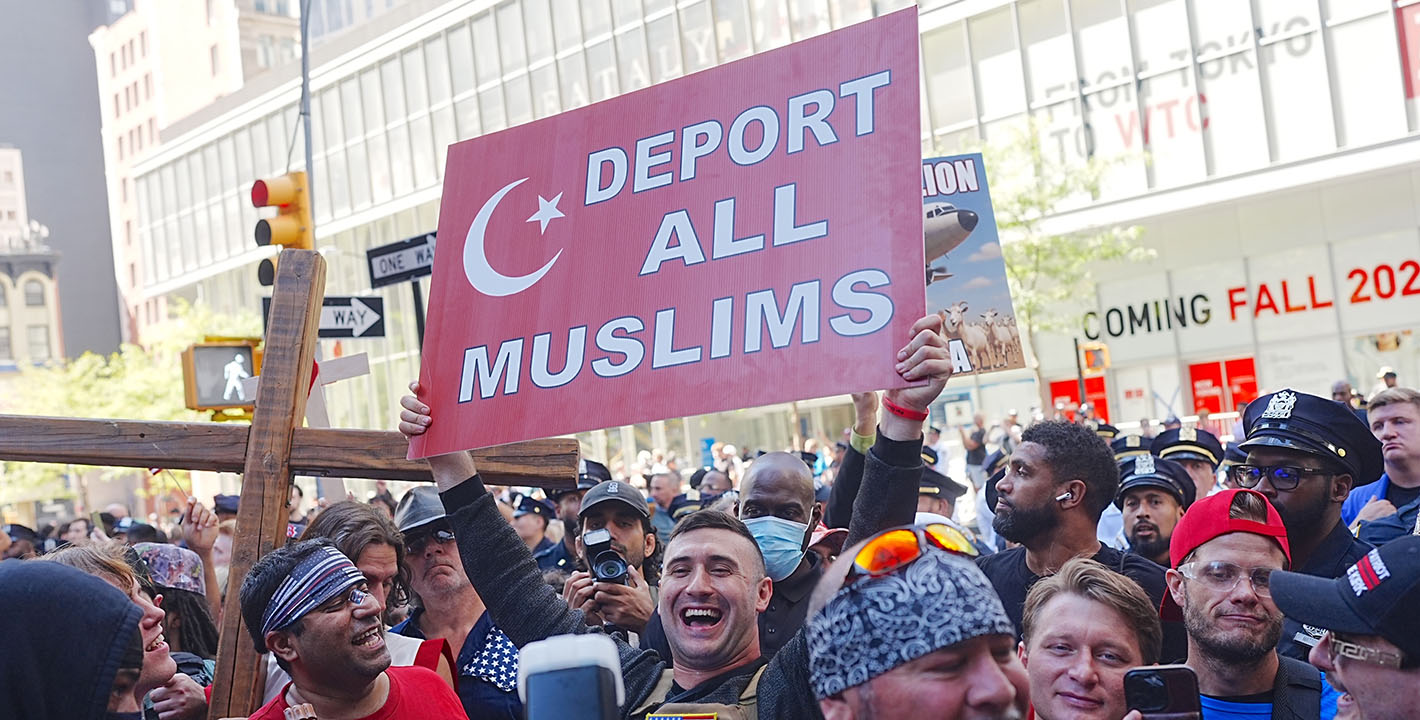
In an interview, Rozina Ali discusses her new book on the rise and manifestations of Islamophobia in the United States.

Michael Young
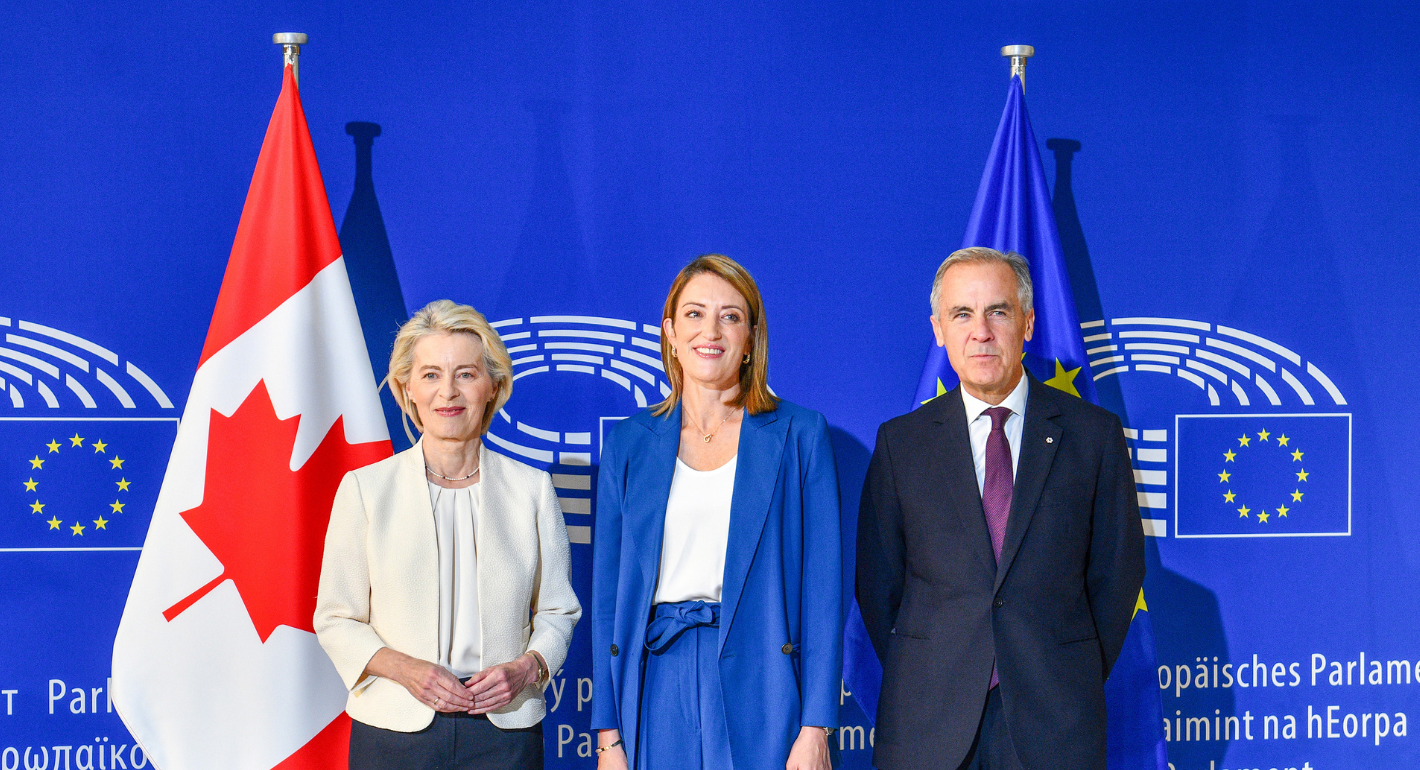
While the EU and European governments are embracing the much-lauded middle-power moment, this entails three difficult conundrums.

Richard Youngs
The middle power moment will not be defined by sovereign states alone, and California stands out for its potential contributions to international cooperation.

Ian Klaus, Stewart Patrick