

Article
Deborah Gordon, Smriti Kumble, David Livingston
{
  "authors": [
    "David Livingston"
  ],
  "type": "other",
  "centerAffiliationAll": "dc",
  "centers": [
    "Carnegie Endowment for International Peace",
    "Malcolm H. Kerr Carnegie Middle East Center"
  ],
  "collections": [],
  "englishNewsletterAll": "ctw",
  "nonEnglishNewsletterAll": "",
  "primaryCenter": "Carnegie Endowment for International Peace",
  "programAffiliation": "SCP",
  "programs": [
    "Sustainability, Climate, and Geopolitics"
  ],
  "projects": [
    "Carnegie Oil Initiative"
  ],
  "regions": [
    "Middle East",
    "Saudi Arabia",
    "Gulf",
    "North America"
  ],
  "topics": [
    "Economy",
    "Climate Change"
  ]
}
Source: Getty
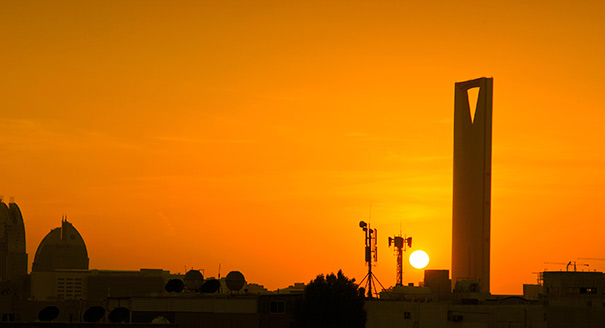
The Saudi Aramco IPO offers a unique opportunity for climate-based transparency. Yet, despite having some of the cleanest oils, transparency is unlikely without pressure from investors and exchanges.
Source: Economist Intelligence Unit
In a recent piece for The Economist Intelligence Unit, Ben Caldecott of the Sustainable Finance Programme at the University of Oxford Smith School of Enterprise and the Environment, raises a number of crucial and underappreciated points relating to the broader implications of Saudi Aramco’s prospective listing.
Specifically, Mr Caldecott highlights a non-intuitive climate “upside” of the IPO - namely that “Saudi Aramco has some of the lowest cost and lowest carbon intensity oil reserves [in the world],” implying that investors “would be able to reduce their exposure to IOCs with high cost oil reserves at significant risk of asset stranding, towards lower cost oil with fewer environmental impacts.” This is an important insight, and one further enhanced by a bit of additional context.
Among the 75 global oils modeled by the Carnegie Endowment’s Oil Climate Index (OCI), three are produced in Saudi Arabia: Ghawar, Safaniya, and Zuluf. In terms of total Saudi oil production, they account for, respectively, approximately 40% (5 mmb/d), 12% (1.5 mmb/d), and 3.5% (0.45 mmb/d). All three of these oils are indeed on the lower end of the lifecycle greenhouse gas (GHG) emissions spectrum, at 491 kg CO2/bbl, 495 kg CO2/bbl, and 503 kg CO2/bbl, respectively. This puts Ghawar and Safaniya in the first quartile of all oils that were modeled in terms of GHG intensity, from initial extraction all the way to the use of final end products. Zuluf scores in the second quartile.
Although these data points are promising for Saudi Arabia, they come with important caveats.
First, the GHG intensity numbers provided here are best interpreted as the average of a likely range, rather than certain point estimate. There are many variables subject to change.
Second, at least 45% of Saudi production remains unmodeled by the OCI, and even the main data inputs for the 55% that has been modeled, likely derive from 2014. More comprehensive transparency of oil data from the Kingdom, specifically related to environmental credentials, would be a welcome – though far from guaranteed – outcome of the Aramco IPO.
Third, there is at least some room for further improvement in these GHG intensity numbers, through applying different processes and innovations to each oil field depending on its particular context. For example, all three oils could benefit from a complete elimination of methane flaring, while Zuluf could further reduce its upstream emissions by nearly 9% with innovations to reduce the water intensity of production.
Elsewhere, depleted oil fields might see the introduction of concentrated solar power in order to generate the steam necessary for enhanced oil recovery. There is no silver bullet strategy, but instead a number of individual golden opportunities to continually reduce the carbon intensity of Saudi production and enhance the attractiveness of Saudi Aramco assets in a carbon-constrained world.
On this front, Saudi Arabia has shown signs of interest in positioning its own oil and gas industry as among the world leaders in environmental management, similar perhaps to a country such as Norway. In announcing the new Fadhili gas processing project to be completed in 2019, Amin Nasser, Saudi Aramco President and CEO, drew special attention to the fact that “the plant is unique because it is designed for maximum sulfur recovery of 99.9%...reflecting Saudi Aramco’s pioneering environmental stewardship.”
Aramco is also reportedly considering integrating helium and/or CO2 recovery units at the plant to reduce other emissions. There is much still to be done to deliver upon this rhetoric, but if transparent and verifiable, plants such as Fadhili indicate a positive direction of travel for the world’s largest liquid hydrocarbons producer.
For Saudi Aramco’s environmental credentials to prove attractive, the governance framework within which the IPO occurs is paramount. It is true that exchanges such as the LSE bring with them new reporting and disclosure requirements, providing positive incentives for continued responsibility at a company like Aramco. However, few if any of these reporting requirements have yet to touch upon oil’s climate-related risks, and even if they do there is a risk of exceptions being made by the exchanges currently courting the Saudi oil major. Already, there are indications that LSE is designing a new, bespoke listing structure for Aramco that would exclude it from certain governance provisions.
Could improved governance be brought about then by voluntary, rather than mandatory, means? While there is indeed a case to be made that investors focused on “ESG” (environmental, sustainability, governance) factors have brought welcome transparency to a growing number of industries, we should be wary of jumping to the assumption that it is ESG-oriented investors who will be taking the most sizeable stakes in partially-privatized Saudi Aramco.
Indeed, given the high valuation that the company is trying to achieve, initially mentioned as US$2tn and even amid revisions still rumored to be somewhere north of US$1tn, shrewd dollars-and-cents investors might not see a clear economic rationale for taking the plunge. Instead, any major institutional investors would have to consider paying a “political” or “diplomatic” premium in order to justify taking a stake.
As a case in point, China has had discussions with the Kingdom regarding potential investments by China Investment Corporation (CIC) and China National Petroleum Corporation (CNPC) in Aramco IPO, with the former rumored as possibly the largest investor in the IPO. Should this come to pass, it seems unlikely that CIC and CNPC will drive environmental performance and transparency to the same degree as, say, CALPERS or a Canadian institutional investor might.
The Saudi Aramco IPO represents a fundamental and perhaps unprecedented opportunity, both for the company to usher in a new era of transparency, and for investors to access a prospectively attractive base of oil resources, not to mention the renewable energy business that Aramco hopes to incubate within the company. But an IPO alone does not ensure quality, transparency, and durability of governance, particularly when it comes to the new data and metrics needed to inform investors about climate-related risks. It will be as important as ever for exchanges, investors, and regulators to maintain high, innovative standards amid the superlative nature and scale of the IPO. This, in the long-run, is in the interest of all stakeholders involved.
This piece was originally published in the Economist Intelligence Unit.
Former Associate Fellow, Energy and Climate Program
Livingston was an associate fellow in Carnegie’s Energy and Climate Program, where his research focuses on emerging markets, technologies, and risks.
Recent Work

Deborah Gordon, Smriti Kumble, David Livingston

Erik Brattberg, David Livingston
Carnegie does not take institutional positions on public policy issues; the views represented herein are those of the author(s) and do not necessarily reflect the views of Carnegie, its staff, or its trustees.
Economic recovery has brought Sri Lanka a modicum of stability, but domestic strains and great-power rivalry could test how long it lasts.
Avinash Paliwal
Policy proposals on sovereign debt must both match the scale of the challenge and be implementable within existing political constraints.
David McNair

For every ruble allocated to social policy, health, and education in 2027, double that amount is earmarked for the army, the police, and the security services.

Alexandra Prokopenko

The European Commissioner for Trade is headed to China. But after President Xi’s bridge-building visit to Washington, can a more isolated EU overcome Beijing’s stranglehold on critical raw materials? Who will blink first?

Rym Momtaz, ed.

The domestic impacts of how long it is taking to end the war in Ukraine have pushed the French electorate to the political extremes and compromised the country’s diplomatic capacity.
Rym Momtaz