

Q&A
Paul Haenle, Philippe Le Corre
{
  "authors": [
    "Philippe Le Corre"
  ],
  "type": "other",
  "centerAffiliationAll": "dc",
  "centers": [
    "Carnegie Endowment for International Peace",
    "Carnegie China"
  ],
  "collections": [
    "Belt and Road Initiative"
  ],
  "englishNewsletterAll": "asia",
  "nonEnglishNewsletterAll": "",
  "primaryCenter": "Carnegie Endowment for International Peace",
  "programAffiliation": "AP",
  "programs": [
    "Asia"
  ],
  "projects": [],
  "regions": [
    "East Asia",
    "China",
    "Central Asia",
    "Eastern Europe",
    "Western Europe"
  ],
  "topics": [
    "Economy",
    "Foreign Policy"
  ]
}
Source: Getty
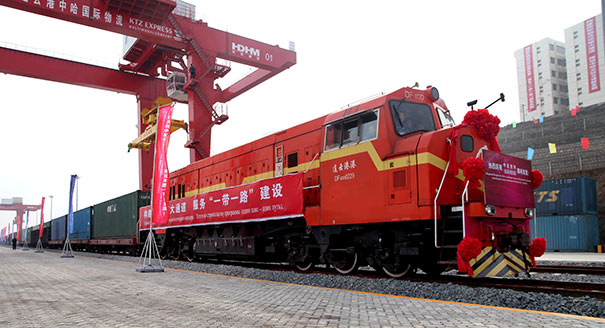
The internationalization of China, and of its companies in particular, is one of the most important phenomena of the beginning of the twenty-first century.
Source: Palgrave Macmillan
This chapter focuses on Chinese foreign direct investments (FDI) in Europe, and their potential impact on the landscape of the targeted countries. It examines the investment’s possible connections with the current Belt and Road Initiative (BR), which is primarily billed as an international network of infrastructure projects. With the BR in mind, this chapter asks whether Chinese state-owned enterprises (SOE) can build from their recent experiences in Western Europe, and looks at three main questions: (1) What is the political, economic, and social impact on targeted countries when it comes to public investments in the field of infrastructures? (2) How does it relate to the Belt and Road Initiative? (3) What are the stakes for the cooperation between Chinese investors on the one hand, and local public- and private-sector actors on the other?
This chapter was originally published in Rethinking the Silk Road, released by Palgrave Macmillan.
Former Nonresident Senior Fellow, Europe Program
Philippe Le Corre was a nonresident senior fellow in the Europe Program at the Carnegie Endowment for International Peace.
Recent Work

Paul Haenle, Philippe Le Corre


Erik Brattberg, Philippe Le Corre, Paul Stronski, …
Carnegie does not take institutional positions on public policy issues; the views represented herein are those of the author(s) and do not necessarily reflect the views of Carnegie, its staff, or its trustees.
AI capabilities are moving fast. Most institutions—including governments—can’t keep up.


Anton Leicht, Scott Singer

The Bureau of Industry and Security needs to adjust its focus and practices to maintain its position as the U.S. government’s primary champion of international technological competition.

Geoffrey Irving
Despite myriad challenges and occasional stumbles, the new Hungarian government is moving ahead with energy and conviction to uproot years of illiberalism and corruption and rebuild Hungarian democracy.

Thomas Carothers

European Commission President Ursula von der Leyen is about to give her annual address on the state of the EU. Here’s what she won’t—but should—say.

Rym Momtaz

Depleted financial reserves and a shrinking tax base mean it is no longer possible to simultaneously deliver high defense spending, price stability, and economic growth.

Alexandra Prokopenko