

Research
- +8
William J. Burns, Michael Chertoff, Catherine Ashton, …
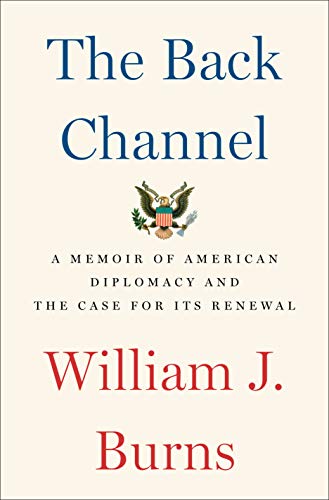
Drawing on a trove of newly declassified cables and memos, this book gives readers a rare inside look at U.S. diplomacy in action.
Source: Random House
From America’s “secret diplomatic weapon” (The Atlantic)—a man who served five presidents and ten secretaries of state—comes an impassioned argument for the enduring value of diplomacy in an increasingly volatile world.
Over the course of more than three decades as an American diplomat, William J. Burns played a central role in the most consequential diplomatic episodes of his time—from the bloodless end of the Cold War to the collapse of post–Cold War relations with Putin’s Russia, from post–9/11 tumult in the Middle East to the secret nuclear talks with Iran. Burns is widely regarded as one of the most distinguished and admired American statesmen of the last half century. Upon his retirement in 2014, Secretary John Kerry said Burns belonged on “a very short list of American diplomatic legends,” alongside George Kennan.
In The Back Channel, Burns recounts, with novelistic detail and incisive analysis, some of the seminal moments of his career. Drawing on a trove of newly declassified cables and memos, he gives readers a rare inside look at American diplomacy in action. His dispatches from war-torn Chechnya and Qaddafi’s bizarre camp in the Libyan desert and his warnings of the “Perfect Storm” that would be unleashed by the Iraq War will reshape our understanding of history—and inform the policy debates of the future. Burns sketches the contours of effective American leadership in a world that resembles neither the zero-sum Cold War contest of his early years as a diplomat nor the “unipolar moment” of American primacy that followed. Ultimately, The Back Channel is an eloquent, deeply informed, and timely story of a life spent in service of American interests abroad. It is also a powerful reminder, in a time of great turmoil, of the enduring importance of diplomacy.
“Bill Burns is simply one of the finest U.S. diplomats of the last half century. The Back Channel demonstrates his rare and precious combination of strategic insight and policy action. It is full of riveting historical detail but also, more important, shrewd insights into how we can advance our interests and values in a world where U.S. leadership remains the linchpin of international order.”
—James A. Baker III
“Bill Burns is a stellar exemplar of the grand tradition of wise Americans who made our country the indispensable nation in this world. The Back Channel shows how diplomacy works, why it matters, and why its recent demise is so tragic.”
—Walter Isaacson, author of Leonardo da Vinci
“Bill Burns is a treasure of American diplomacy and a model of the American idea and spirit when we need it most. In The Back Channel, Burns provides another great act of public service by giving us a smart, plainspoken account of America’s changing role in the world and the power and purpose of American diplomacy at its best.”
—Hillary Clinton
“From one of America’s consummate diplomats, The Back Channel is an incisive and sorely needed case for the revitalization of diplomacy—what Burns wisely describes as our ‘tool of first resort.’”
—Henry Kissinger
“The Back Channel is a masterfully written memoir from one of America’s most accomplished and respected diplomats. Burns not only offers a vivid account of how American diplomacy works, he also puts forward a compelling vision for its future that will surely inspire new generations to follow his incredible example.”
—Madeleine K. Albright
“Told with humor and humility, The Back Channel brings all the behind-the-scenes efforts into the light, and brings readers into the room to share the journey of a talented, tough-minded diplomat par excellence who served as conduit and catalyst in making America stronger.”
—John Kerry
“The Back Channel deserves to be widely read—it’s a great book filled with fascinating stories and the kind of wisdom that is sorely needed these days.”
—George P. Shultz
“Burns has written the best diplomatic memoir of the post–Cold War period. Must reading for anyone looking back on an era that’s now ending, and for any young person looking forward to diplomacy as a profession in whatever era is likely to come.”
—John Lewis Gaddis, Robert A. Lovett Professor of Military and Naval History, Yale University
“An engaging tale of modern statecraft full of fascinating eyewitness accounts of several important events in modern international history . . . Burns’s compelling, fast-paced, and witty narrative is necessary reading for America’s next generation of diplomats.”
—Condoleezza Rice
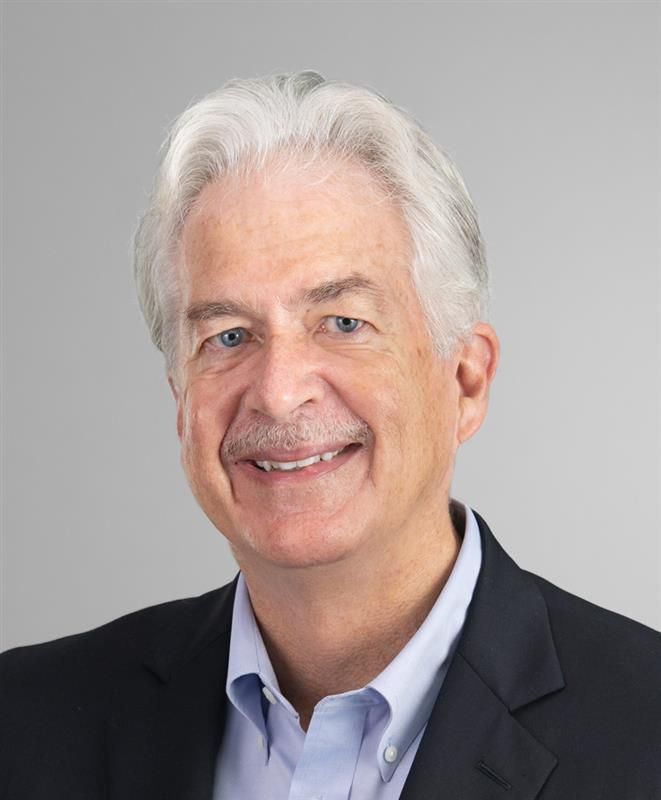
Former Carnegie President (2015-2021)
A former career diplomat, William J. Burns served as director of the CIA, deputy secretary of State, and ambassador to Russia and Jordan. Burns was also president of the Carnegie Endowment for International Peace from 2015 to 2021.
Recent Work
William J. Burns, Michael Chertoff, Catherine Ashton, …
William J. Burns
Carnegie does not take institutional positions on public policy issues; the views represented herein are those of the author(s) and do not necessarily reflect the views of Carnegie, its staff, or its trustees.

Despite its flop at the box office, the film raises important questions for the climate community to answer.
Leonardo Martinez-Diaz

Funding Ukraine remains a priority for European leaders. As Russia’s war of aggression heads into another winter, two feasible options to mobilize support for Kyiv should be fast-tracked.


Vladyslav Rashkovan, Gregory P. Wilson

Russian strikes are weakening the economy sustaining Ukraine’s war effort. Closing the growing funding gap will require more European support and politically contentious reforms in Kyiv.

Balázs Jarábik

In an interview, Rozina Ali discusses her new book on the rise and manifestations of Islamophobia in the United States.

Michael Young

While the EU and European governments are embracing the much-lauded middle-power moment, this entails three difficult conundrums.

Richard Youngs