

Paper
Ashley J. Tellis
{
  "authors": [
    "Ashley J. Tellis"
  ],
  "type": "other",
  "centerAffiliationAll": "",
  "centers": [
    "Carnegie Endowment for International Peace"
  ],
  "collections": [
    "Coronavirus"
  ],
  "englishNewsletterAll": "",
  "nonEnglishNewsletterAll": "",
  "primaryCenter": "Carnegie Endowment for International Peace",
  "programAffiliation": "",
  "programs": [],
  "projects": [],
  "regions": [
    "North America",
    "United States",
    "East Asia",
    "China"
  ],
  "topics": [
    "Foreign Policy"
  ]
}
Source: Getty
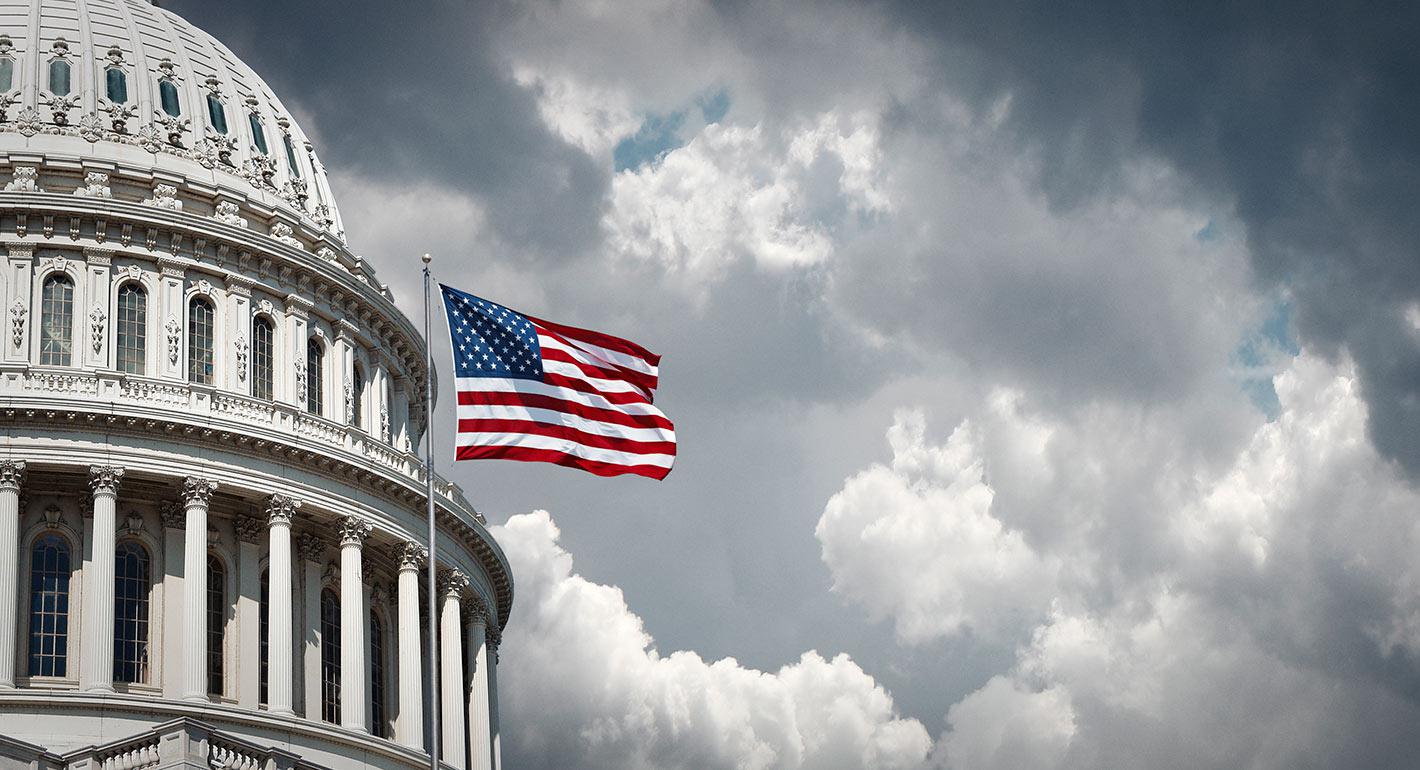
The coronavirus pandemic threatens U.S. hegemony in new, deadly ways.
Source: National Bureau of Asian Research
After almost two decades of conflicted hesitancy, the United States finally acknowledged that it is involved in a long-term strategic competition with China. This rivalry, almost by definition, is not merely a wrangle between two major states. Rather, it involves a struggle for dominance in the international system, even if China as the rising power disavows any such ambition. China’s very ascendancy—if sustained—could over time threaten the U.S. hegemony that has been in place since the end of World War II. It is this reality of unequal growth—which has nourished China’s expanding influence and military capabilities—that lies at the root of the evolving rivalry.
Although the term sometimes has unsettling connotations, the United States is a genuine hegemon, understood in the original Greek sense as a leader in the competitive international system. This hegemony derives from the fact that the United States is the world’s single most powerful state. First, it remains the largest economy in real terms, a foundation that underwrites its capacity to project military power globally in ways unmatched by any peers. Second, it possesses a sufficiently effective state that presides over a remarkably productive society. And, third, in partnership with strong allies in North America, Western Europe, East Asia, and Oceania, who share both values and interests, the United States has created an international order that buttresses its primacy materially, institutionally, and ideationally, thereby allowing it to advance diverse interests while economizing on its use of force. Although these foundations have been stressed in recent times, the Covid-19 pandemic now threatens them in deadly ways.
This piece was originally published by the National Bureau of Asian Research.
Former Senior Fellow
Ashley J. Tellis was a senior fellow at the Carnegie Endowment for International Peace.
Recent Work
Ashley J. Tellis
Ashley J. Tellis
Carnegie does not take institutional positions on public policy issues; the views represented herein are those of the author(s) and do not necessarily reflect the views of Carnegie, its staff, or its trustees.

Rubio’s recent visit brought welcome attention, but more capital requires governance changes that may be a hard sell for regional governments.

Jennifer B. Murtazashvili

Japan’s long-term security policy is driven by concerns about China, and there is little appetite for (or interest in) pursuing a confrontation with Moscow.

James D.J. Brown

Russia is testing the waters of NATO’s mutual defense clause. What do strikes in Romanian territorial waters mean for the alliance’s posture toward Moscow?

Dimitar Bechev

China has showcased its engineering prowess with small modular reactor demonstration projects. But turning these technological achievements into commercial success will be a greater challenge.

Tong Zhao
Why Pakistan, Saudi Arabia, and Turkey are joining forces on regional security.


Alper Coşkun, Amr Hamzawy