

Commentary
The summit may be remembered as a fatal blunder, when Washington, Beijing, and the AI industry collectively chose ceremony over action.
Jeffrey Prescott
{
  "authors": [
    "Sophia Besch",
    "Jon Bateman"
  ],
  "type": "commentary",
  "blog": "Emissary",
  "centerAffiliationAll": "",
  "centers": [
    "Carnegie Endowment for International Peace"
  ],
  "englishNewsletterAll": "",
  "nonEnglishNewsletterAll": "",
  "primaryCenter": "Carnegie Endowment for International Peace",
  "programAffiliation": "",
  "programs": [],
  "projects": [],
  "regions": [
    "China",
    "United States"
  ],
  "topics": [
    "Climate Change",
    "Foreign Policy",
    "Economy",
    "Technology"
  ]
}

Source: Getty
Domestic politics are a major factor, but not the only one.
Earlier this month, U.S. President Joe Biden’s administration announced new tariffs on several categories of Chinese imports—most notably, electric vehicles (EVs). On this week’s episode of The World Unpacked, host Sophia Besch talks with Jon Bateman, a senior fellow in the Technology and International Affairs Program and author of a 2022 report on U.S.-China tech decoupling. An excerpt from their conversation, which has been edited for clarity, is below.
Sophia Besch: The announcement of these new tariffs a couple of weeks ago was, at the surface, triggered by a four-year review of former U.S. president Donald Trump’s tariffs. But we also have an election coming up here in the United States. Can you help us situate this decision in the context of U.S. politics?
Jon Bateman: Politics are a huge driver here, [but] I don’t want to oversell it. I think sometimes people on the Chinese side believe that everything that Washington does is purely a function of domestic politics and there isn’t actually a sincere belief in these measures, which really there is.
But yes, this is an election year, and [that’s particularly important] when it comes to electric vehicles—let’s start there. EVs are the sector that Biden put the harshest tariffs on: a 100 percent tariff that virtually guarantees that Chinese EVs will not penetrate the U.S. market. They’re not being sold today, and [the tariff will] essentially guarantee that they won’t be sold in the future. This is very important for the U.S. auto industry, which is heavily centered in parts of the country that will be swing states deciding this election—Michigan, Wisconsin, Pennsylvania. These are the states that Biden and Trump both feel that they need to win to win the presidency in 2024.
So there is an ongoing battle, on the one hand, between the United States and China for market share in the global auto manufacturing marketplace, and then also between internal combustion engines and EVs. And both of these friction points are potential threats to jobs in these heartland states. Undoubtedly, Biden is trying to show that he is making a strong play to protect those jobs.
Sophia Besch: Smaller allies are acting in the context of a changing world and of that economic order eroding. Their options are also becoming fewer. And so that might also be one of the reasons that they’re aligning with the U.S. on [these tariffs].
Jon Bateman: The U.S. often says we don’t want countries to have to choose between the United States and China. That's patently false. We absolutely do want countries to choose. And they’re making that choice. They’re trying to avoid it as much as possible, but many countries are choosing the United States in some form or fashion.
When the U.S. put in these export controls, I thought to myself: the U.S. is trying to derisk and decouple as aggressively as possible within several key constraints. One of those constraints is what allies and partners can stomach. Another constraint is what U.S. industry can tolerate. And a third constraint is Chinese potential retaliation—and perhaps more broadly, the global economic system and entities like the World Trade Organization.
I think from a Biden administration perspective, all of those systems and constraints have basically held. We haven’t gotten extreme pushback on any U.S. policy or even the collection of U.S. policies. I think if anything, that could be seen as validating the administration’s approach. It also makes it very likely that it’ll be full steam ahead and that the U.S. government will keep pushing until one or more of those systems or constraints pushes back hard.
To listen to the full episode, use the player below or your favorite podcast app.

Former Senior Fellow, Europe Program
Sophia Besch was a senior fellow in the Europe Program at the Carnegie Endowment for International Peace. Her research focuses on European foreign and defense policy.

Senior Fellow and Co-Director, Technology and International Affairs Program
Jon Bateman is a senior fellow and co-director of the Technology and International Affairs Program at the Carnegie Endowment for International Peace.
Carnegie does not take institutional positions on public policy issues; the views represented herein are those of the author(s) and do not necessarily reflect the views of Carnegie, its staff, or its trustees.
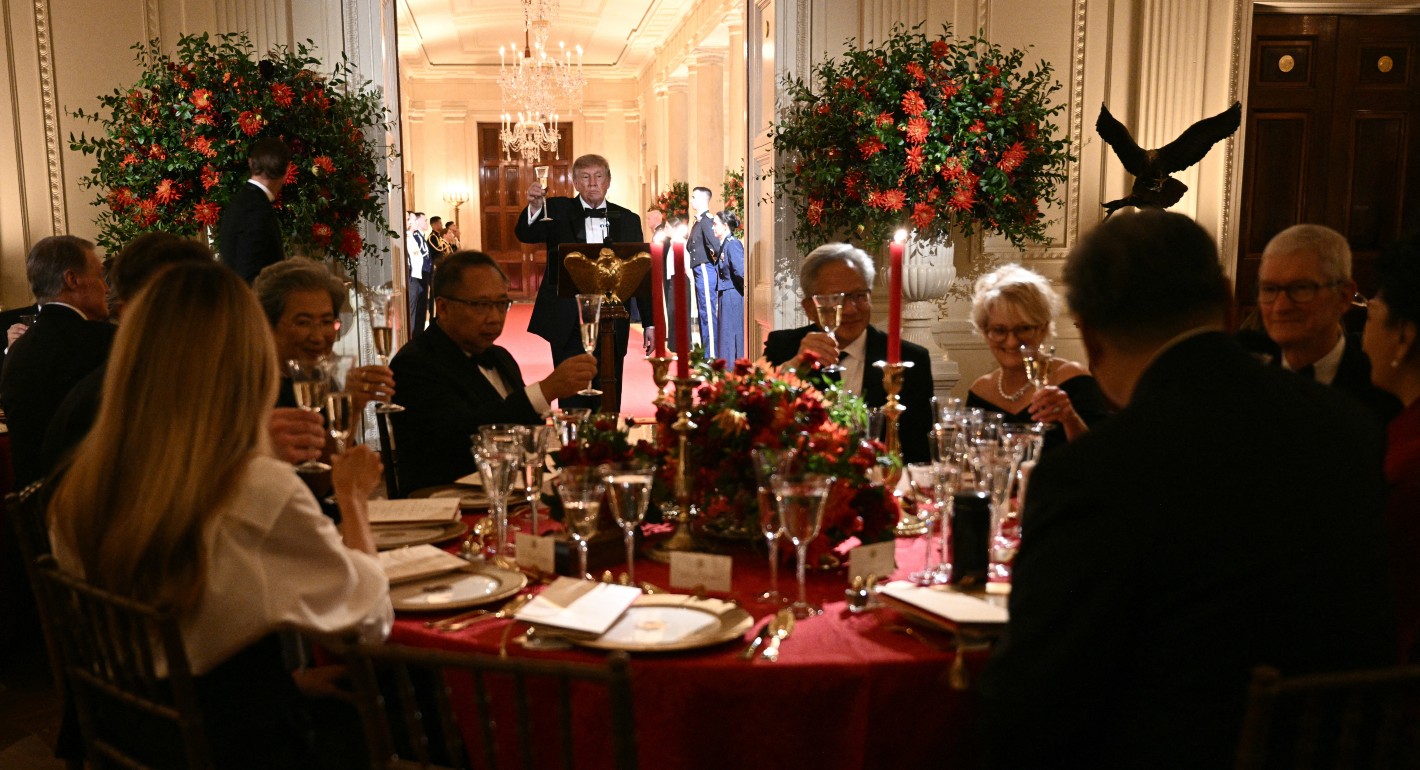
The summit may be remembered as a fatal blunder, when Washington, Beijing, and the AI industry collectively chose ceremony over action.

Jeffrey Prescott

The real test may come after the leaders leave the room.



Sheena Chestnut Greitens, Oriana Skylar Mastro, Yukon Huang, …

The Horn of Africa countries are among those facing a new security calculus.


Andrew Leber, Lesley Anne Warner
Why governance of rapidly evolving technology will be distributed and complex.


Stewart Patrick, Scott Singer
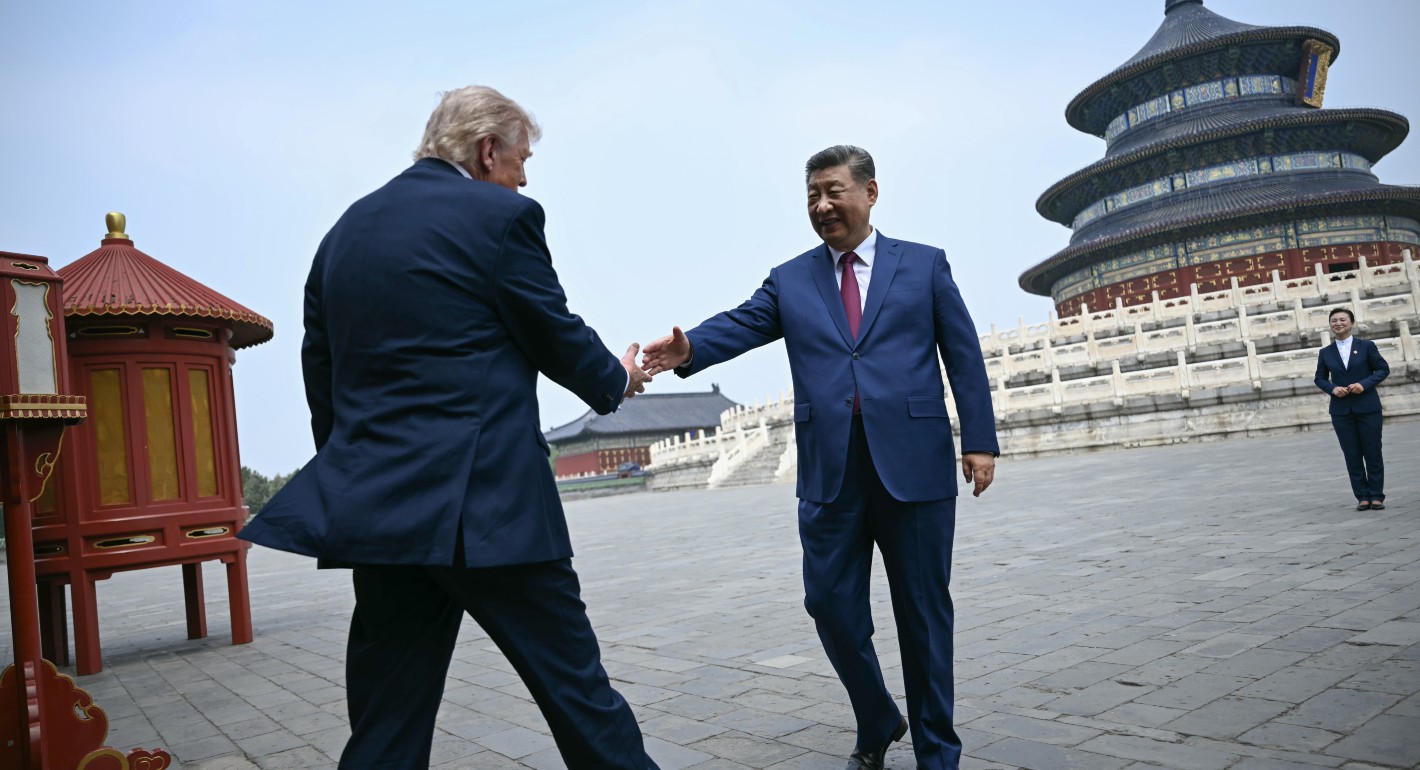
It should address the shortcomings of previous crisis communication efforts and adapt to the demands of frontier AI.

Lucy Luo