

Commentary
The summit may be remembered as a fatal blunder, when Washington, Beijing, and the AI industry collectively chose ceremony over action.
Jeffrey Prescott
{
  "authors": [
    "Sophia Besch",
    "Dan Baer"
  ],
  "type": "commentary",
  "blog": "Emissary",
  "centerAffiliationAll": "",
  "centers": [
    "Carnegie Endowment for International Peace"
  ],
  "englishNewsletterAll": "",
  "nonEnglishNewsletterAll": "",
  "primaryCenter": "Carnegie Endowment for International Peace",
  "programAffiliation": "",
  "programs": [],
  "projects": [
    "Baltic Sea Region Security Initiative"
  ],
  "regions": [
    "Europe",
    "United States"
  ],
  "topics": [
    "Security",
    "Foreign Policy",
    "NATO",
    "Defense"
  ]
}

U.S., Swedish, and Finnish leaders at the White House in 2022. (Photo by Mandel Ngan/AFP via Getty Images)
Critics claim E-PINE is redundant now that Finland and Sweden have joined NATO. Instead, it's a chance to show U.S. flexible multilateralism in action.
This week, the Nordic countries, the Baltic countries, and the United States are meeting in Sweden for the Enhanced Partnership in Northern Europe, or E-PINE. In recent years, E-PINE has served as a forum for Washington to engage with countries in Northeast Europe, but now that Sweden and Finland have joined NATO, all members of E-PINE have access to Washington in Brussels.
Some might say E-PINE is now redundant. But rather than scrapping it, leaders should reinvigorate it. U.S. President Joe Biden and his administration have touted flexible multilateralism, which should be understood not only as inventing new constellations of countries to cooperate on shared issues but also as renovating old ones to make them more effective and energetic at tackling today’s problems. In this vein, E-PINE should bring Poland and Germany on board.
Since 2003, the E-PINE format has brought together officials from the U.S. State Department and political directors of the Ministries of Foreign Affairs of the Baltic states and Nordic countries. Before E-PINE, Washington was engaged in the region through the Northern Europe Initiative (NEI), founded in 1997 to integrate the Baltic states into Euro-Atlantic circles and strengthen regional cooperation. When Estonia, Latvia, and Lithuania joined NATO and the EU twenty years ago, there were questions over whether to sustain NEI. The United States decided then to maintain its engagement via E-PINE. NATO’s northern enlargement now signifies a similar turning point.
Security in Europe’s northeast is heavily dependent on regional and transatlantic cooperation. The European Baltic Sea states have traditionally been connected through various political, security, and defense collaborations. The Nordic defense ministers meet regularly in the Nordic Defense Cooperation format, and the Nordics and Baltics meet in the Nordic-Baltic Eight grouping. Defense ministers from the five Nordics, the Baltics, Germany, Poland, the Netherlands, and the UK also meet in the Northern Group twice a year. And the Council of Baltic Sea States—recently reinvigorated after suspending Russian membership—brings together the foreign ministers of all Baltic Sea littoral states and the EU.
Many of these groupings have existed for years, but the Russian war on Ukraine is now ramping up the pressure to turn talking shops into productive cooperation formats. This means critically examining what each of them contributes concretely, and, if necessary, revising their substance and membership.
Invalid video URL
In the past, E-PINE often has been limited in its ambition to coordinating political positions, but it is well-placed to address crucial challenges facing the region and wider Europe. The broader focus on foreign policy, as well as the participation of foreign ministries, allow for a wider view of the region’s security concerns. Take Ukraine: many of its neighbors can draw on their own histories to support its integration into the European economic and security architecture. Or consider Europe’s energy transition: the Baltic Sea region’s offshore wind potential is pivotal to strengthening energy security, new liquified natural gas terminals are central to addressing near- and medium-term needs, and an aggressive Russia that is seeing fewer direct economic benefits from European energy consumption means that those countries will need to work together to improve the resilience of energy infrastructure.
The Baltic and Nordic nations have demonstrated exemplary leadership on European foreign, security, and defense policy in their commitments to Ukraine and to strengthening their national defenses. They have also understood that, when dealing with an overstretched and distracted Washington, there is strength in numbers. They regularly coordinate their positions before meeting U.S. counterparts. E-PINE, as the only regional cooperation format that includes the United States as an active participant, is an important vehicle for keeping Washington engaged.
Bringing military heavyweight Poland and economic heavyweight Germany into E-PINE would add significant resources and clout. It could, for instance, create opportunities for transatlantic defense industrial or energy cooperation at scale. It would also help Berlin and Warsaw in their missions to strengthen their own credibility as security providers in the region: Germany has an interest in putting meat on the bones of its Zeitenwende policy, and Poland can translate the pro-European momentum of its new government into stronger relations with its neighbors and a greater responsibility for regional security.
The United States would win, too. After all, the Biden administration’s focus on flexible multilateralism is more than a feel-good fad: it is a reflection that as Beijing rises and Moscow rages, Washington cannot manage burdens of global governance alone. It needs more “boards of directors” for regional and specific topics. Moreover, a format like E-PINE offers an opportunity for Washington to engage the region on subjects that are more difficult to bring up inside NATO, such as the region’s approach to economic security and engagement with the Indo-Pacific.
The future of European security lies in regional cooperation. The future of transatlantic security cooperation depends on energized, credible, and coordinated European engagement with the United States. An enlarged E-PINE+2 could support both objectives.
Understand the world with the latest from our scholars around the world.

Former Senior Fellow, Europe Program
Sophia Besch was a senior fellow in the Europe Program at the Carnegie Endowment for International Peace. Her research focuses on European foreign and defense policy.

Senior Vice President; Director, Europe Program
Dan Baer is a senior vice president of the Carnegie Endowment for International Peace and director of the Europe Program. Under President Obama, he was U.S. ambassador to the Organization for Security and Cooperation in Europe (OSCE) and he also served deputy assistant secretary of state for the Bureau of Democracy, Human Rights, and Labor.
Carnegie does not take institutional positions on public policy issues; the views represented herein are those of the author(s) and do not necessarily reflect the views of Carnegie, its staff, or its trustees.
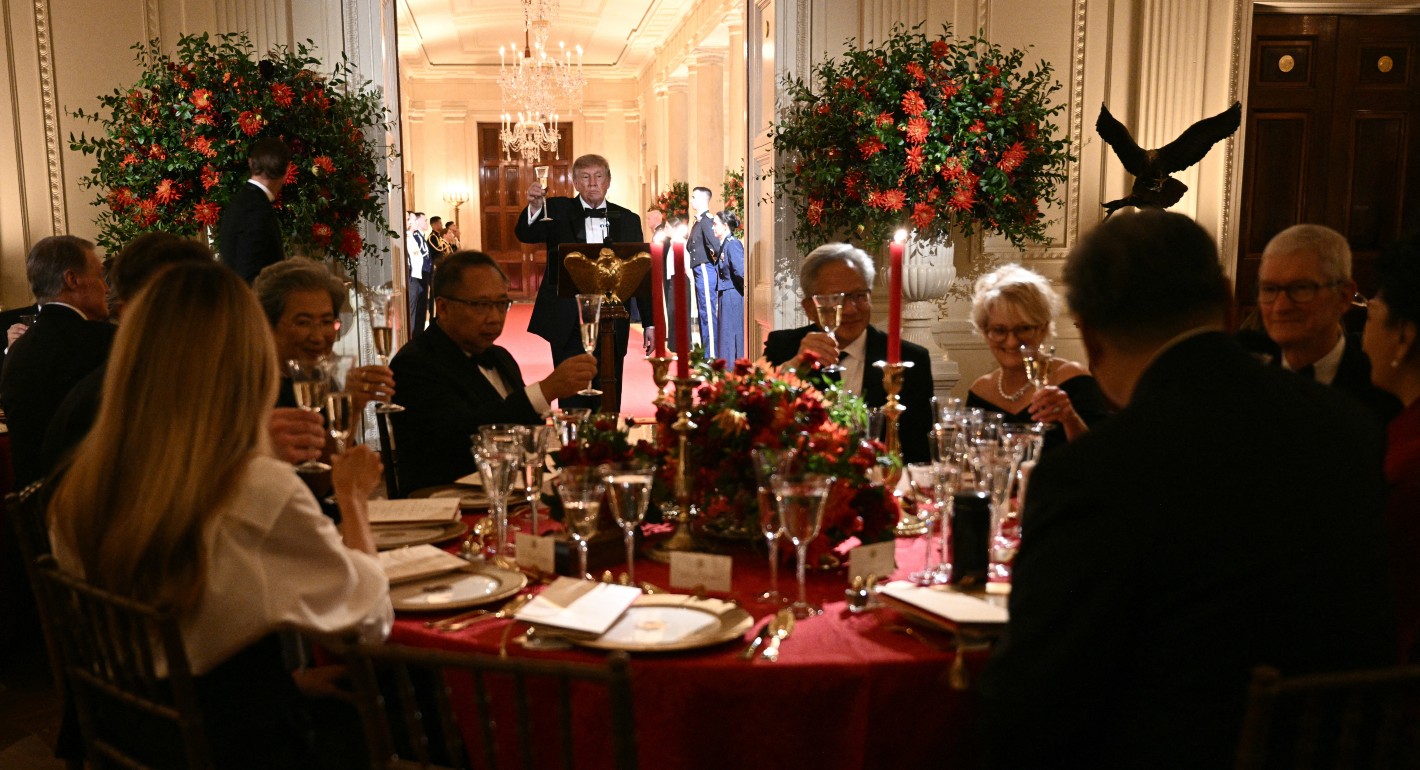
The summit may be remembered as a fatal blunder, when Washington, Beijing, and the AI industry collectively chose ceremony over action.

Jeffrey Prescott
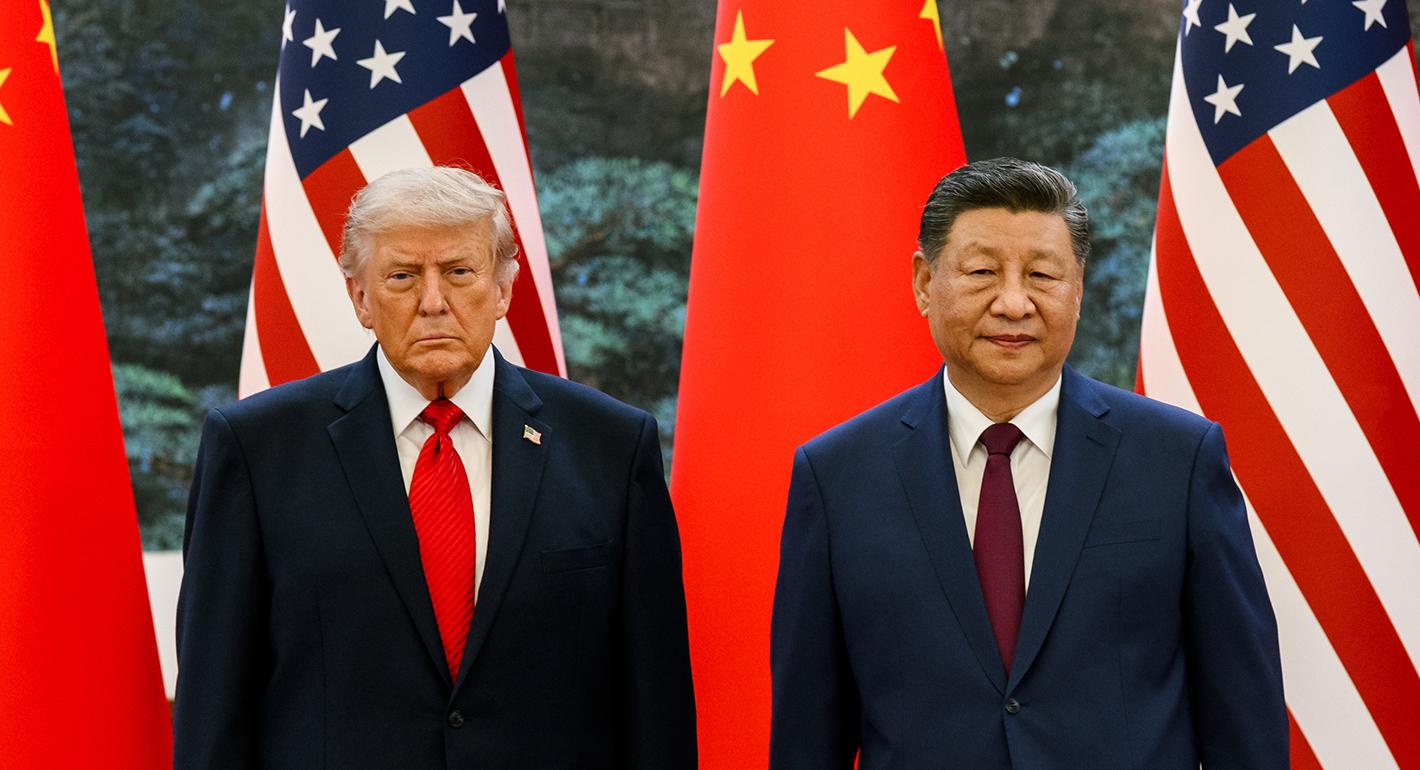
The real test may come after the leaders leave the room.



Sheena Chestnut Greitens, Oriana Skylar Mastro, Yukon Huang, …

The Horn of Africa countries are among those facing a new security calculus.


Andrew Leber, Lesley Anne Warner
Why governance of rapidly evolving technology will be distributed and complex.


Stewart Patrick, Scott Singer

It should address the shortcomings of previous crisis communication efforts and adapt to the demands of frontier AI.

Lucy Luo