

Paper
Sarah Yerkes, Natalie Triche, Amr Hamzawy
{
  "authors": [
    "Sarah Yerkes"
  ],
  "type": "commentary",
  "blog": "Emissary",
  "centerAffiliationAll": "",
  "centers": [
    "Carnegie Endowment for International Peace"
  ],
  "collections": [
    "Democracy at 10"
  ],
  "englishNewsletterAll": "",
  "nonEnglishNewsletterAll": "",
  "primaryCenter": "Carnegie Endowment for International Peace",
  "programAffiliation": "",
  "programs": [],
  "projects": [],
  "regions": [
    "Europe"
  ],
  "topics": [
    "Democracy",
    "Civil Society"
  ]
}
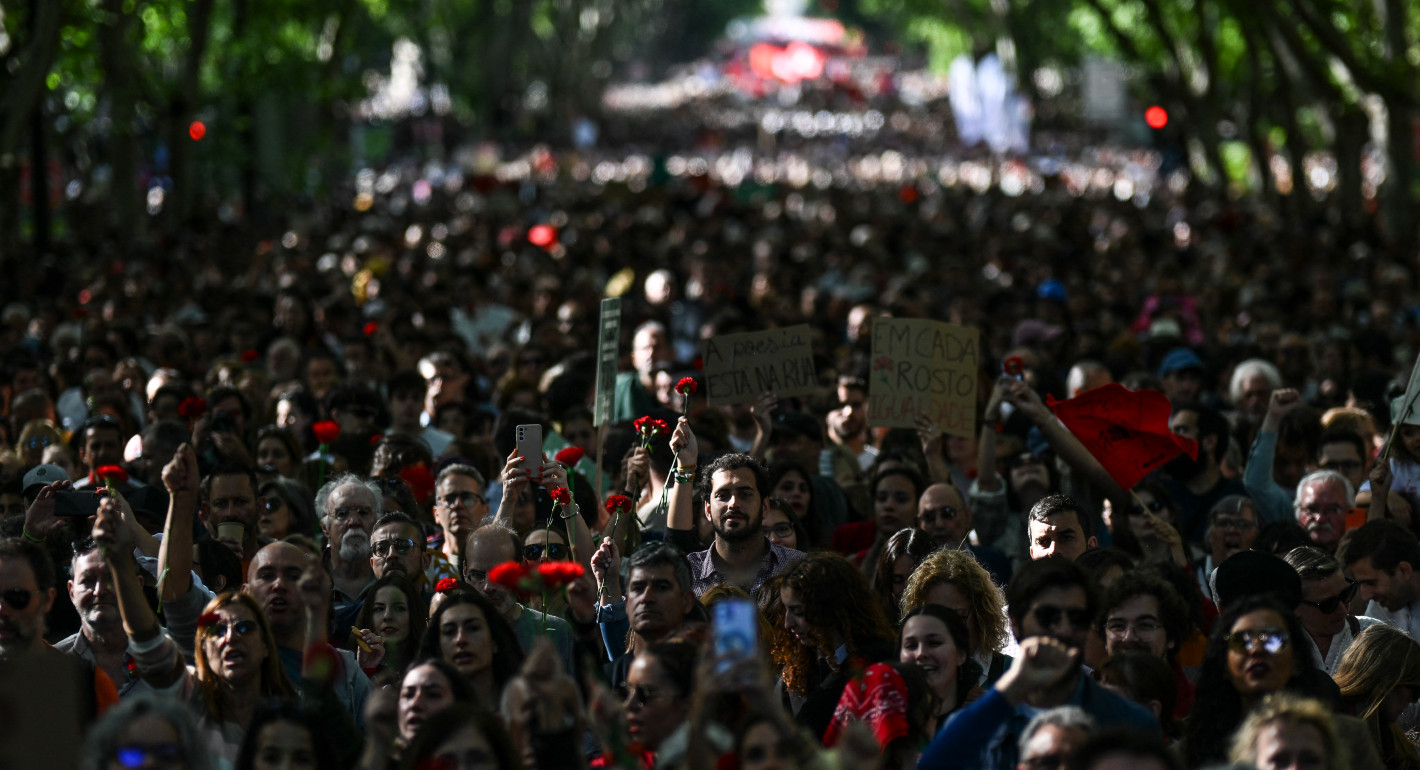
People commemorate the fiftieth anniversary of the Carnation Revolution on April 25, 2024, in Lisbon. (Photo by Patricia de Melo Moreira/AFP via Getty Images)
The country’s transition fifty years ago offers important lessons for aspiring democracies.
When Portugal began its democratic transition on April 25, 1974, the odds were not in favor of success. The change took place in the midst of the Cold War, in a country with a popular, Moscow-aligned Communist Party. For much of the democratic West, the country’s stability as a NATO founding member—not its level of freedom—was the priority. Portugal had little space for civil society or political opposition.
Yet, fifty years later, Portugal has established and retained a fully consolidated liberal democracy with regular elections, a democratic constitution, rule of law, and an active civil society. In addition, its transition started what is commonly called the “third wave of democratization.” Its revolution was followed in short order by similar transitions in Spain and Greece, and by 1992, forty-three countries had begun transitions to democracy.
Portugal’s democracy is certainly not perfect: parliamentary elections in March saw massive gains by a far-right, anti-establishment party (Chega), and those elections came about because of a corruption scandal that roiled Prime Minster Antonio Costa’s government and forced his resignation. However, Portugal achieved something shared by few of its peers. By 2017, nearly two-thirds of the third-wave countries suffered either democratic backsliding or return to autocracy, while Portugal saw the largest gain in democracy of any country. As the world faces continued democratic decline, Portugal’s success offers some lessons for nascent democratic transitions and countries in the midst of democratic reversals.
Portugal’s transition began, in the simplest terms, as a result of the continued economic and social strain on the Portuguese public due to the continued colonization of Angola, Mozambique, and Guinea-Bissau. While the rest of Europe had been forced to decolonize in the 1950s, Portugal held on to its African colonies into the 1970s, fighting off independence movements between 1961 and 1974. By 1974, one-quarter of military-aged Portuguese men were in the armed forces. The government’s fate was sealed when it promoted non-career military officers over their career counterparts, leading to resentment and frustration that manifested in the Armed Forces Movement. The movement—driven by a group of 200–300 officers—removed then prime minister Marcelo Caetano from power via coup on April 25, 1974. And although some initially feared that the autocratic civilian authorities would simply be replaced by a military autocracy, the coup leaders ushered in an era of liberalization that eventually unseated the military as a political force.
The first years of the transition were bumpy. The combination of a strong military and weak political parties contributed to frequent turnover, with two presidents, three prime ministers, and six provisional governments cycling in and out of office for the first two years after the coup. And Portugal’s first ten postcoup governments only stayed in power an average of 346 days, meaning no one was in power long enough to fully tackle either administrative or economic reform. But by 1986, eleven years after the transition began, Portugal elected its first civilian president in sixty years, Mario Soares, and had its first single-party majority in parliament the following year, cementing the full demilitarization of Portuguese political life.
The Portuguese case, like all transitions, is sui generis in some ways, and there is certainly no guaranteed recipe for democratic success. However, Portugal’s enduring democracy offers a few important lessons for future democratic transitions.
First, external support can make (or break) a transition. In the case of Portugal, integration into the European Economic Community (EEC) was one of the most influential factors in keeping the transition on track. The Soares government first applied to join the EEC (which later became the EU) in March 1977, and Portugal achieved EEC membership in 1985. During the pre-accession period, EEC membership was a carrot that helped keep Portugal’s transition on track. It offered a variety of political and economic benefits and came with democratic requirements, which helped guide Portugal’s constitution-drafting process and kept any illiberal tendencies at bay. Even during the rockiest period of the transition, from 1974 to 1975, the right and center-left parties were focused on European integration as a way to solve Portugal’s economic problems, making a convincing argument that Portugal should turn West rather than East toward the USSR and largely sidelining the Communist Party.
Additionally, when Portugal experienced a rapid economic decline common to early transitions, the International Monetary Fund was able to step in with $42.4 million in short-term assistance in 1977 and another $57.4 million in 1978. Aid from Western European countries also softened the blow of the economic downturn, making the transition less painful for the Portuguese people.
The second factor was location, location, location. Having democratic neighbors does not guarantee democratic success, but Portugal’s exposure to Western European democracies clearly benefited the transition. Members of the Portuguese diaspora who lived and worked in democratic Europe transmitted their experiences, along with their remittances, back home. The European social democratic parties were also highly influential during the early years of the transition in providing financial support as well as training and advice to their Portuguese counterparts.
Furthermore, as a founding NATO member, Portugal was tied to the United States in a way that made U.S. interests in the country more relevant to Portugal. And the ties developed between the Portuguese military and the European and U.S. militaries helped create a democratic political culture within the armed forces, which helped prevent a second military coup.
Third, there is no democracy without democrats. While Portugal’s revolution began with a military coup, the Portuguese public soon took to streets to demand democratic change. Once the transition began, much of the Portuguese public had little interest in returning to authoritarianism, preventing anti-democratic forces from co-opting the transition. A military coup alone—without public backing—likely would not have been sufficient to bring about the monumental and lasting change Portugal experienced. Rather, the commitment to democracy from the Portuguese people and civil society sustained the transition during dark times.
Fourth, and perhaps most important, democracy is a rocky and uncertain process. One of the reasons for Portugal’s success was the failure of the Soviet Union to support its communist allies. Although there was fear that the USSR would undermine Portugal’s democratic turn (and it did initially provide Portugal’s Communist Party with financial aid), it instead prioritized détente with the United States and Western Europe, shoring up its military access to the NATO arena, and bringing former Portuguese colony Angola into its orbit. Those who wrote off Portugal’s transition because of its ties to the Soviet Union were taken by surprise at how little attention Moscow paid to Lisbon and how little resistance the Soviet Union put up to Portugal’s burgeoning democracy. Had Portugal’s revolution occurred a few years earlier, the USSR might have seized on the opportunity to bring a European country into its orbit and brought about a very different result.
An observer looking at Portugal fifty years ago would not likely anticipate that today it would be as democratic as its Western European neighbors. And it’s easy to forget that Portugal’s democracy was not expected to last. In the midst of a major global democratic decline, it’s worth remembering that the trends we are witnessing may not be a harbinger of an autocratic future—and that those countries that have managed to accomplish the difficult task of creating a lasting, consolidated democracy have done so with the help of their friends.

Acting Co-Director and Senior Fellow, Middle East Program
Sarah Yerkes is acting co-director and a senior fellow in the Middle East Program at the Carnegie Endowment for International Peace. Her research focuses on democracy and governance, U.S. foreign policy towards the Middle East and North Africa, and political and economic reform in Tunisia.
Recent Work

Sarah Yerkes, Natalie Triche, Amr Hamzawy
Carnegie does not take institutional positions on public policy issues; the views represented herein are those of the author(s) and do not necessarily reflect the views of Carnegie, its staff, or its trustees.

Despite its flop at the box office, the film raises important questions for the climate community to answer.

Leonardo Martinez-Diaz
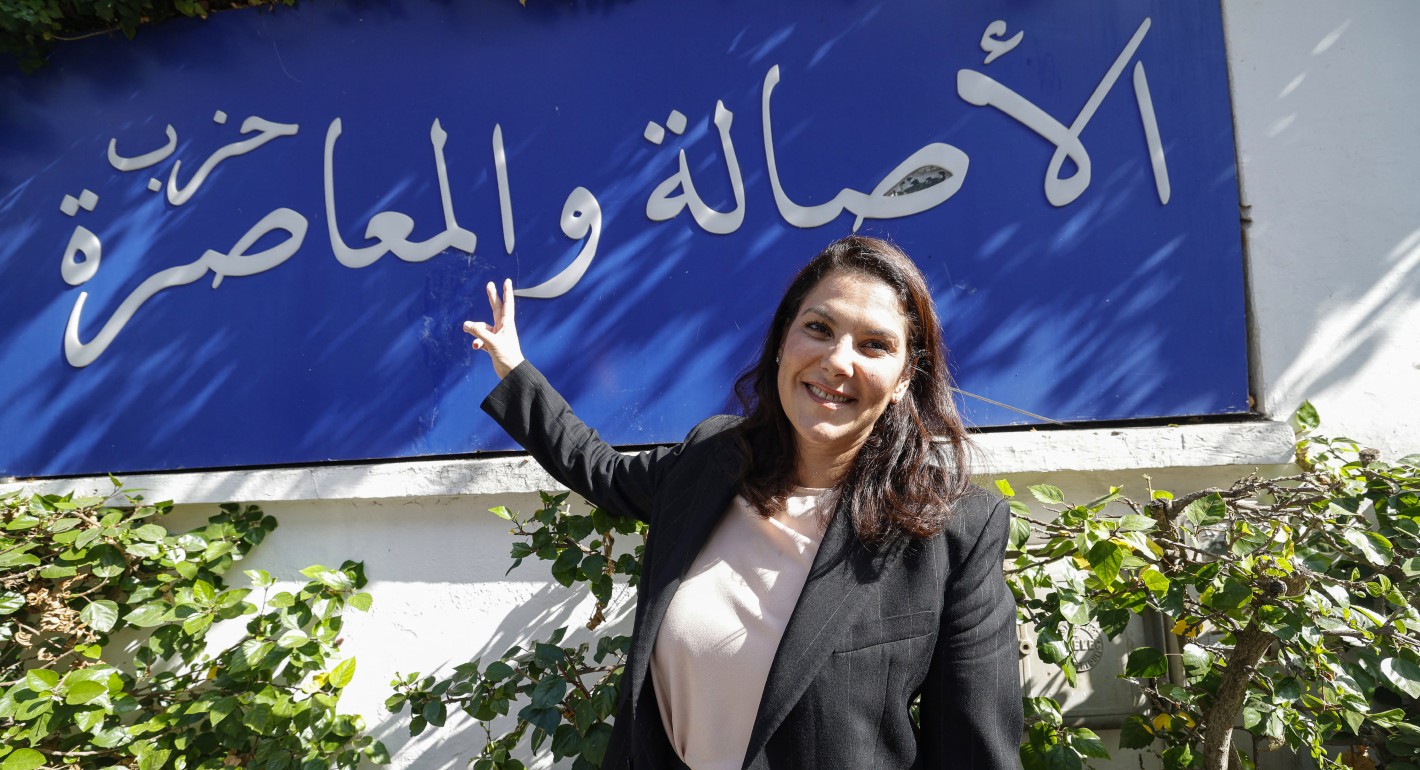
Fatima El Mansouri is the country’s first female prime minister. She’s also a privileged insider in a largely ceremonial position.
Sarah Yerkes

Over the past decade, China has moved from marginal player to major producer of all things batteries. The United States, Europe, and others are aiming to balance the market.

Milo McBride
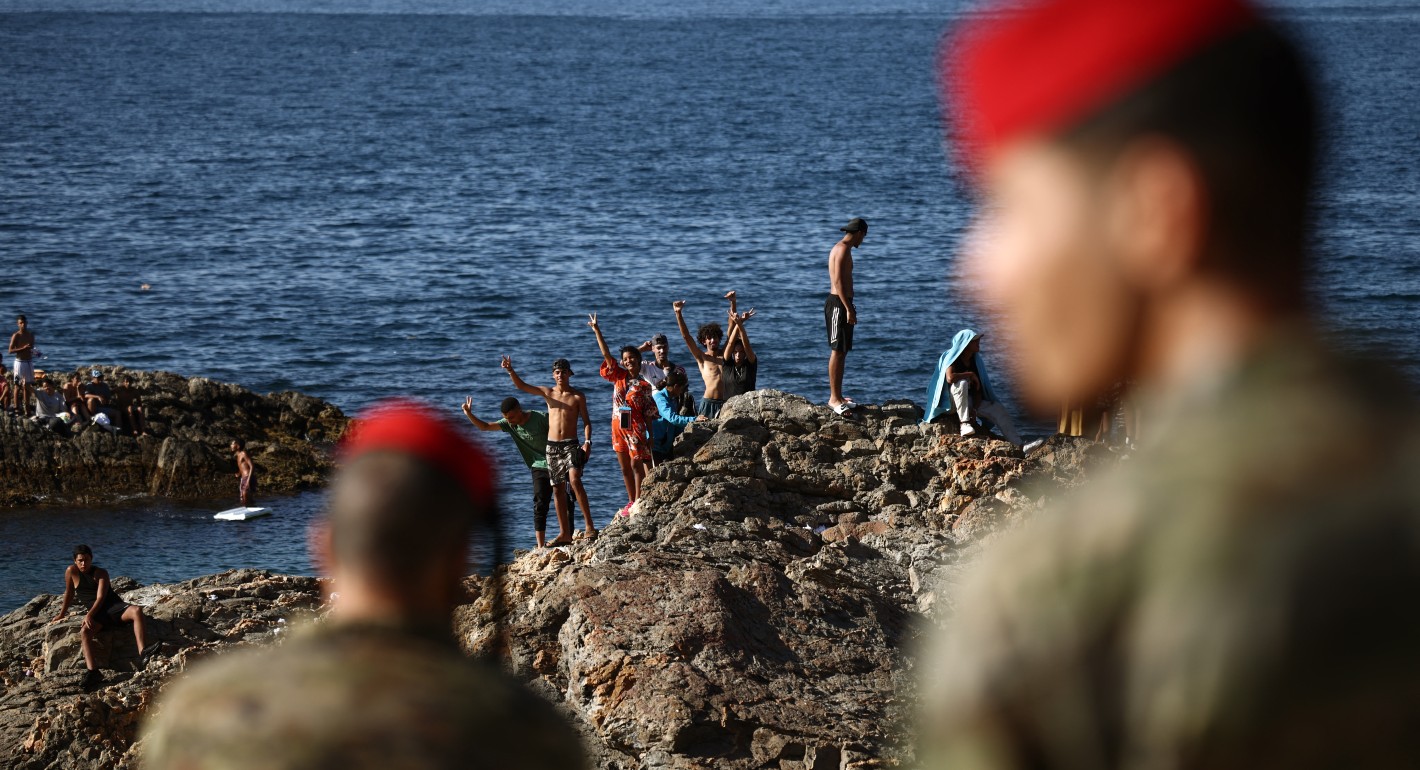
Most migrants may have left Ceuta, but the effects may linger.

Alejandro Martin Rodriguez, Sarah Yerkes
Saied’s main accomplishment has been to destroy a decade’s worth of democratic progress.
Sarah Yerkes