

Q&A
Eugene Rumer
{
  "authors": [
    "Eugene Rumer"
  ],
  "type": "commentary",
  "blog": "Emissary",
  "centerAffiliationAll": "dc",
  "centers": [
    "Carnegie Endowment for International Peace"
  ],
  "englishNewsletterAll": "ctw",
  "nonEnglishNewsletterAll": "",
  "primaryCenter": "Carnegie Endowment for International Peace",
  "programAffiliation": "russia",
  "programs": [
    "Russia and Eurasia"
  ],
  "projects": [
    "The Return of Global Russia: A Reassessment of the Kremlin’s International Agenda"
  ],
  "regions": [
    "Russia",
    "North Korea"
  ],
  "topics": [
    "Security",
    "Arms Control"
  ]
}
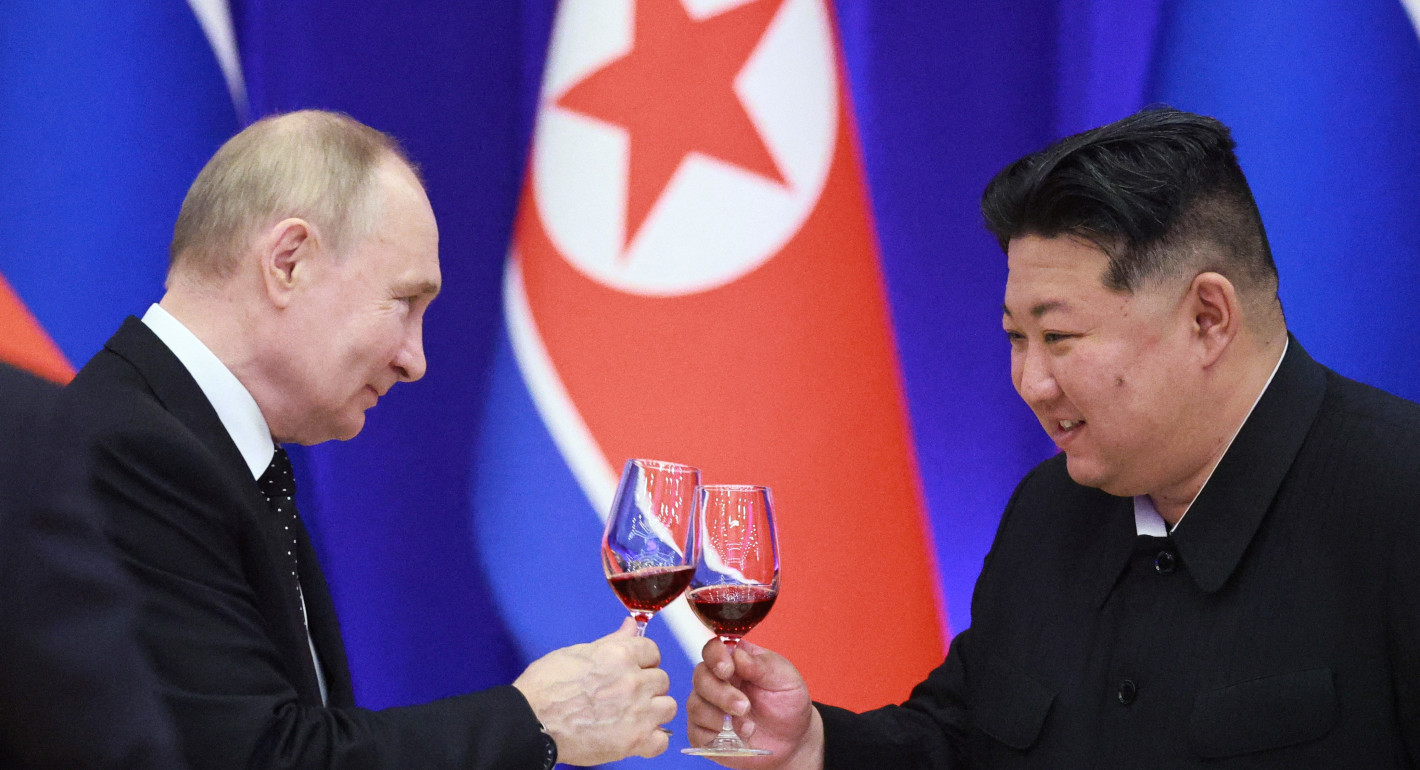
Putin and Kim toast during a reception in Pyongyang on June 19. (Pool photo via Getty Images)
It’s the logical next step since Putin’s quest for victory in Ukraine has stalled.
Twenty-four years ago, in July 2000, newly elected Russian President Vladimir Putin was greeted at the G8 summit in Nago, Japan, with a mixture of excitement and disbelief. On the way there, he stopped in Pyongyang and announced a would-be major breakthrough in arms control: the then-leader of North Korea, Kim Jong Il, had told him that North Korea was not interested in developing its own ballistic missile capability and would be content to use “exclusively” rockets from other countries “for peaceful exploration of space.” A month later, Kim made a mockery of Putin’s claim by announcing that what he had told the Russian leader was a joke.
The contrast between Putin then and now couldn’t be more striking. This week, Putin traveled to Pyongyang to embrace a fellow dictator and international outcast, blatantly undermining the efforts of the international community to contain North Korean nuclear ambitions that Russia, as a permanent member of the Security Council, had helped craft and pledged to enforce. In a show of solidarity with current North Korean leader Kim Jong Un, Putin promised to work with him to undermine those sanctions. Putin capped the visit by signing an agreement on strategic partnership with North Korea, including a mutual security assistance provision.
The security pact with North Korea is a new low for the Russian leader, already subject of an arrest warrant issued in March 2023 by the International Criminal Court for alleged war crimes in Ukraine. But it should not come as a surprise. The embrace of the North Korean dictator is the logical extension of Putin’s course after he launched his all-out invasion of Ukraine. He staked his entire tenure on victory in Ukraine. When triumph proved elusive, he went all in, hell-bent on winning even if it meant destroying his country; severing the critical diplomatic, security, and trade ties with the West; and weaponizing everything at his disposal.
Climate action, food security, and global nonproliferation efforts have become collateral victims of Putin’s war in Ukraine. Oil is the lifeline of the Russian war effort. Russia joined forces with Saudi Arabia to oppose an agreement to phase out oil at last year’s COP28. This is certain to be repeated at this year’s COP29 in Baku, Azerbaijan, the birthplace of the modern oil industry and Russia’s new best friend in the South Caucasus. Grain is a major Ukrainian export, and at the start of the war in 2022, Russia shut down Ukrainian grain exports in an effort to cripple the Ukrainian economy with no regard whatsoever for the threat of starvation in many African countries and the harm to their fragile economies. Ukrainian grain exports eventually resumed, but the damage was done.
Putin’s outreach to North Korea is particularly ominous when it comes to weapons. When his army ran short of artillery shells, he turned to Kim for help. The North Korean dictator obliged, sending an estimated 5 million artillery shells to Russia. What Kim is getting in return from “the dearest friend of the Korean people” is not known, but when Kim visited Russia in 2023, Putin took him to a space launch facility, which suggests that Russian assistance with North Korea’s missile program may be on offer.
This accelerating record of recklessness and disregard for international rules and norms has dealt a lasting blow to Russia’s relations with the West. To make up for it, over the course of the past ten years—after illegally annexing Crimea—Putin has implemented his own version of a pivot to Asia. In reality, it has amounted to a pivot to China only. During that decade, Russia has grown ever more dependent on this “no limits friendship.” In 2023, China accounted for 30 percent of Russian exports and nearly 40 percent of Russian imports. It is the key supplier of equipment to Russia’s defense industry, even as Chinese companies thread the needle carefully to avoid getting hit with U.S. sanctions for aiding the Russian war effort. And despite all the warmth of Putin’s bromance with Chinese President Xi Jinping, the Russian leader’s biggest ask of Xi—the contract for another major gas pipeline to China, to make up for the loss of the European market—remains elusive.
Elsewhere in Asia, Putin’s pivot has produced few results. For years, Japan’s late prime minister Shinzo Abe tried to improve relations with Russia and make progress toward settling the issue of the Northern Territories—four islands captured by Russia at the end of World War II. He met with Putin twenty-five times during his eight years as prime minister, and not only were all these overtures rebuffed, but Russia adopted an increasingly provocative military posture toward Japan, flying joint air patrols with China and violating Japan’s airspace on multiple occasions.
Putin’s second and final stop on his tour of Asia is Vietnam, another Cold War–era client. But if the visit to Hanoi is intended to diversify Russia’s economic ties or even show a measure of independence from China, which has a history of difficult relations with Vietnam, the Russian leader is wasting his time. Vietnam’s trade with Russia in 2023 was $5 billion, versus $230 billion with China. The outlook for Russian arms exports—long a staple of Moscow’s relationship with Hanoi—is bleak, as the Russian defense industry is focused on supplying its own army and Hanoi is looking for alternative suppliers.
Even in Beijing, the Putin-Kim embrace may not score the Russian leader any points. Just as in Washington, the prospect of the North Korean leader bolstered by Russia and engaging in even more provocative activities is likely to be a source of concern for China’s leadership. Beijing is wary of strengthening security ties between Tokyo, Seoul, and Washington and rejects the concept of the China-Russia-North Korea “northern triangle” for fear of encouraging closer U.S.-Japan-South Korea, or “southern triangle,” collaboration. Still, Xi may cast a wary eye on Putin’s overtures to Kim, but he is showing no sign of giving up on his Moscow friend.
Putin’s embrace of Kim is hardly a sign that the Russian leader is getting desperate. The war is not going well for him, but he is not about to give up. Putin’s economy has proved to be far more resilient than anyone had expected before the war, and his friends in Pyongyang, Tehran, and Beijing are helping him. Anyone betting against him should look at three decades of predictions of the imminent collapse of his new friend’s dynasty. The visit is a sign that he is going all in on his murderous course in Ukraine, and that the West is in an open-ended confrontation with a dangerous, determined, and capable rogue regime postured to make the Soviet Union during the Cold War look restrained by comparison.
Understand the world with the latest from our scholars around the world.
Director and Senior Fellow, Russia and Eurasia Program
Rumer, a former national intelligence officer for Russia and Eurasia at the U.S. National Intelligence Council, is a senior fellow and the director of Carnegie’s Russia and Eurasia Program.
Recent Work
Eugene Rumer
Eugene Rumer
Carnegie does not take institutional positions on public policy issues; the views represented herein are those of the author(s) and do not necessarily reflect the views of Carnegie, its staff, or its trustees.

The books, podcasts, and films that explain the world it made.

Andrew Leber
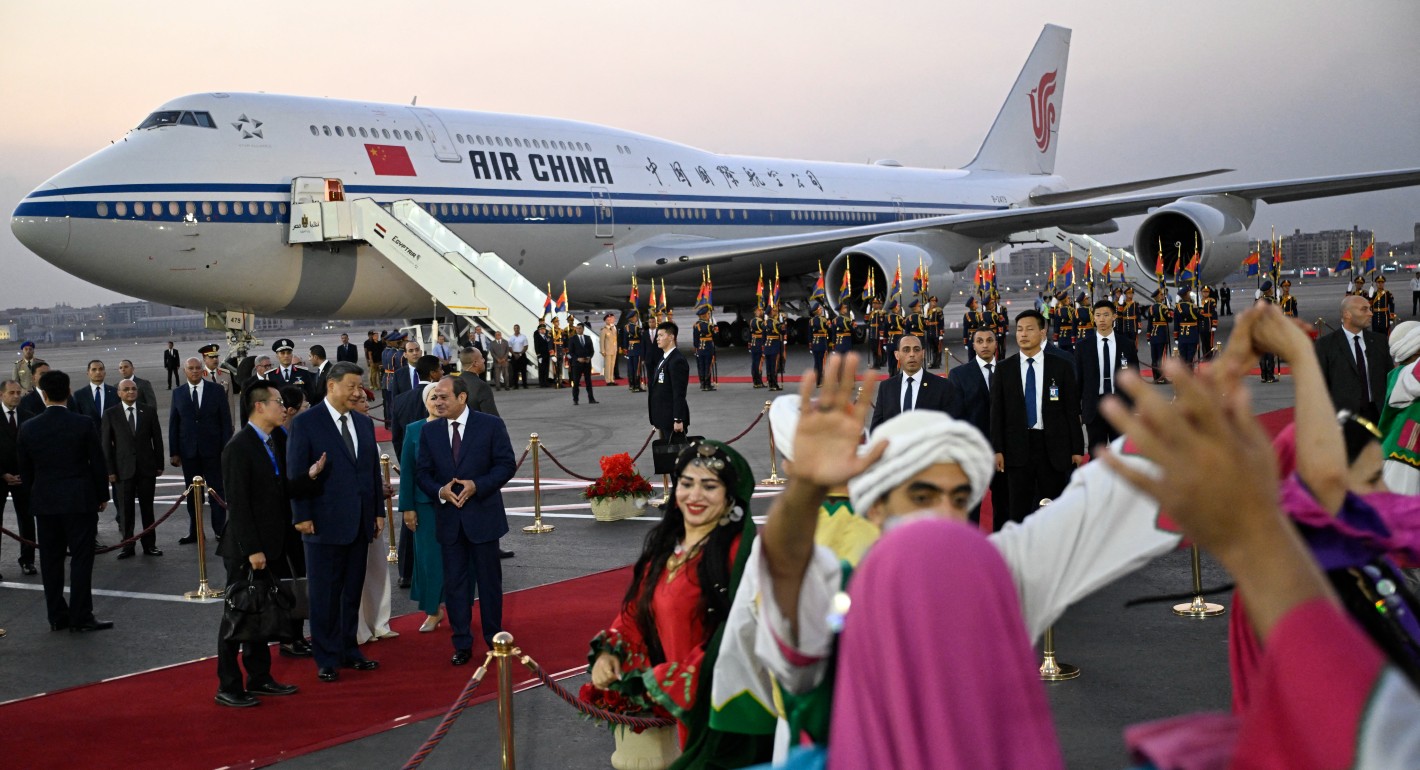
Amid celebrations of bilateral ties was a deeper focus on stability in the Middle East.

Amr Hamzawy
Xi, Putin, and other regional leaders are back-slapping in Bishkek, but the SCO has yet to answer the most serious questions about continental Asia's economic future.

Evan A. Feigenbaum
By focusing only on hard security, the Shield ignores the conditions that fuel cartel power.


Alejandro Martin Rodriguez, Kayly Ober
Media coverage suggests Kyiv’s fortunes have changed. That shift may be important, but it only goes so far.



Dara Massicot, Aaron David Miller, Andrew S. Weiss