

Research
Steve Feldstein, Shreya Joshi
{
  "authors": [
    "Steve Feldstein"
  ],
  "type": "commentary",
  "blog": "Emissary",
  "centerAffiliationAll": "dc",
  "centers": [
    "Carnegie Endowment for International Peace"
  ],
  "collections": [
    "U.S. Democracy in Comparative Perspective"
  ],
  "englishNewsletterAll": "democracy",
  "nonEnglishNewsletterAll": "",
  "primaryCenter": "Carnegie Endowment for International Peace",
  "programAffiliation": "DCG",
  "programs": [
    "Democracy, Conflict, and Governance"
  ],
  "projects": [],
  "regions": [
    "United States"
  ],
  "topics": [
    "Democracy",
    "Domestic Politics",
    "Civil Society"
  ]
}
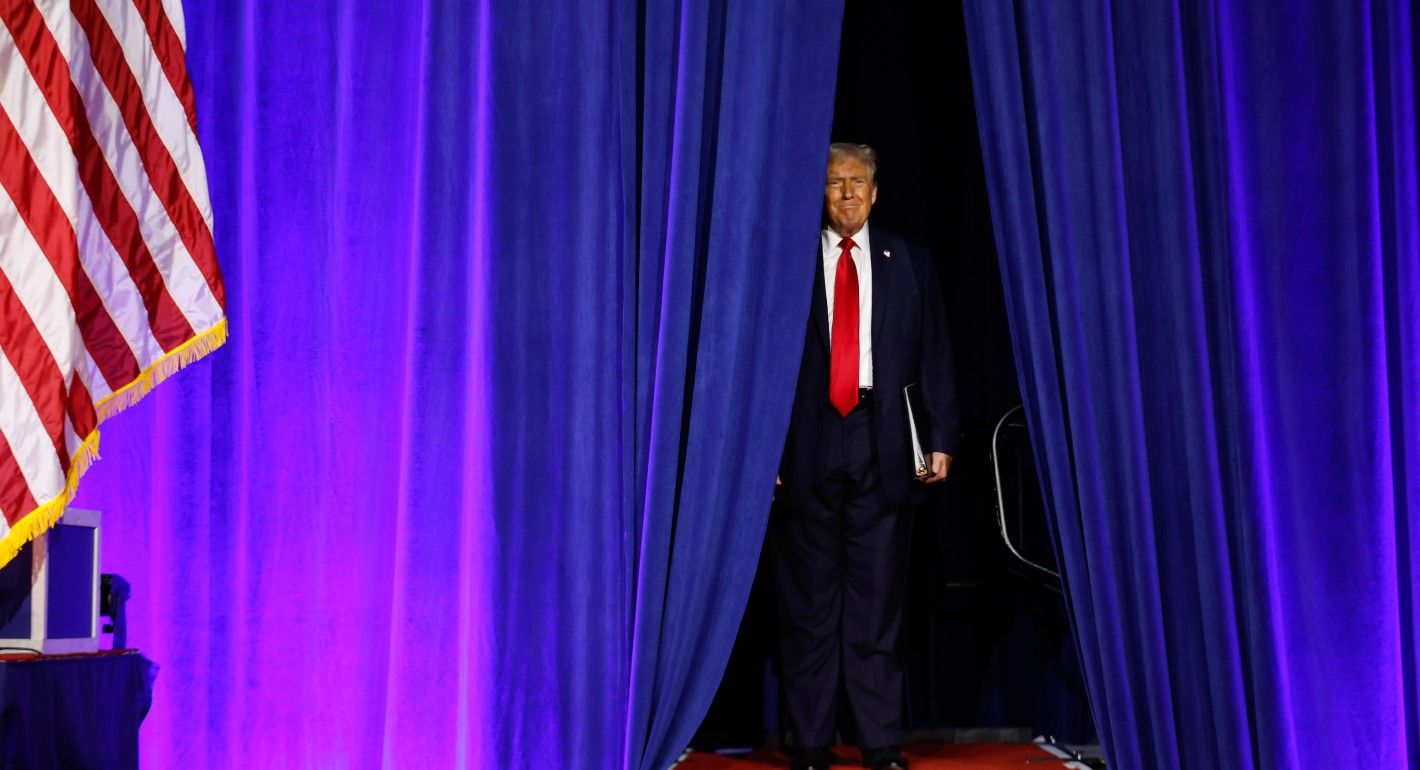
President-elect Donald Trump waits to take the stage on November 6 in West Palm Beach, Florida. (Photo by Chip Somodevilla/Getty Images)
Four crucial signals can inform us about whether America’s authoritarian descent is real.
The morning after Donald Trump’s resounding victory over Kamala Harris, The New York Times declared—with a headline blaring “America Hires a Strongman”—that the country “stands on the precipice” of an authoritarian level of governance not before seen in its 248-year history. Politico proclaimed, “Trump promised to get revenge. Here are his targets,” and proceeded to work through, line-by-line, an enemies list that Trump and his allies may implement. The New Yorker’s lead story featured a blood-red silhouette of Trump superimposed on a solid black background, with the headline “Donald Trump’s Revenge: the former President will return to the White House older, less inhibited, and far more dangerous than ever before.”
Many commentators take it as given that Trump’s second term will be a slide into autocratic rule. Indeed, Trump has done little to refute these claims. He openly admires strongman leaders and aspires to govern as one. In darker moments, he has fantasized about shooting his political enemies and to rule as a dictator on Day One.
This sets up a crucial question: Should we take Trump at his word? Will he actually lead America down an authoritarian path? Or is his rhetoric (wink, wink) a calculated attempt to troll his opponents for the entertainment of his supporters?
Strongmen come in different types. Some operate as commanding, powerful leaders who still function within democratic confines. Others embrace repressive methods and values in a bid to dismantle institutional checks and balances. The peril lies with leaders in this second category. As scholar Larry Diamond writes, the greatest risk to democracy is the empowerment of “strong leaders” who “sideline or undermine established institutions and constraints—Congress, the courts, the media, and the political opposition” in the name of getting things done. Heads of state across the world, from Recep Tayyip Erdoğan in Türkiye to Viktor Orbán in Hungary, have created blueprints for how to suffocate democratic pluralism and entrench autocracy.
This time around as president, how far will Trump go from bark to bite on the strongman spectrum? While we won’t know for some time where his presidency will take us, there are specific signposts that can inform us about whether America’s authoritarian descent is real. Here are four crucial signals.
First, will Trump weaponize the administration to persecute his political opponents? Democracies flourish when political actors believe they are better off playing by the rules of the game, even in defeat. According to the political scientist Adam Przeworski, the stakes for power must remain low, “so that people don’t fear electoral defeat so much that they seek other methods — such as coups — of reversing it.” The implication is that election winners are obligated to act with restraint against electoral losers and not foreclose the possibility that today’s losers could compete in and win future elections. When these conditions are met, democracies function well. But political persecutions fly against this understanding and relay a very different message: those who fail to win elections not only get shut out of power but also risk personal harm.
Trump’s comments have been ominous. NPR tallies that Trump made over 100 threats to “prosecute or punish perceived enemies” during his 2024 campaign. At a September rally, he suggested that Harris “should be impeached and prosecuted.” Last year, he promised to appoint a special prosecutor to “go after the most corrupt president in the history of the United States of America, Joe Biden, and the entire Biden crime family.” In the waning days of the race, he seemingly threatened to shoot Liz Cheney, a key figure opposing Trump after the January 2021 insurrection. If Trump follows through on these ideas, it will be an earth-shattering moment for U.S. democracy.
Second, will Trump erode the norm of a nonpartisan military and deploy active-duty troops for domestic policing purposes? The United States has a widely held belief that the military is nonpartisan and serves all citizens regardless of political affiliation. This norm safeguards American democracy by ensuring that the military won’t intervene for specific political outcomes. The Posse Comitatus Act, a post–Civil War law, codifies this norm and is designed to stop presidents from using the military to impose domestic control except for extreme emergencies. Yet during Trump’s first term, his administration had discussions about bringing in “regular, active-duty troops” to violently quell Black Lives Matter protests in 2020. Reportedly, opposition from Trump’s senior aides caused him to back down from pursuing this measure.
On the campaign trail, Trump has continued to toy with the idea of deploying troops against American citizens. Trump has threatened to bring in the military to police large American cities, saying in 2022, “In places where there is a true breakdown of the rule of law, such as the most dangerous neighborhoods in Chicago, the next president should use every power at his disposal to restore order — and, if necessary, that includes sending in the National Guard or the troops.” When asked in an interview with Time in April whether he would “override” the Posse Comitatus Act and use the military in his mass deportation plan, Trump replied, “Well, these aren’t civilians . . . I can see myself using the National Guard and, if necessary, I’d have to go a step further.” Notably, he has talked about using troops to subdue critics and opponents—“We have some sick people, radical left lunatics . . . and it should be very easily handled by, if necessary, by National Guard, or if really necessary, by the military, because they can’t let that happen.” Crossing this guardrail would be another sharp warning about a turn toward authoritarianism in the country.
Third, will Trump use the coercive powers of the state to restrict civil society? In healthy democracies, outside independent groups serve as a vital check on state power. These organizations monitor and track government abuses, expose corruption among public officials, promote political participation and awareness among citizens, and develop other crucial aspects of democratic life. Yet, even before Trump takes office, American civil society already faces mounting attacks at the state level. Carnegie scholar Saskia Brechenmacher writes that media outlets, watchdog groups, and advocacy organizations “are encountering legal and political intimidation tactics that are eerily similar to those used to harass and silence activists in Hungary, India, Türkiye, and other backsliding democracies.”
There are few signs that civil society harassment trends will abate under Trump. He has called for television networks such as CBS, ABC, and NBC to be stripped of their broadcast licenses after they aired unfavorable reports of him. He also promised to bring the Federal Communications Commission, which regulates such licenses, “back under presidential authority as the Constitution demands.” During his campaign, Trump discussed at least twice “scenarios for jailing journalists in the course of leak investigations and implied that the threat of a prison rape could get them to cough up their sources,” according to Vanity Fair.
As for civil society protests, he has pledged to use a heavy hand. Regarding Gaza war demonstrations, he told a gathering of donors, “One thing I do is, any student that protests, I throw them out of the country. You know, there are a lot of foreign students. As soon as they hear that, they’re going to behave.” In the same meeting, he also vowed that “if you get me reelected, we’re going to set that movement back twenty-five or thirty years.” The question is how much more pressure will accrue against civil society under Trump’s tenure—will it cross the line into something overtly repressive, akin to the coercion faced by organizations and activists in nondemocratic countries? If so, this would represent a further fraying of a major guardrail of American democracy.
Fourth, will Trump sideline institutions seeking to check his power? America’s founding fathers designed the Constitution to prevent any one actor or institution from centralizing excessive power in their hands. Despite a growing amount of authority that has accrued to the presidency at the expense of Congress and the courts, horizontal accountability between the branches remains an essential pillar of the U.S. system.
Trump’s tangles with the courts are well known: in the past four years, he faced significant legal peril from a slew of lawsuits and investigations. Because of his electoral victory, Trump’s legal jeopardy will end (at least at the federal level—the fate of state-level cases in Georgia and New York remains unclear). Justice Department officials are winding down federal criminal cases against Trump “to comply with long-standing department policy that a sitting president can’t be prosecuted.”
But that does not mean Trump won’t maintain a grudge against the judiciary and seek to hollow out the courts. In his first term, Trump habitually targeted individual judges or courts. He publicly disparaged Supreme Court Justices John Roberts and Sonia Sotomayor, and even the late Ruth Bader Ginsburg—asserting that Ginsburg “went wild” during his first presidential campaign and that “she said some things that were obviously very inappropriate.” Periodically, he has suggested changing the structure of the court system. In 2018, Judge Jon Tigar, a federal trial judge in San Francisco, ordered the administration to accept asylum claims no matter where migrants entered the United States. Trump then labeled Tigar “an Obama judge,” and said that the U.S. Court of Appeals for the Ninth Circuit, which is also headquartered in San Francisco, is “really something we have to take a look at because it’s not fair,” adding, “That’s not law. Every case that gets filed in the Ninth Circuit we get beaten.”
Trump has also attacked America’s federalist structure, politicizing his treatment of “blue” Democratic states. In his first term, he proposed legislation and enacted policies, from healthcare to taxes, that disproportionately favored citizens in red states and targeted individuals in blue states. In his final year in office, he repeatedly sent federal law-enforcement agents to Democratic cities, even when Democratic state and local leadership opposed the move. In one notorious instance, Trump sent federal personnel to Portland, Oregon, purportedly to protect a U.S. courthouse. Reports soon showed camouflaged federal agents without any identification shoving citizens into unmarked vehicles and hauling them off to jail.
Trump repeatedly attacked blue America on the 2024 campaign trail. He vowed to withhold federal funding from schools in blue states that teach certain topics, such as critical race theory or “gender ideology,” and he mused about investigating “Marxist local District Attorneys.” Said Connecticut Democratic Governor Dan Malloy, in the Trump era, “to be a Democratic governor or a Democratic-leaning state is to be punished.”
But the ultimate test of Trump’s fealty to the Constitution and institutional checks and balances would be whether he attempts to run for a third presidential term. Although that prospect is prohibited by the Twenty-Second Amendment, he has already floated the idea. At a May campaign rally in Dallas, he said, “FDR 16 years — almost 16 years — he was four terms. I don’t know, are we going to be considered three-term? Or two-term?” Some people in the crowd shouted in response: “Three.” Flouting electoral term limits is a longstanding autocratic tradition, embraced by leaders such as Russian President Vladimir Putin and Chinese President Xi Jinping. A bid by Trump to join the company of such leaders would be a pivotal moment for U.S. democracy.
These four issues are not the only potential signals of a substantive turn toward authoritarianism under the second Trump administration. He has floated other antidemocratic and illiberal ideas, including the mass deportation of millions of immigrants. But a significant erosion in any of these four areas would represent a genuine shift away from nearly 250 years of democratic governance in the United States.
With Trump, one always runs the risk of overinterpreting his words—attributing intentions beyond what’s actually contemplated. Yet we should also not make the mistake of underestimating the distortionary power of Trump’s rhetoric, especially within a form of government that can be easily subverted. The novelist Allen Drury observed: “Democracy is the most fragile thing on earth, for what does it rest upon? You and me, and the fact that we agree to maintain it. The moment either of us says we will not, that’s the end of it. It doesn’t rest on anything but us; it doesn’t rest on armed force, the moment it does it isn’t democracy.” As America enters a grim period in its democratic experiment, these are useful words to remember in our scrutiny of the president-elect.
The latest from Carnegie scholars on the world’s most pressing challenges, delivered to your inbox.

Director and Senior Fellow, Democracy, Conflict, and Governance Program
Steve Feldstein is a senior fellow and director of the Democracy, Conflict, and Governance Program at the Carnegie Endowment for International Peace. His research focuses on technology, national security, the global context for democracy, and U.S. foreign policy.
Recent Work
Steve Feldstein, Shreya Joshi
Steve Feldstein
Carnegie does not take institutional positions on public policy issues; the views represented herein are those of the author(s) and do not necessarily reflect the views of Carnegie, its staff, or its trustees.
Despite its flop at the box office, the film raises important questions for the climate community to answer.

Leonardo Martinez-Diaz
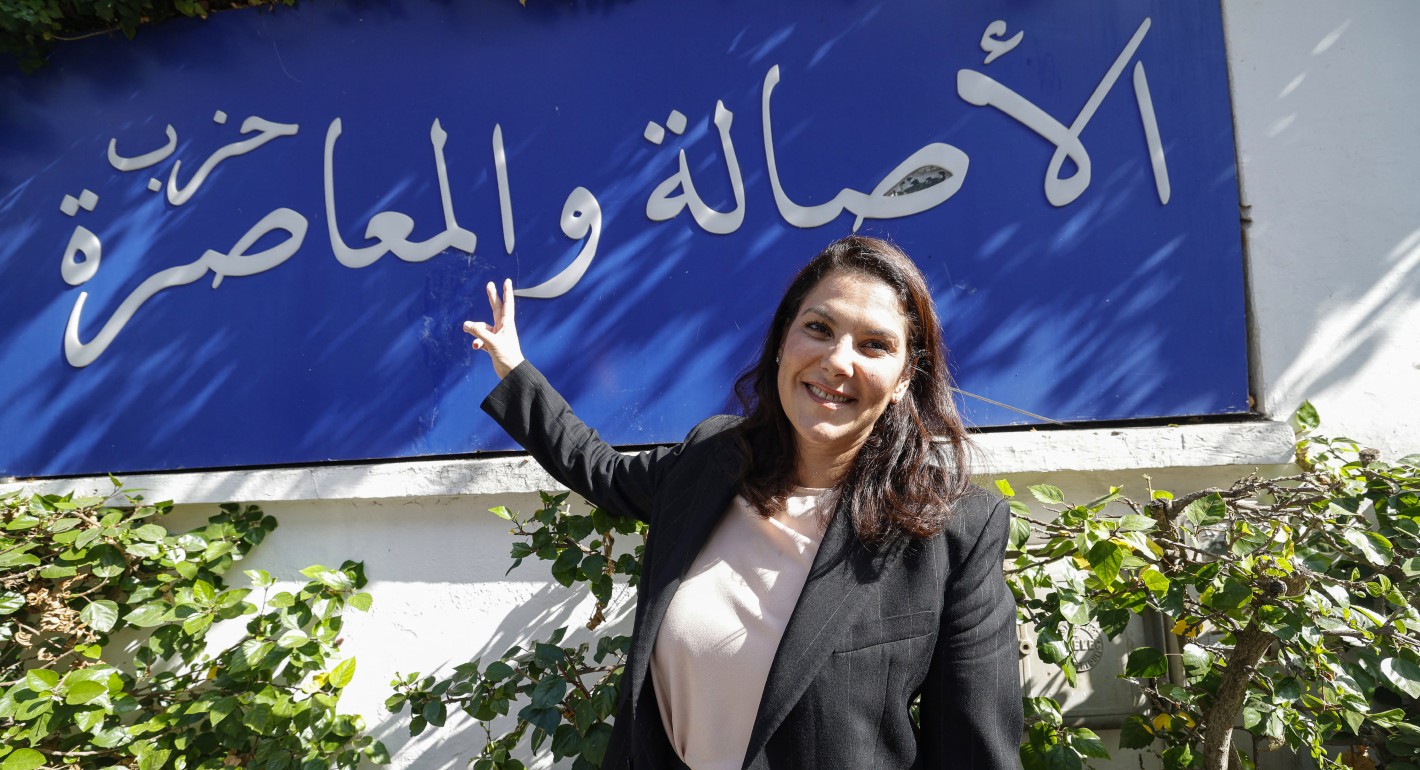
Fatima El Mansouri is the country’s first female prime minister. She’s also a privileged insider in a largely ceremonial position.

Sarah Yerkes

The acknowledgment has sparked fears of a new arms race with China and Russia.

Chris O’Meara

The summit may be remembered as a fatal blunder, when Washington, Beijing, and the AI industry collectively chose ceremony over action.

Jeffrey Prescott

The real test may come after the leaders leave the room.



Sheena Chestnut Greitens, Oriana Skylar Mastro, Yukon Huang, …