

Commentary
Egypt and Jordan are caught in the middle.
{
  "authors": [
    "Amr Hamzawy"
  ],
  "type": "commentary",
  "blog": "Emissary",
  "centerAffiliationAll": "dc",
  "centers": [
    "Carnegie Endowment for International Peace"
  ],
  "englishNewsletterAll": "menaTransitions",
  "nonEnglishNewsletterAll": "",
  "primaryCenter": "Carnegie Endowment for International Peace",
  "programAffiliation": "MEP",
  "programs": [
    "Middle East"
  ],
  "projects": [],
  "regions": [
    "Egypt",
    "Jordan",
    "Palestine",
    "Israel",
    "United States",
    "Middle East"
  ],
  "topics": []
}
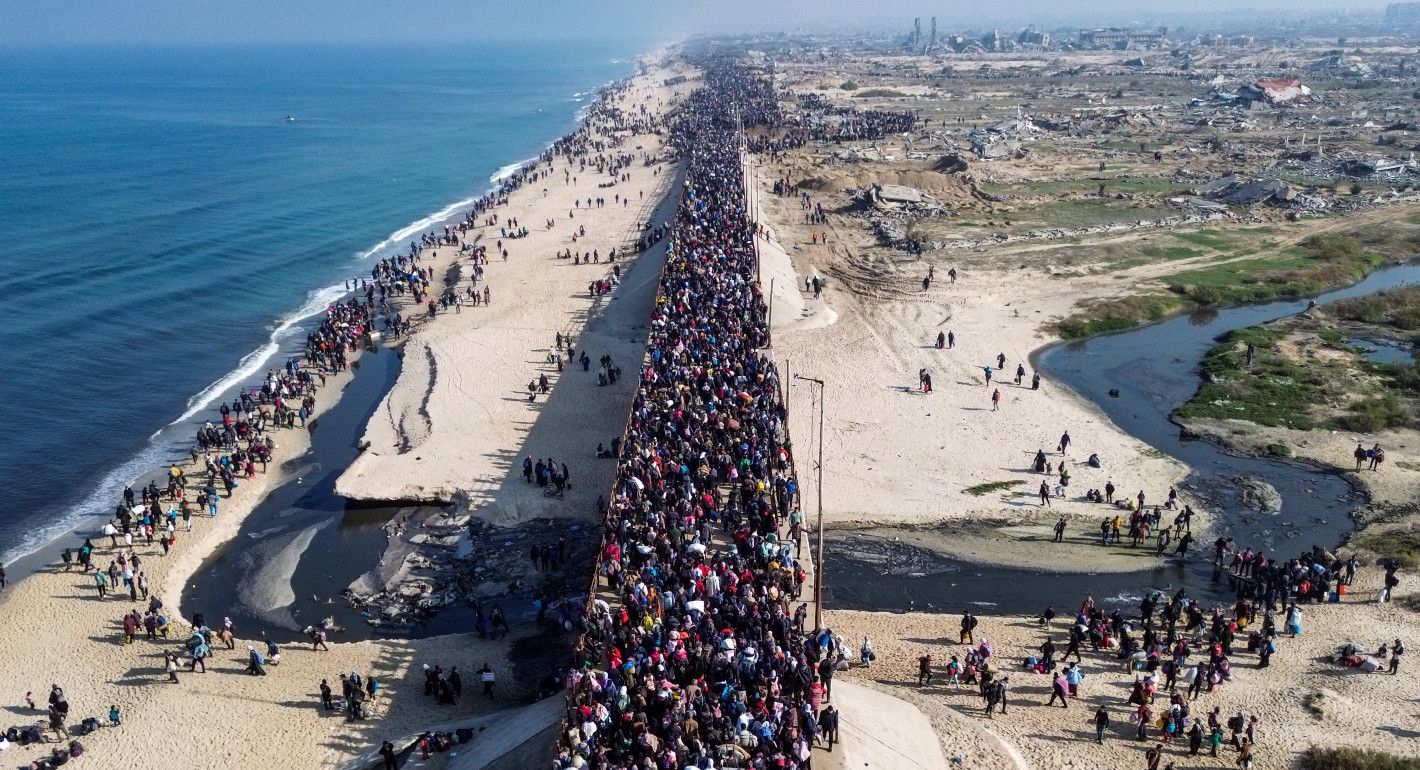
Displaced Palestinians walk toward Gaza City on January 27. (Photo by AFP via Getty Images)
Displacing the Palestinian population could bring about a dangerous mix of polarization, mistrust, and regional instability.
President Donald Trump’s recent remarks urging Egypt and Jordan to take in Palestinians to “clean out” Gaza have led to an uproar in the Middle East.
The remarks come at a time in which the ceasefire arrangements in Gaza and Lebanon are yet to stabilize and the much-needed humanitarian and reconstruction assistance is still struggling to reach those in need. The possibility of displacing the Palestinian population introduces a dangerous mix of polarization, mistrust, and regional instability that would play into Middle Eastern politics, undermine international law, and severely affect key Arab partners of the United States.
First, Trump’s remarks reward the Israeli far right for the war of destruction it waged against Gaza over the past fifteen months. They signal that the new U.S. administration has little interest in mobilizing aid or prioritizing mediation efforts between Israelis and Palestinians to transition from the current ceasefire into a long-term truce and a revival of peace negotiations centered around the two-state solution.
Instead, the remarks embrace the far-right government’s policy end goal: to make the Gaza Strip uninhabitable and to push Palestinians into Egypt and Jordan. The Israeli finance minister, Bezalel Smotrich, was quick to commend Trump’s remarks and to announce that the cabinet will work out a plan to “encourage” Palestinians to leave Gaza or not to return to it.
On a global level, forced displacement contradicts international laws and binding U.N. resolutions regarding the Israeli-Palestinian conflict, which recognize the right of the Palestinian people to self-determination in their territories. Indeed, taken as a policy statement, the “clean out” Gaza remarks annul Palestinian rights and encourage the crime of displacement. They represent a reversal of the Middle East peace process that has been built on the principle of land for peace, guaranteed in UN Security Council Resolution 242, and the right of the Palestinians to establish their independent state along the 1967-determined borders. Saudi officials indirectly responded to Trump by stating that the kingdom would only normalize its relations with Israel—a major push during Trump’s first term and in the Biden years—if the establishment of an independent Palestinian state is guaranteed.
In Egypt and Jordan—the two countries that Trump urged to take in more Palestinians—the pushback has been both massive and widespread, from government leaders, intellectuals, influencers, and regular citizens alike. Cairo and Amman immediately rejected the remarks as a violation of their national sovereignty and a denial of legitimate Palestinian rights. Statements, op-eds, interviews, and social media posts spanning the ideological spectrum have been united in their opposition to Trump’s remarks. As an Egyptian, I have taken particular note of the immediate support extended to the government of President Abdel Fattah al-Sisi by some of its fiercest critics in exile. When it comes to safeguarding the country’s sovereignty and territorial integrity, politics do not divide us Egyptians.
Egypt and Jordan both have peace treaties and diplomatic relations with Israel, making Trump’s remarks even more challenging, beyond the sovereignty and displacement implications. The two countries have kept their commitment to peace intact throughout the Gaza war and played a constructive role in mediating between Israelis and Palestinians (Egypt) or in containing the threats of an expanded regional war (Jordan). Cairo and Amman have upheld their commitment to peace as the strategic maxim of their foreign policies, even as the Israeli war in Gaza was ravaging the strip, enacting tragedy on its population, and threatening border security in the two countries. They have also signaled determination to work with partners to stabilize Gaza and the West Bank, and to work in the Middle East to revive peace and normalization talks.
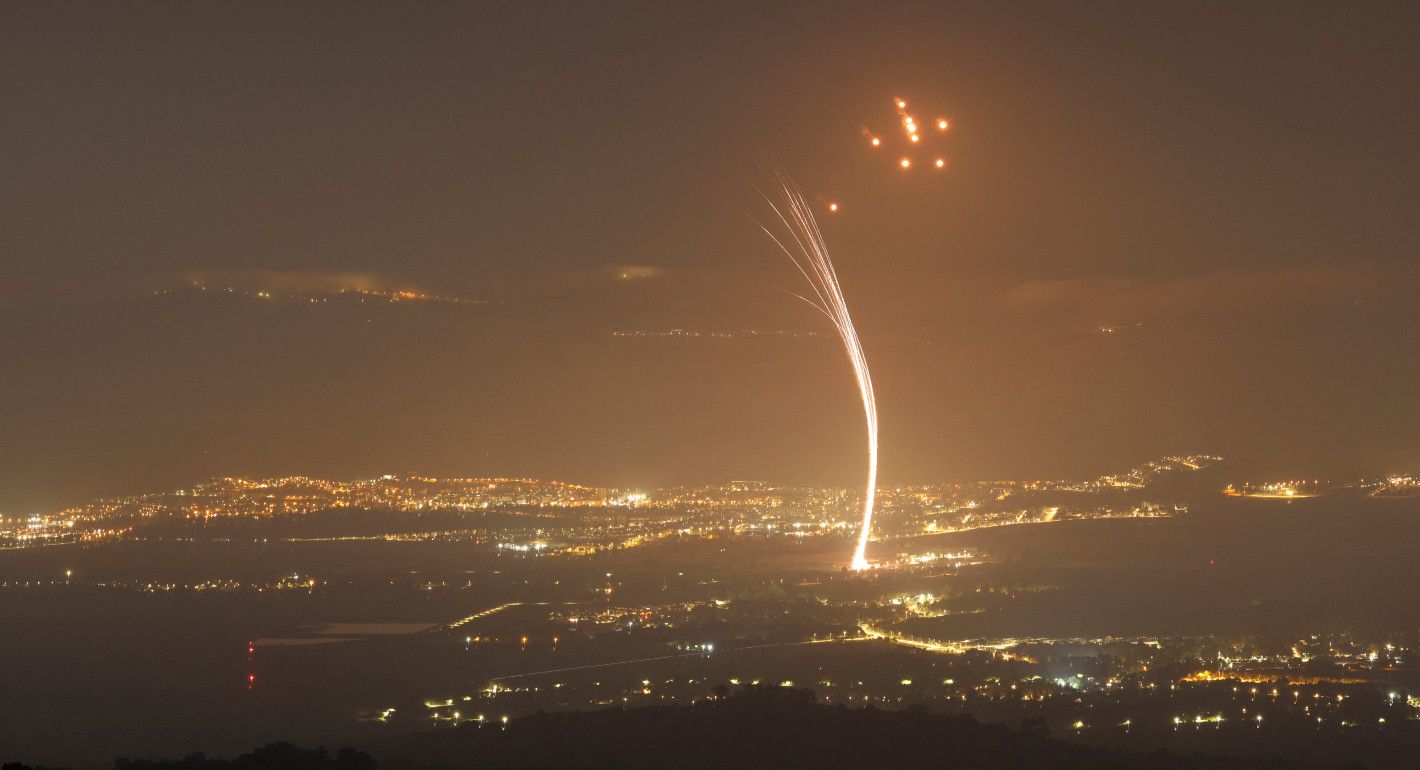
Egypt and Jordan are caught in the middle.
The two countries have traditionally maintained collaborative relations with the United States and constructively supported U.S. security efforts in the region, especially in the past fifteen months. During the war, Egypt worked with U.S. officials to implement security guarantees to deescalate along its borders with Israel—especially in the demilitarized Philadelphi Corridor. Jordan participated in the U.S.-led effort to shoot down Iranian drones and missiles in the two attacks launched by the Islamic republic against Israel.
Security cooperation with both Egypt and Jordan has always been an integral part of U.S. efforts in the Middle East, and jeopardizing it is in no one’s interest.
Finally, Trump’s remarks ignore the fact that the number one pillar of Egyptian and Jordanian policies has always been to protect their national sovereignty and not to accept any attempt to undermine it by means of displacing the Palestinian people. The second pillar has been Cairo and Amman’s longstanding support of Palestinian national aspirations and of the establishment of an independent Palestinian state.
The Trump administration would be ill-advised to embrace the displacement agenda of the Israeli far right at the expense of risking stable relations with Egypt and Jordan and undermining the prospects for reviving peace and normalization in the Middle East. Both would never happen without a legitimate solution for the Palestinian problem. Amid the aftermath of a horrible war, this may be one of the boldest policy outcomes yet.
The latest from Carnegie scholars on the world’s most pressing challenges, delivered to your inbox.

Director, Middle East Program
Amr Hamzawy is a senior fellow and the director of the Carnegie Middle East Program. His research and writings focus on Egypt’s and other middle powers’ involvement in regional security in the Middle East, particularly through collective diplomacy and multilateral conflict resolution
Recent Work

Alper Coşkun, Amr Hamzawy

Sarah Yerkes, Natalie Triche, Amr Hamzawy
Carnegie does not take institutional positions on public policy issues; the views represented herein are those of the author(s) and do not necessarily reflect the views of Carnegie, its staff, or its trustees.

Rubio’s recent visit brought welcome attention, but more capital requires governance changes that may be a hard sell for regional governments.

Jennifer B. Murtazashvili
Why Pakistan, Saudi Arabia, and Turkey are joining forces on regional security.
Alper Coşkun, Amr Hamzawy

Despite public disputes over trade and immigration, the strategic partnership’s foundations remain sturdy.

Sameer Lalwani

It signals a new era of tech diffusion and warfare.

Steve Feldstein

Despite its flop at the box office, the film raises important questions for the climate community to answer.

Leonardo Martinez-Diaz