

Research
- +5
Alper Coşkun, Fatih Ceylan, Tacan İldem, …
{
  "authors": [
    "Alper Coşkun"
  ],
  "type": "commentary",
  "blog": "Emissary",
  "centerAffiliationAll": "dc",
  "centers": [
    "Carnegie Endowment for International Peace"
  ],
  "collections": [
    "European Politics",
    "Türkiye and the World"
  ],
  "englishNewsletterAll": "ctw",
  "nonEnglishNewsletterAll": "",
  "primaryCenter": "Carnegie Endowment for International Peace",
  "programAffiliation": "EP",
  "programs": [
    "Europe"
  ],
  "projects": [],
  "regions": [
    "Türkiye"
  ],
  "topics": [
    "Democracy",
    "Domestic Politics",
    "Civil Society"
  ]
}
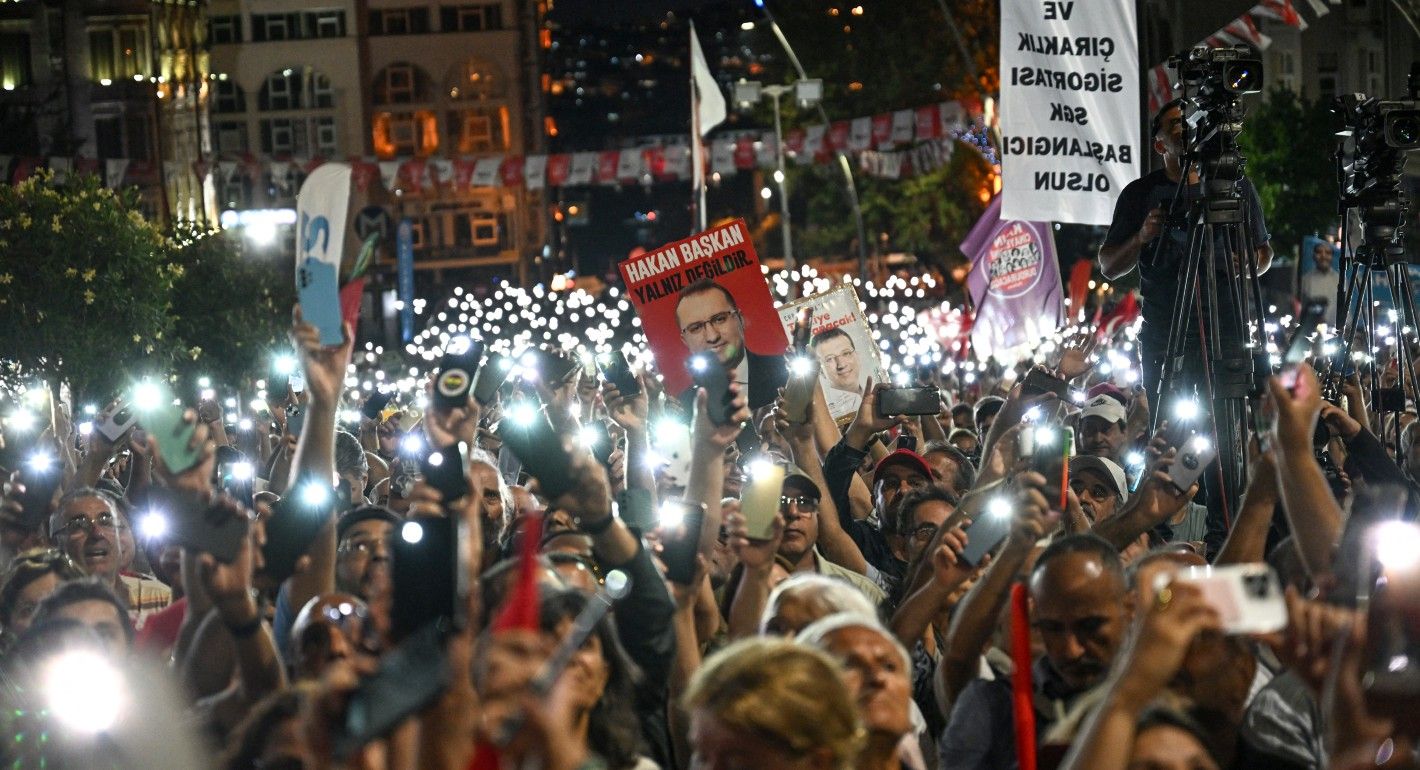
CHP supporters rally in Istanbul on August 27, 2025. (Photo by Ozan Kose/AFP via Getty Images)
The country stands at yet another important threshold of power consolidation and shrinking space for the opposition.
If you can’t beat them, find another way to contain them. This appears to be the logic behind the government-led campaign against Türkiye’s main political opposition, the Republican People’s Party (CHP). The push, which has dramatically escalated in recent months, has used court rulings and other measures designed to render the CHP dysfunctional and set the stage for a possible re-election campaign for President Recep Tayyip Erdoğan.
Türkiye’s next presidential and parliamentary elections aren’t scheduled until 2028, and Erdoğan, who will then be seventy-four, will be ineligible to run under constitutional term limits. But Erdoğan is widely assumed to be pursuing a legal pathway to re-election, which would require either amending the constitution or parliament calling early elections. The ruling coalition currently lacks the necessary votes for either option.
In addition, the CHP’s popularity, coupled with the decline of Erdoğan’s Justice and Development Party (AKP), represents a major challenge to the president’s presumed re-election quest. After more than two decades of uninterrupted rule, the AKP no longer seems capable of reinventing itself and has lost much of its earlier appeal as an inspiring force for positive change. A prolonged period of economic hardship and persistent inflation, coupled with a significantly constrained political environment, has eroded its support and left it reliant on coalition arrangements with smaller parties. In contrast, the CHP, notwithstanding significant challenges of its own, has managed to survive repeated legal battles while broadening its base through political activism that has resonated with large segments of the population, particularly younger voters.
Sustaining electoral legitimacy matters for Türkiye’s ruling party, even after it led the country’s transition to a centralized presidential system, prompting executive aggrandizement and a gradual shift toward one-man rule. As a result, the government’s recent measures directed at the CHP seem to target the party’s internal divisions, as well as making its leadership less capable of mounting credible political opposition to the AKP. These actions—ostensibly legal—have seemed calibrated not to eliminate the CHP entirely, but to reduce its capacity to function, while preserving the appearance of political pluralism.
CHP’s popular presidential candidate, Istanbul Mayor Ekrem Imamoğlu—who has emerged as a key political figure by defeating the AKP in four municipal elections—has been under arrest since mid-March on charges of corruption and financial wrongdoing. As he has awaited indictment without parole, the number of imprisoned CHP mayors has risen to fourteen, alongside more than 200 party and municipal officials. In contrast, AKP-controlled municipalities have not been subjected to the same type of legal scrutiny, even where similar allegations have surfaced.
The CHP also faces the prospect of court-ordered changes to its elected leadership, following claims of irregularities in party congresses. Earlier this month, a district court annulled the party’s Istanbul provincial congress under similar charges. The court ousted elected CHP officials and appointed trustees who are affiliated with the CHP but in opposition to the party’s current leadership. The move, which enabled appointed officials to frequent the Istanbul office under heavy police protection while elected officials are denied entry, has been widely interpreted as a precursor to action against the party’s top leadership. That case has now been delayed until October. Meanwhile, in a show of force and defiance, the main opposition continues to take to the streets in mass rallies, the latest of which drew tens of thousands of supporters to Ankara’s streets.
Türkiye’s democratic resilience is going through a significant stress test, as the country stands at yet another important threshold of power consolidation and shrinking space for the opposition. The NATO ally has a democratic tradition of competitive multiparty politics in place since the mid-1940s. But its current playbook bears similarities to patterns observed in countries such as Hungary, where judicial mechanisms and state resources have been used to weaken the integrity of the opposition. Some recent polls cited in Turkish media suggest that roughly 60 percent of the population view the legal actions against the CHP as politically motivated, while over 80 percent express doubts about the impartial application of justice. Interestingly, there are also unconfirmed reports of unease among some segments of the AKP, fearing popular backlash.
Erdoğan, modern Türkiye’s longest serving leader, is also risking his legacy. Erdoğan has often expressed pride in overcoming the arbitrary restrictions imposed by unelected figures in his political career—particularly when he spent four months in jail in 1998 on charges of inciting hatred during his tenure as mayor of Istanbul. (In a twist, his political beginnings are eerily similar to Imamoğlu, his CHP rival and the uncontested future leader of the main opposition.) In the early 2000s, Erdoğan spearheaded sweeping democratic reforms that culminated in the European Union’s decision to open membership negotiations with Türkiye.
That legacy stands in stark contrast with his current reputation as an increasingly authoritarian leader. It also makes it counterintuitive for him to be overseeing the dismantling of the main opposition and Türkiye’s descent into illiberal democracy. Yet that seems to be his current direction of travel, as he remains distanced from his reformist beginnings.
How these dynamics unfold will be instrumental in shaping Türkiye’s future, as well as its place in the world. The preferred alternative would entail rekindling Türkiye’s democratic traditions and rule of law practices. It would require fully respecting elected officials, and foremost, faithfully honoring the will of the people. For anyone, including Erdoğan, recognition as someone honoring these principles should be the preferred option and the legacy to strive for. It is also what the Turkish people expect and deserve from their leadership.
The latest from Carnegie scholars on the world’s most pressing challenges, delivered to your inbox.

Senior Fellow, Europe Program
Alper Coşkun is a senior fellow in the Europe Program and leads the Türkiye and the World Project at the Carnegie Endowment for International Peace in Washington, DC.
Recent Work
Alper Coşkun, Fatih Ceylan, Tacan İldem, …

Sophia Besch, Alper Coşkun, Nate Reynolds, …
Carnegie does not take institutional positions on public policy issues; the views represented herein are those of the author(s) and do not necessarily reflect the views of Carnegie, its staff, or its trustees.

Despite its flop at the box office, the film raises important questions for the climate community to answer.

Leonardo Martinez-Diaz
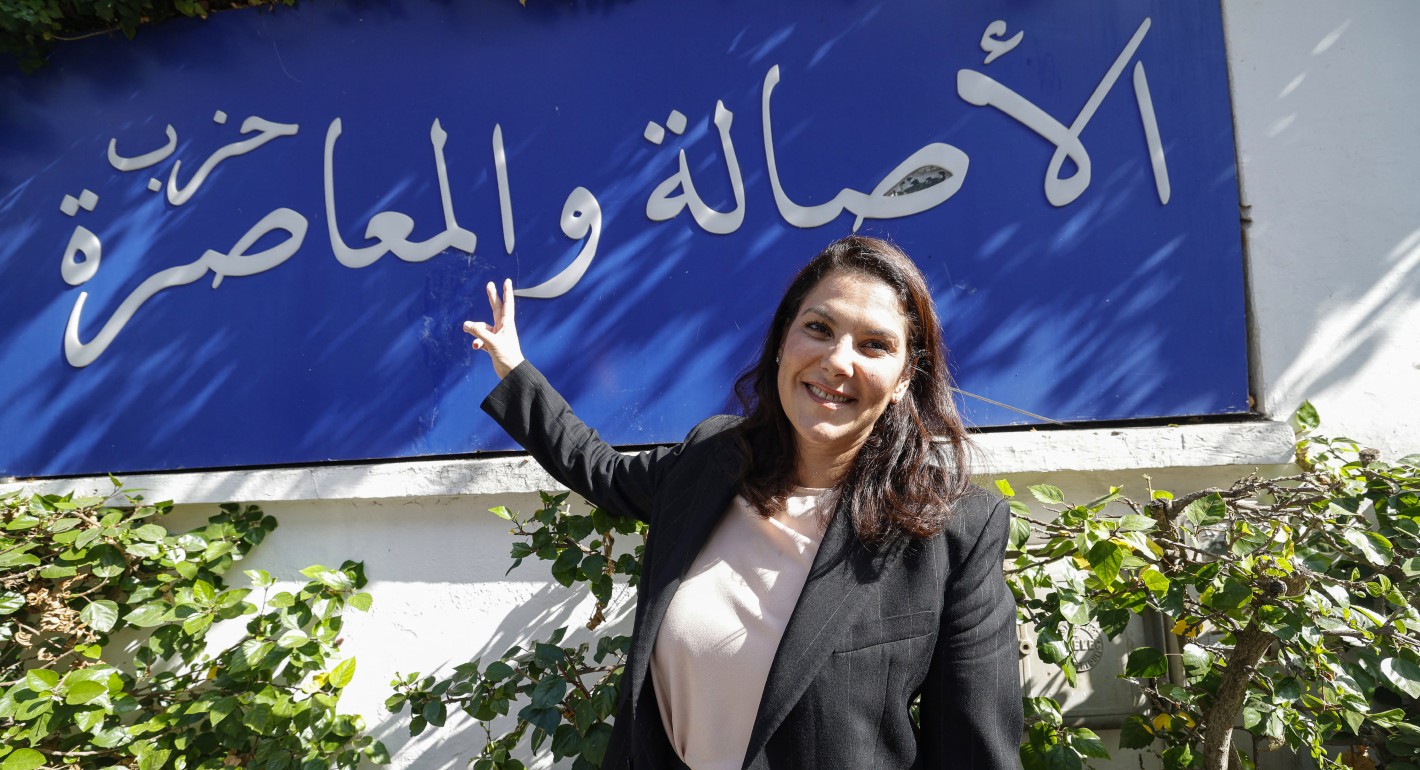
Fatima El Mansouri is the country’s first female prime minister. She’s also a privileged insider in a largely ceremonial position.

Sarah Yerkes
Why governance of rapidly evolving technology will be distributed and complex.


Stewart Patrick, Scott Singer

Washington’s decision to support some UN functions while letting others wither is pulling the organization apart at the seams.
Stewart Patrick, Theodore Zaritsky

The books, podcasts, and films that explain the world it made.

Andrew Leber