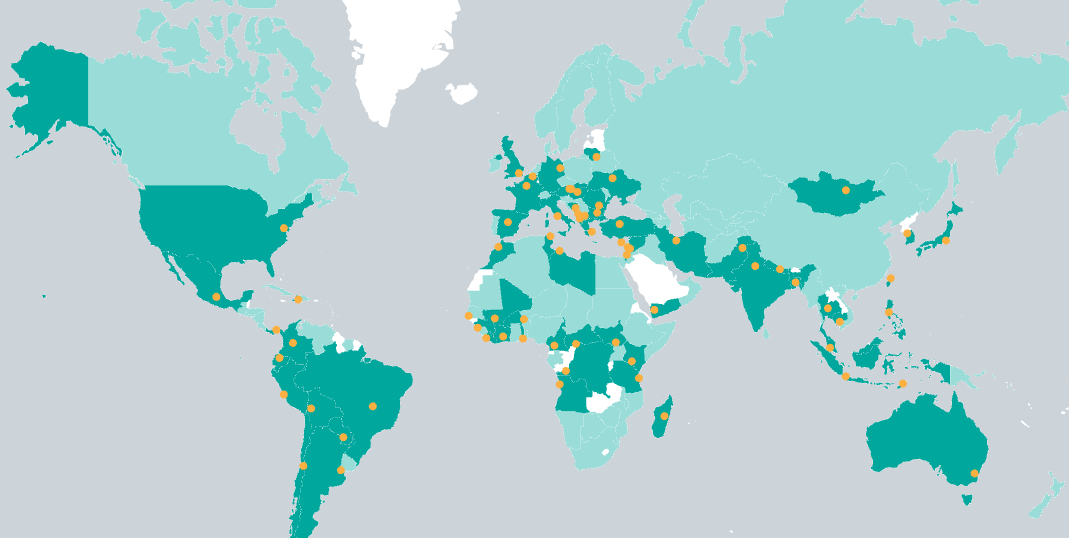
Anti-government protests flooded streets across the globe in 2025, from Sub-Saharan Africa to Eastern Europe to Southeast Asia. New demonstrations emerged in more than seventy countries. Of those catalogued in Carnegie’s Global Protest Tracker, twenty-seven occurred in countries ranked “partly free” with respect to people’s access to political rights and civil liberties, twenty-six “free,” and seventeen “not free.” Anger against government corruption fueled a sizeable portion of the protests catalogued in the Global Protest Tracker this year. The two other main triggers were antidemocratic overreach and economic hardship.
Specific corruption scandals or allegations sparked demonstrations in multiple regions. In March, North Macedonia erupted in protests condemning the alleged corruption and bribery that led to a deadly nightclub fire. Over 45,000 people in Spain took to the streets to criticize Prime Minister Pedro Sánchez for the various political and corruption scandals surrounding his administration. The persistent issue of corruption in the Gambia brought out protesters who demanded government accountability. The Gen-Z protests in Nepal, which garnered significant media attention, were also spurred by issues of nepotism and corruption, and eventually led to Prime Minister K. P. Sharma Oli’s resignation. Around the same time, the Philippines saw Gen-Z protests against a corruption scandal involving the country’s flood control projects.
Other corruption-related protests were triggered less by specific scandals or allegations and more by simmering underlying public anger over corruption and other forms of government malfeasance. Mongolia’s protests in May initially emerged to condemn the lavish spending of the son of Prime Minister Luvsannamsrain Oyun-Erdene, but they developed into a broader anti-corruption movement that ousted Oyun-Erdene. In Indonesia, Gen-Z protests against parliament members’ high salaries were partially driven by longstanding anger toward perceived government corruption. Morocco’s Gen-Z protests were similarly fueled by anger over corruption, though they initially stemmed from Moroccans’ frustration over inappropriate government spending and the neglect of government services. In Mexico, the death of Uruapan Mayor Carlos Alberto Manzo triggered nationwide demonstrations against corruption and violent crime. The ongoing protests in Serbia, which began in November 2024 over the Novi Sad train station roof collapse, evolved into anti-corruption protests and general protests against the government of President Aleksandar Vučić.
Antidemocratic overreach by governments, a major theme of protests in 2024, continued driving demonstrations this year. Fury over broad governmental claims to expanding power triggered many protests. In Indonesia, students and pro-democracy activists protested revisions to the nation’s military law, which permitted military officers to serve in civilian government posts and thus widened the military’s role in civilian affairs. Central African Republic President Faustin-Archange Touadéra’s bid for a third term in upcoming elections mobilized thousands who opposed his extended rule. Mali experienced protests after the military junta extended its rule for another five years and dissolved all political parties. The removal of presidential term limits in Togo triggered deadly protests, led by Gen-Z and other activists angered by Faure Gnassingbé’s extended rule and concerned over the state of democracy in the country. In Ukraine, thousands took to the streets over a law that they feared would undermine the independence of anti-corruption agencies by placing them under the supervision of the presidentially appointed prosecutor general. Brazil’s “shielding” bill, which provided greater immunity to lawmakers, also prompted enraged citizens to demonstrate against its passage. The United States experienced multiple protests throughout the year against the perceived authoritarian actions of President Donald Trump and his administration.
Governmental targeting of political opposition or civil society also pushed citizens to the streets in various places. Anger over attacks on internal dissenters or opposition figures triggered protests in Israel over the dismissal of Shin Bet chief Ronen Bar, in Ivory Coast over the ban of opposition candidates in the 2025 presidential election, and in Türkiye over the arrests of various opposition figures (which have been ongoing since 2024). Threats to civil rights and liberties prompted numerous demonstrations, such as those in Slovakia criticizing an NGO bill that held similarities to Russia’s foreign agent law, in the United Kingdom decrying a Supreme Court ruling against transgender rights, and in Hungary denouncing the ban against Pride demonstrations and criticizing a foreign funding bill that also resembled Russia’s foreign agent law.
Economic hardship also drove many demonstrations in 2025. Several countries experienced protests over unpopular austerity measures, including Belgium, Indonesia, France, Slovakia, Romania, and Argentina. Frustrated by the ongoing economic struggles in their countries, demonstrators argued that the various reforms—which impacted pensions, education, and worker benefits—would only worsen the existing hardships. Demonstrators in other countries protested generally against high costs of living. In Greece and Chile, workers demanded greater protections and benefits from the government. In Angola and Ecuador, increased fuel prices drove hundreds to thousands of disgruntled protestors to the streets. Spain’s high rent prices, exacerbated by the region’s tourism boom, triggered massive protests from aggrieved residents who demanded government action in increasing affordable housing.
Some protests that began in 2024 sustained their momentum throughout 2025. The anti-corruption protests in Serbia and the election- and EU accession-related protests in Georgia have occurred almost daily since their emergence last year. Other protests, such as those in Türkiye against the arrest of opposition figures, in France and Belgium involving farmers and the EU-Mercosur trade agreement, and in Israel against ultra-Orthodox conscription, continued intermittently throughout 2025 in response to major government actions. Protests against the Israeli government regarding the war in Gaza also continued to erupt every month across the globe, from Italy and Morocco to Malaysia and Australia.
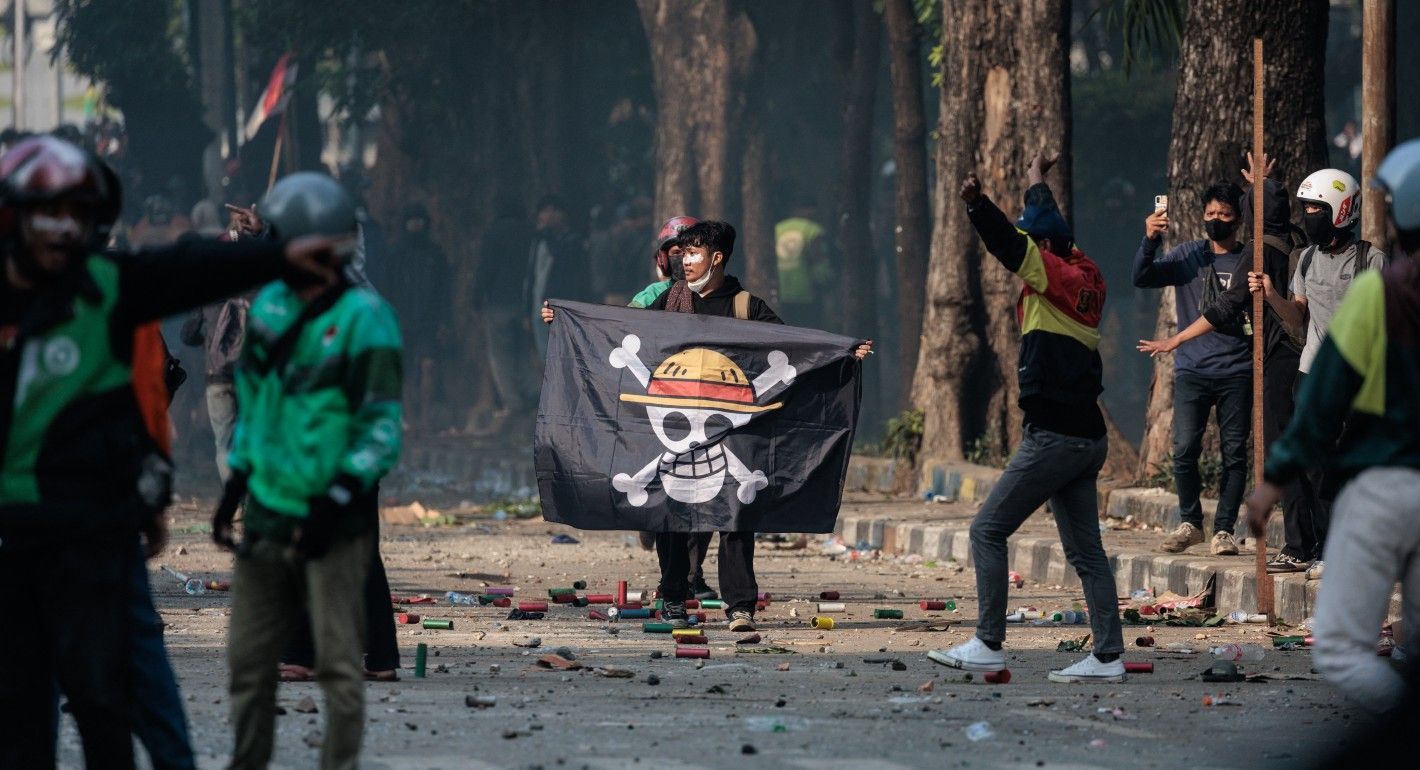
Some observers have seized on the surge of youth-led protests in countries such as Indonesia, Nepal, the Philippines, Peru, Timor-Leste, Madagascar, Morocco, and Mexico during the latter months of 2025 to put forward the idea of a rising global “Gen-Z movement.” Although this cluster of youth-led protest movements is significant, it is not a new trend. Young people led numerous protests throughout the year, including in Serbia, Mongolia, and Togo, and more than twenty significant anti-government protests in 2024. Looking back even further, data from the Global Protest Tracker reveals that the rates of youth-led protests between 2017 to 2019 were similar or higher to the rate of youth-led protests in 2025. As such, while it is noteworthy that the 2025 Gen-Z protests have drawn inspiration from one another and united under common symbols—such as the pirate flag from the Japanese anime One Piece —it remains uncertain whether they will combine to constitute a substantially interconnected wave of protests.