

Article
Middle powers have an important role to play in reviving international cooperation at this dawning moment of a new multipolar world.
{
  "authors": [
    "Sophia Besch",
    "Steve Feldstein",
    "Stewart Patrick",
    "Alicia Wanless"
  ],
  "type": "questionAnswer",
  "blog": "Emissary",
  "centerAffiliationAll": "dc",
  "centers": [
    "Carnegie Endowment for International Peace"
  ],
  "collections": [
    "European Politics",
    "Building Resilient Multilateralism",
    "Global Democracy",
    "The Middle Power Moment?"
  ],
  "englishNewsletterAll": "democracy",
  "nonEnglishNewsletterAll": "",
  "primaryCenter": "Carnegie Endowment for International Peace",
  "programAffiliation": "DCG",
  "programs": [
    "Democracy, Conflict, and Governance",
    "Europe",
    "Global Order and Institutions",
    "Technology and International Affairs"
  ],
  "projects": [],
  "regions": [
    "United States",
    "Canada",
    "Europe"
  ],
  "topics": [
    "Foreign Policy",
    "Security",
    "Global Governance"
  ]
}
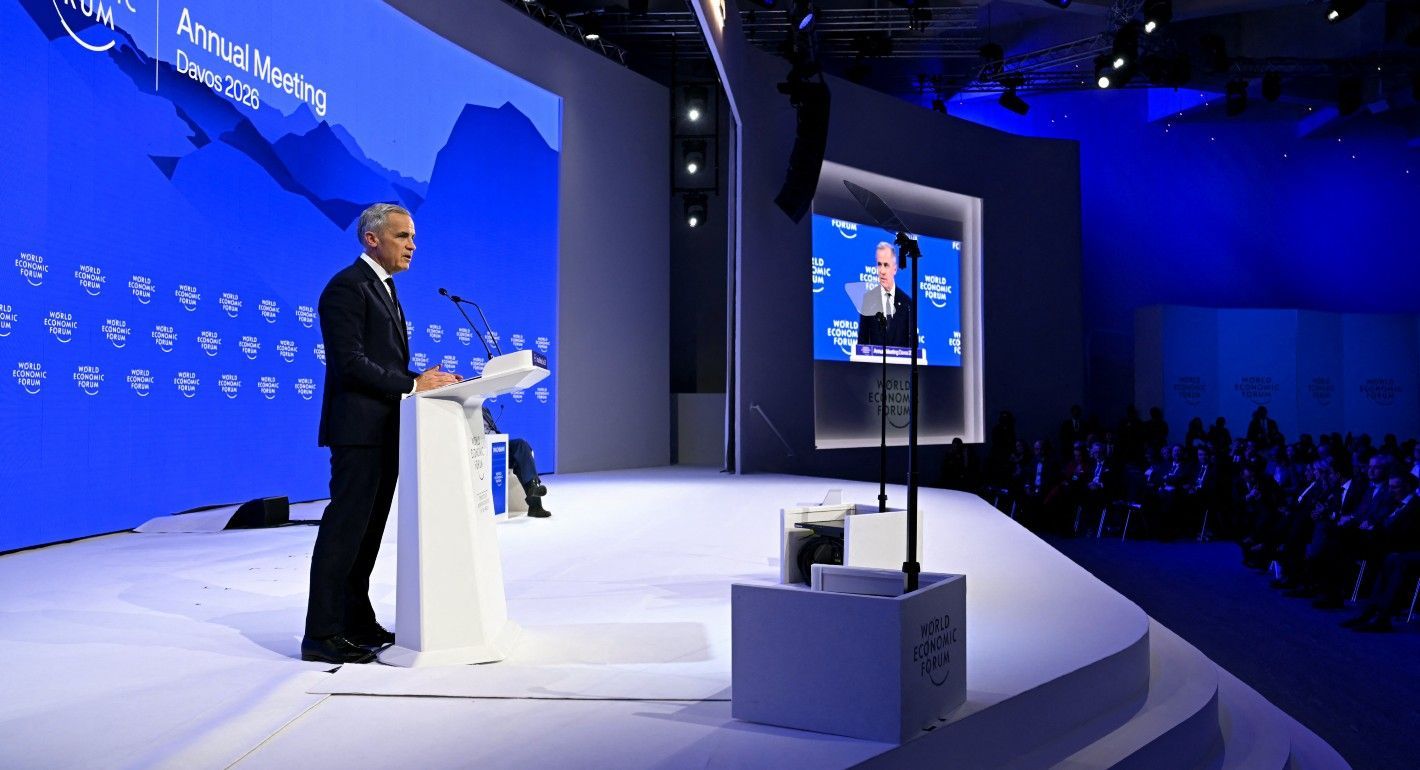
Carney speaks during the World Economic Forum annual meeting in Davos on January 20, 2026. (Photo by Fabrice Coffrini/AFP via Getty Images)
And how they can respond.
What was so notable about Canadian Prime Minister Mark Carney’s speech at Davos?
Alicia Wanless: Carney’s speech was uncharacteristically candid both for Davos and a Canadian. Often, leaders give sales pitches for investments into their countries, and Carney did a bit of that, but he also articulated what many leaders must have been quietly thinking—that the world has fundamentally changed, and realism is required to cope.
Stewart Patrick: The most striking thing about Carney’s provocative address was that it was the first time that the leader of a close U.S. ally had the courage to stand up to President Donald Trump and the guts to say enough is enough. He avoided the euphemisms, weasel words, and sycophantic appeals that Western governments have been using to register their disquiet with the U.S. president’s imperialistic turn. He laid out, for all to hear, the catastrophic implications of Washington’s current policies for global order and signaled that at least one erstwhile ally is prepared not only to hedge against an unpredictable and predatory United States, but if need be to balance against it.
Steve Feldstein: One line sticks out to me: “You cannot live within the lie of mutual benefit through integration, when integration becomes the source of your subordination.”
Under Trump, the United States has wielded coercive economic tools against numerous foes—adding new energy sanctions against Russia, ramping up financial embargoes against Iran, and implementing tech restrictions against China. Yet Trump has targeted America’s closest allies more aggressively. He has imposed major steel, aluminum, and auto penalties against the EU, Canada, and Japan. He has threatened to dissolve NATO if member states don’t increase their contributions and has mused about making Canada the fifty-first state. Now he’s bullying Denmark over Greenland.
Trump’s targeting of allies isn’t accidental; it’s a deliberate strategy. In his bid to break up international organizations and impose a new U.S. sphere of influence that will give America “unfettered primacy,” coercing allies is a logical step. In fact, it is well established in international relations literature that tools of economic coercion are most effective when used against diplomatic partners and allies rather than against hostile states. Because America’s allies are more invested in maintaining strong relations, they are likelier to yield to economic threats rather than rivals with little expectation of improved ties.
This raises a painful dilemma for countries such as Canada: Should they continue trying to placate Washington and face the consequences of Trump’s bullying? Or escalate back and risk provoking an increasingly hostile American response? Neither choice is optimal, but as Canada increasingly recognizes, staying the course is a dead end. Instead, its best option is to align with other middle powers and work collectively to increase its bargaining power vis-à-vis Washington. Pursuing this path will not be easy given the economic and political costs involved. Yet, as Ottawa, Brussels, London, and other capitals are quickly discovering, they may have little alternative.
What options and tools do these middle powers have?
Stewart Patrick: While no single middle power can face down the United States or China alone, they can take steps to expand their diplomatic room for maneuver and insulate themselves from superpower coercion, particularly if they act collectively and across North-South lines.
Beyond defending the fundamental principles of international law, including the UN Charter, they can make use of flexible minilateral coalitions to advance practical cooperation in spheres ranging from global trade to climate action to advanced technology. Such strategies will take time to come into being, however, and are subject to caveats.
Most Western middle powers—whether Canada, Australia, or France—remain heavily dependent on the United States for security and (for now) seek to maintain their alliances with Washington. More generally, middle powers are a heterogeneous lot, and countries of the Global North and South will often disagree on global priorities, as well as on fundamental issues of international institutional reform. Building solidarity and a common sense of purpose across these divides will be the work of years, not months.
Middle powers have an important role to play in reviving international cooperation at this dawning moment of a new multipolar world.
Alicia Wanless: The middle power concept has long been an important element of Canadian political self-perception. Carney’s use of it was likely quite deliberate. In drawing on it, he’s appealing to a broad swath of countries that are wealthy and can invest, and calling on them in this way Carney assigns them importance in international affairs where the big powers are clearly failing the rest. But the term might also play well at home, where its use could revive a historic role Canadians have played internationally.
In this realist approach, there is a risk of short-termism. Canada and other middle powers shouldn’t forget that one of the reasons many democracies find themselves in a challenging situation is a lack of a vision that unites citizens to fight for a better tomorrow. That too needs addressing.
Previously, European and NATO allies have engaged with Trump’s arguments for wanting Greenland. How do you see that shifting after this speech, alongside Trump’s claims on Wednesday that a U.S. military option in the country is “not likely” and that he won’t pursue tariffs on European allies?
Sophia Besch: For months, European and NATO allies engaged Trump’s Greenland claims on their merits. They treated this as a security argument, expanded NATO’s Arctic focus, raised defense spending, offered expanded U.S. basing access, and worked to put distance between Greenland’s economy and China. It achieved nothing. The issue was never an unmet security need; it was always presidential ownership, legacy, and leverage.
When the president was faced with the prospect of costs, he backed down—for now. Trump’s assurance on military action and his withdrawal of the tariff threat relieve the Europeans of the need to agree on whether to retaliate or not. But this does not close the episode. It brings into focus what Europe has learned and whether it is willing to act on it.
Carney warned that integration can become a source of subordination when it rests on dependence. The U.S. diplomatic climbdown leaves damage behind. European leaders cannot responsibly continue to rely on a military alliance with a security guarantor willing to blatantly ignore the territorial sovereignty and agency of another member. The question now is whether Europe continues to mistake restraint for responsibility or learns to draw clearer red lines, act collectively, and invest in its economic and military strength at home, to reduce the vulnerabilities that will inevitably invite further testing.
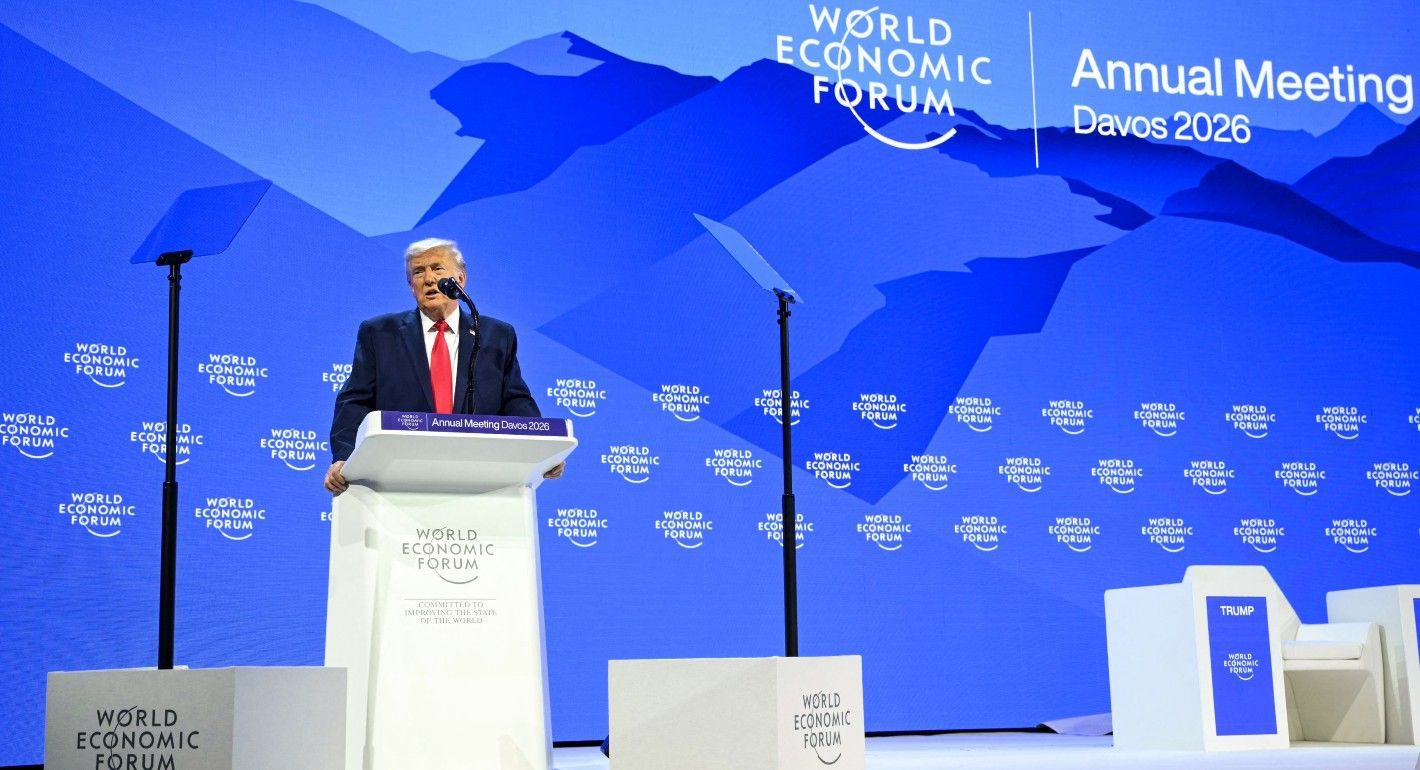
They cannot return to the comforts of asymmetric reliance, dressed up as partnership.
Alicia Wanless: I don’t see Carney’s speech as being a game-changer on this front. No matter how much a leader might behave like a character from Mean Girls, the world isn’t a giant high school. European and Canadian leaders must keep a dialogue open with Trump, if for no other reason than the gravity of the threats made about Greenland and the U.S. role in NATO.
The latest from Carnegie scholars on the world’s most pressing challenges, delivered to your inbox.
Former Senior Fellow, Europe Program
Sophia Besch was a senior fellow in the Europe Program at the Carnegie Endowment for International Peace. Her research focuses on European foreign and defense policy.

Director, Democracy, Conflict, and Governance Program
Steve Feldstein is director of the Carnegie Endowment for International Peace in the Democracy, Conflict, and Governance Program. His research focuses on technology, national security, the global context for democracy, and U.S. foreign policy.

Senior Fellow and Director, Global Order and Institutions Program
Stewart Patrick is a senior fellow and director of the Global Order and Institutions Program at the Carnegie Endowment for International Peace. His primary areas of research focus are the shifting foundations of world order, the future of American internationalism, and the requirements for effective multilateral cooperation on transnational challenges.

Senior Fellow, Technology and International Affairs, Director, Information Environment Project
Alicia is the director of the Information Environment Project and the author of The Information Animal: Humans, Technology and the Competition for Reality. Alicia was a technical advisor to the Aspen Institute’s Commission on Information Disorder and is a founding member of its Global Cybersecurity Group.
Carnegie does not take institutional positions on public policy issues; the views represented herein are those of the author(s) and do not necessarily reflect the views of Carnegie, its staff, or its trustees.

The books, podcasts, and films that explain the world it made.

Andrew Leber
U.S. trading partners in Asia are closely watching the dispute for signs of how it may affect their own interests.
Barbara Weisel
Congress should ask tough questions about the agreement’s more unique features and whether they advance U.S. interests or compromise them.

Jane Darby Menton
The ninety-three-year-old Biya’s absence and refusal to name a vice president threaten to upend domestic and regional stability.

Lesley Anne Warner

Amid celebrations of bilateral ties was a deeper focus on stability in the Middle East.

Amr Hamzawy