

Commentary
Rubio’s recent visit brought welcome attention, but more capital requires governance changes that may be a hard sell for regional governments.
Jennifer B. Murtazashvili
{
  "authors": [
    "Oliver Stuenkel",
    "Adrian Feinberg"
  ],
  "type": "commentary",
  "blog": "Emissary",
  "centerAffiliationAll": "dc",
  "centers": [
    "Carnegie Endowment for International Peace"
  ],
  "collections": [
    "Democracy Policy"
  ],
  "englishNewsletterAll": "democracy",
  "nonEnglishNewsletterAll": "",
  "primaryCenter": "Carnegie Endowment for International Peace",
  "programAffiliation": "DCG",
  "programs": [
    "Democracy, Conflict, and Governance"
  ],
  "projects": [],
  "regions": [
    "United States",
    "Venezuela"
  ],
  "topics": [
    "Economy",
    "Foreign Policy"
  ]
}
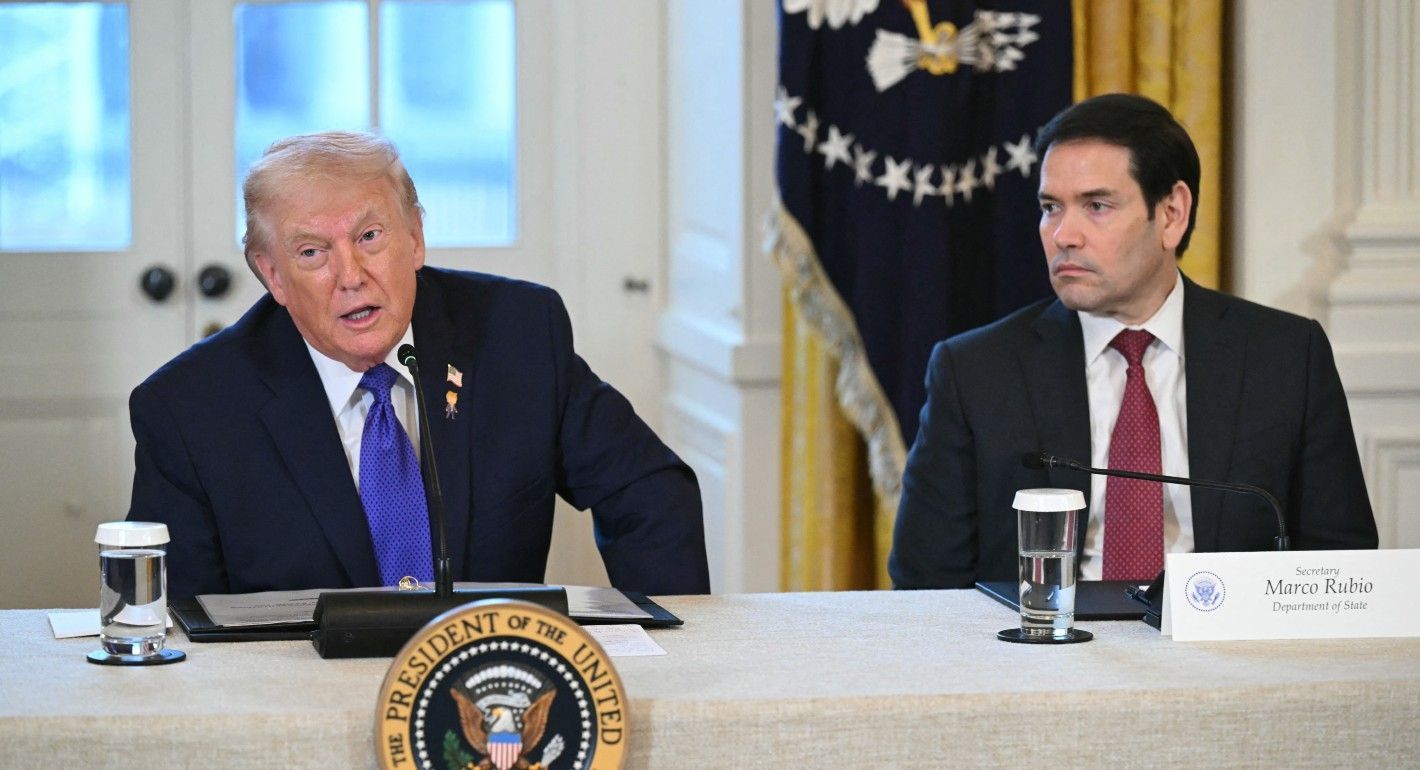
Trump and Rubio during a meeting with U.S. oil executives at the White House on January 9, 2026. (Photo by Saul Loeb/AFP via Getty Images)
Lessons from early twentieth-century “fiscal receivership” efforts should be a warning for Venezuela.
Last week, after the U.S. military operation in Venezuela toppled President Nicolás Maduro, Secretary of State Marco Rubio announced a three-phase plan for administering the country’s vast oil reserves from Washington. Beyond overseeing production and sales, Rubio also suggested that the United States would control how the proceeds from oil sales are allocated, claiming this would ensure that revenues benefit the Venezuelan population rather than corrupt powerholders. Given that oil accounts for the significant majority of Venezuela’s public income, this would effectively give Washington decisive influence over the country’s budgetary priorities.
The administration’s Venezuela plan represents a stark departure from U.S. regime-change operations of the past eight decades. It reflects neither the ideological motivations of the Cold War era nor the democratic idealism that shaped post–Cold War interventions. Instead, President Donald Trump’s vision of low-cost extraction—managing the sale and proceeds of Venezuelan oil without U.S. administrators or troops on the ground—seems to revive a much older model: fiscal receivership. This approach, pioneered under President Theodore Roosevelt in the early twentieth century, offers a set of instructive historical precedents as Washington embarks on a potentially risky experiment in Venezuela.
Between 1904 and the 1930s, the United States supervised fiscal receiverships in several Latin American and Caribbean countries, most notably the Dominican Republic, Cuba, Haiti, Nicaragua, and Panama. These arrangements did not amount to formal protectorates but often functioned like them in practice. U.S. officials assumed control over key revenue streams—most commonly customs houses, which at the time were the primary source of state income—and in some cases also exercised authority over internal taxation and budgeting. Local governments retained nominal sovereignty and formal political institutions, but decisions over revenue collection, debt servicing, and public spending increasingly flowed through Washington.
The Dominican Republic was the first major test of this model. In 1905, facing chronic political instability and concern about European intervention over unpaid debts, the Roosevelt administration took control of Dominican customs. The arrangement initially succeeded in reorganizing foreign debt and restoring short-term fiscal order. Yet the underlying political problems remained unresolved. By 1916, renewed instability and armed conflict prompted a full U.S. military occupation, which would last until 1924. The lesson was clear: Controlling revenue did not prevent domestic actors from mobilizing alternative sources of finance, nor did it eliminate political fragmentation.
Cuba and Haiti entailed even more intrusive versions of fiscal control. Following disputed elections and rebellion in Cuba in 1906, the United States installed a provisional government that effectively ran the country for more than two years. Despite sweeping authority, U.S. administrators failed to produce durable fiscal improvements. Corruption persisted, and American officials frequently tolerated patronage networks to maintain political stability. In Haiti, after the 1915 intervention and subsequent occupation, a U.S. financial adviser became the final authority over the national budget. The arrangement generated intense popular resistance (including a peasant rebellion in 1919), failed to boost revenues, and left the country politically fragile after U.S. forces withdrew in 1934.
Cases based on formal cooperation fared no better. In Nicaragua and Panama, U.S. fiscal advisers were invited in by local governments seeking stability and international credibility. Yet historical studies show that, on average, countries under U.S. fiscal supervision did not experience sustained increases in public revenues. In some instances, revenues declined. The promise that external technocratic oversight would deliver “good governance” proved illusory. Just as important, American investors—often assumed to be the main beneficiaries—rarely reaped long-term gains. Beyond sporadic debt repayments, U.S. companies faced continued hostile, unstable political environments that undermined durable investment and inflicted reputational costs on them.
By the 1930s, these accumulated failures led Washington to abandon the model. Under Franklin D. Roosevelt’s Good Neighbor Policy, the United States formally renounced armed intervention and withdrew from fiscal receiverships, recognizing that governing foreign finances from afar was both politically costly and economically ineffective. Coercion alone could not produce stability or legitimacy.
The Trump administration’s plan for Venezuela must be assessed against this backdrop.
Trump faces constraints similar to those that limited Roosevelt. At the turn of the twentieth century, memories of the Philippine-American War (1899–1902, followed by a prolonged insurgency) dampened U.S. public support for extended overseas occupations. Today, the legacies of Afghanistan and Iraq likewise constrain domestic tolerance for long-term foreign entanglements. Yet without sustained presence, administrative capacity, and political legitimacy on the ground, the prospects for reforming Venezuela’s oil sector remain uncertain—especially in an environment marked by corruption, institutional fragility, and the risk of renewed conflict.
History does not necessarily repeat itself, and Venezuela in 2026 is not the Caribbean of 1906. But these precedents are nonetheless instructive. Early twentieth-century fiscal receiverships offered the illusion of control while failing to resolve structural problems, stabilize politics, or deliver lasting economic benefits—either for the countries involved or for U.S. investors. They underscore a recurring lesson: Even hegemonic powers face sharp limits when attempting to manage the political economy of other states from a distance, producing anti-American sentiment and rally-round-the-flag effects. The tepid response by U.S. oil companies to Trump’s request to make significant investments in Venezuela suggests they are aware of the long-term risks involved, particularly considering Venezuela’s history of institutional volatility and brusque nationalization. As Washington embarks on its most ambitious experiment in hemispheric control in decades, these harsh lessons from the past deserve careful attention.
The latest from Carnegie scholars on the world’s most pressing challenges, delivered to your inbox.
Senior Fellow, Democracy, Conflict, and Governance Program
Oliver Stuenkel is an associate professor at the School of International Relations at Fundação Getulio Vargas (FGV) in São Paulo, Brazil. He is also a senior fellow affiliated with the Democracy, Conflict, and Governance Program at the Carnegie Endowment for International Peace.
Former James C. Gaither Junior Fellow, Democracy, Conflict and Governance Program
Adrian Feinberg was a James C. Gaither Junior Fellow in the Carnegie Democracy, Conflict and Governance Program.
Carnegie does not take institutional positions on public policy issues; the views represented herein are those of the author(s) and do not necessarily reflect the views of Carnegie, its staff, or its trustees.
Rubio’s recent visit brought welcome attention, but more capital requires governance changes that may be a hard sell for regional governments.

Jennifer B. Murtazashvili
Why Pakistan, Saudi Arabia, and Turkey are joining forces on regional security.


Alper Coşkun, Amr Hamzawy

Despite public disputes over trade and immigration, the strategic partnership’s foundations remain sturdy.

Sameer Lalwani

It signals a new era of tech diffusion and warfare.

Steve Feldstein
Despite its flop at the box office, the film raises important questions for the climate community to answer.

Leonardo Martinez-Diaz