

Commentary
Venezuelans deserve to participate in collective decisionmaking and determine their own futures.
Jennifer McCoy
{
  "authors": [
    "Michael Pettis"
  ],
  "type": "legacyinthemedia",
  "centerAffiliationAll": "",
  "centers": [
    "Carnegie Endowment for International Peace",
    "Carnegie China"
  ],
  "collections": [],
  "englishNewsletterAll": "",
  "nonEnglishNewsletterAll": "",
  "primaryCenter": "Carnegie China",
  "programAffiliation": "",
  "programs": [
    "Asia"
  ],
  "projects": [],
  "regions": [
    "East Asia",
    "China"
  ],
  "topics": [
    "Economy"
  ]
}
How Beijing responds to pressure to lower lending rates will be an important indicator of whether it is prioritizing short-term growth or the transition to a healthier economy in the medium-term.
Source: Financial Times
Years of artificially low interest rates have been key both to China’s rapid growth and to its notorious domestic imbalances. The role of financial repression – manipulating the financial system to divert money from savers to producers – in the Chinese growth model is widely recognised. But the improvement in the country’s interest rate structure is not.
As a rule when nominal lending rates are broadly in line with nominal gross domestic product growth rates, the rewards of expansion are efficiently distributed between savers and users of capital. When they are substantially lower, however, as they have been in China for the past 30 years, net lenders – mainly household depositors – in effect pay a hidden subsidy to net borrowers. In China these include state entities, manufacturers, state-owned enterprises and real estate developers.
This subsidy – an astonishing 5-8 per cent of GDP – encourages irresponsible borrowing and forces down household income. This is why its elimination is crucially important both for rebalancing the economy towards greater household consumption and for reducing the amount of wasteful investment.There is good news on that front. The hidden subsidy has declined dramatically since 2011. In the five years from 2006 to 2011, nominal GDP growth averaged about 18 per cent or more, while the official lending rate averaged around 7 per cent. In the past two years the nominal GDP growth rate has fallen to below 10 per cent while the lending rate rose to 7.5 per cent, bringing the gap down by an impressive three-quarters.
Interest rates are still artificially low, but with much of the economy addicted to cheap capital, any further narrowing of the gap is likely to be opposed by borrowers. In fact the combination of slowing growth and the recent low inflation numbers has already sparked urgent calls for interest rate cuts.
On the surface these calls seem justified. China’s economy is slowing partly because borrowers are struggling to repay debt. Usually this would argue for rate cuts – but not in China. It is still overly reliant on investment for growth. Because so much investment in the past has been in nonproductive projects, debt has risen faster than debt-servicing capacity for many years, to the point where it has reached alarming levels.
Here is where the problem lies. The faster Beijing reduces the gap between the nominal growth rate and the nominal lending rate, the more painful it will be for existing borrowers, especially the most irresponsible, who have depended on the subsidy. But the slower Beijing does so, the more debt will be added to the country’s overstretched balance sheets, especially among the least efficient borrowers, and the more painful the adjustment will be.
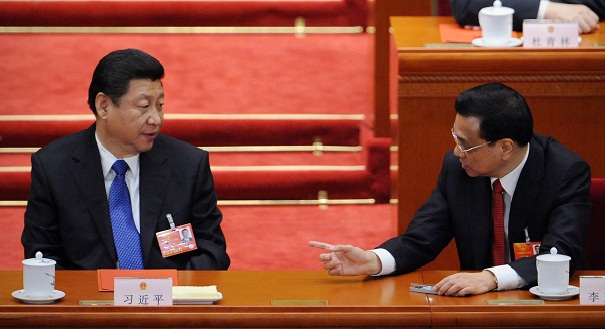
So far Beijing has shown tremendous restraint. In 2012 there were rumours that Li Keqiang, now prime minister, strongly opposed reducing lending rates even as inflation all but collapsed. It is also impressive that China has continued to resist interest rate cuts as growth drops and inflation fears subside further. The longer Beijing resists calls to cut interest rates, the harder it will be to maintain 7 per cent growth rates, and it is almost certain that GDP growth will drop further. However, by resisting the temptation Beijing will force swifter rebalancing and will reduce the overall debt and wasted investment that it will eventually have to confront.
Just as importantly, by eliminating the hidden transfer from household depositors to borrowers it can boost growth in household income even as output growth slows. This will allow China to move more quickly towards developing a healthy balance between consumption and investment while preventing slower growth from undermining the income of ordinary households. Cutting interest rates, in other words, will hurt households and increase bad debt, while not doing so will hurt the elite and cause the economy to slow in the short term.
Beijing faces a difficult choice. It must choose between preventing growth from slowing further in the short term and speeding up the transition to a healthier economy over the medium term. How China responds to interest rate pressures over the next year will be an important indication of the political difficulties Premier Li faces.
This article was originally published in the Financial Times

Venezuelans deserve to participate in collective decisionmaking and determine their own futures.

Jennifer McCoy

The supposed threats from China and Russia pose far less of a danger to both Greenland and the Arctic than the prospect of an unscrupulous takeover of the island.

Andrei Dagaev
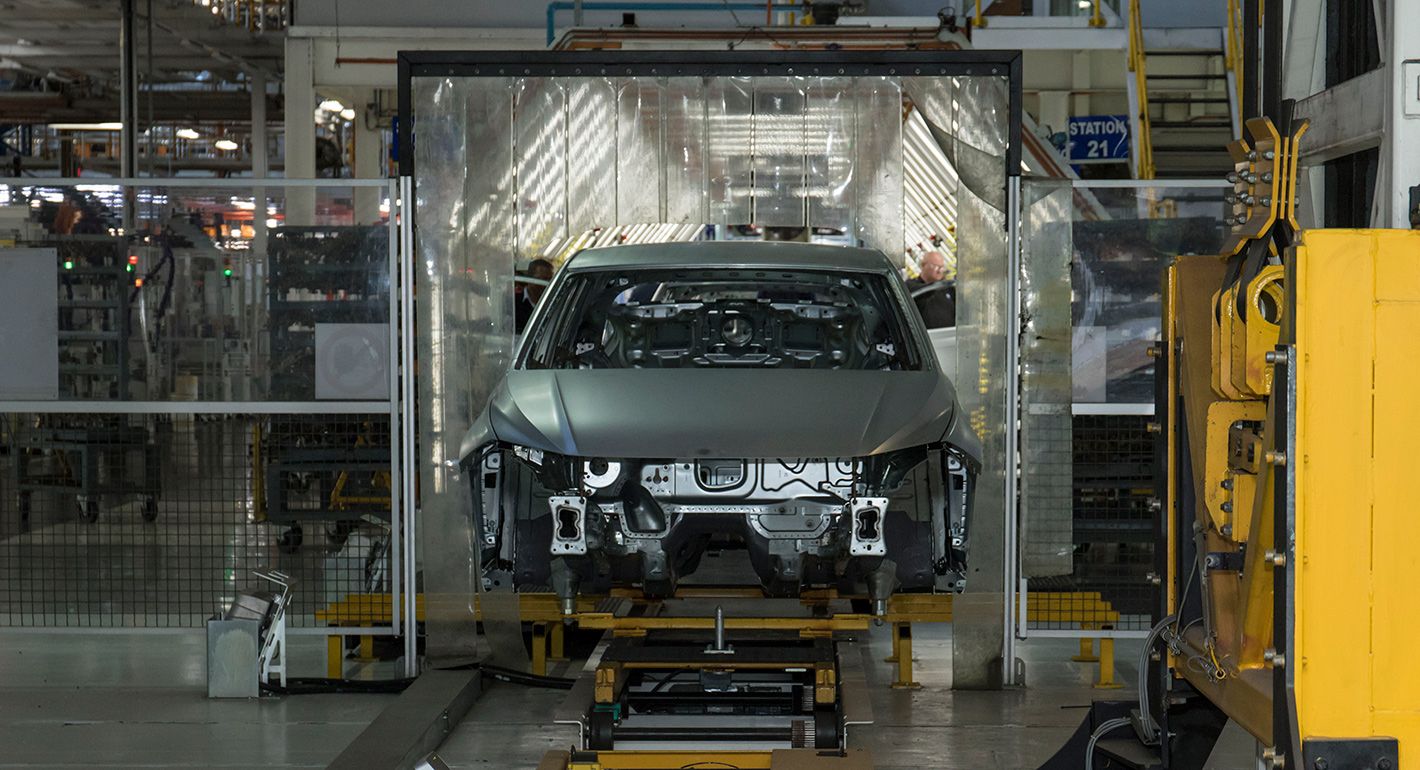
German manufacturing firms in Africa add value, jobs, and skills, while benefiting from demand and a diversification of trade and investment partners. It is in the interest of both African economies and Germany to deepen economic relations.
Hannah Grupp, Paul M. Lubeck

As European leadership prepares for the sixteenth EU-India Summit, both sides must reckon with trade-offs in order to secure a mutually beneficial Free Trade Agreement.

Dinakar Peri
Global development needs imagination to update the purposes, structures, and systems of outmoded institutions to make them fit for today’s world.

David McNair