

Commentary
A conversation with Karim Sadjadpour and Robin Wright about the recent protests and where the Islamic Republic might go from here.
Aaron David Miller, Karim Sadjadpour, Robin Wright
{
  "authors": [
    "Marc Lynch",
    "Deen Freelon",
    "Sean Aday"
  ],
  "type": "legacyinthemedia",
  "centerAffiliationAll": "",
  "centers": [
    "Carnegie Endowment for International Peace"
  ],
  "collections": [
    "Arab Awakening"
  ],
  "englishNewsletterAll": "",
  "nonEnglishNewsletterAll": "",
  "primaryCenter": "Carnegie Endowment for International Peace",
  "programAffiliation": "",
  "programs": [
    "Middle East"
  ],
  "projects": [],
  "regions": [
    "Middle East",
    "North Africa",
    "Egypt"
  ],
  "topics": [
    "Political Reform",
    "Civil Society"
  ]
}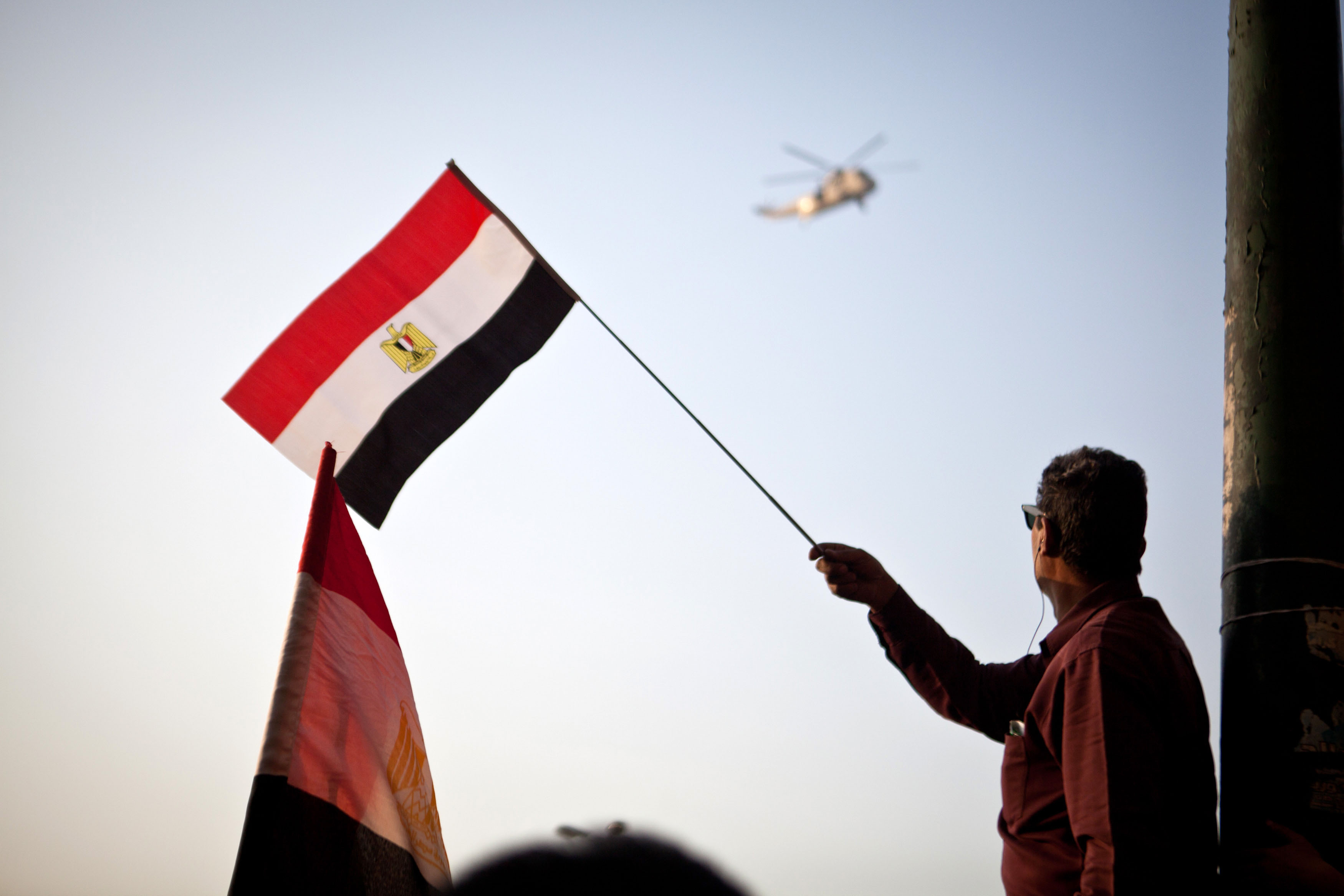
While Egypt’s uprising has become synonymous with the successful use of social media to overthrow an entrenched authoritarian regime, social media may also have contributed to its failure of the revolution.
Source: Washington Post
Egypt’s 2011 uprising has become synonymous with the successful use of social media to overthrow an entrenched authoritarian regime. Popular and academic literature hold it up as the paradigm of social media’s effects on contentious politics. Activists from Bahrain and Turkey to Ukraine and St. Louis learned and applied Egyptian protest tactics such as setting up encampments in public space, preparing ways to resist police attacks, organizing protest locations and times on Facebook groups, and rapidly disseminating videos and images of protests to mass media.
But it is equally significant that Egypt’s attempted transition to democracy after the overthrow of President Hosni Mubarak ended in violent political polarization and a military coup. Did social media also contribute to the failure of democratic consolidation? What does this mean for future attempts at democratic transition, given that they will probably unfold in heavily socially mediated societies, too? In a new report in the Blogs and Bullets series for PeaceTech Lab, we use unique Twitter and Facebook data to explore how social media contributed to the spread of polarization and fear in Egypt that undermined its transition.
Social media is, of course, not the sole, or even the most important, cause of this failure. But we argue that social media challenges democratic consolidation by accelerating and intensifying dangerous trends such as polarization, fear and dehumanization of rivals. The speed, emotional intensity and echo-chamber qualities of social media content make those exposed to it experience more extreme reactions. Social media is particularly suited to worsening political and social polarization because of its ability to spread violent images and frightening rumors extremely quickly and intensely through relatively closed communities of the like-minded.
We developed two unique social media data sets to see whether there was empirical evidence for such dynamics. First, we developed a Twitter data set of every public tweet containing the case-insensitive term “Egypt” in English or Arabic, between January 2011 and August 2013. This includes nearly 62 million tweets by more than 7 million unique users. We also constructed a unique Facebook data set based on public pages. We randomly sampled 1,000 posts on each page over the one-year period between Mohamed Morsi’s election in June 2012 and the coup in July 2013, divided into 26 fortnights, then extracted all comments — 593,428 in total. Full details on the data sets can be found in the report.
While the report explores different issues, one particularly interesting dynamic we found is how the clustering of social media users unevenly influences the spread of fear.
During the heady days of revolution, social media seemed to unify Egyptians across disparate ideological trends around a limited, shared goal. That didn’t last. As time went on, social media encouraged political society to self-segregate into communities of the like-minded, intensifying connections among members of the same group while increasing the distance among different groups.
Our data allowed us to visualize this pattern in real time, showing which groups emerged and how they related to one another. By analyzing retweeting patterns, we identified several persistent communities, such as those we label the “Political Public,” “Activists” and“Islamists.” In addition, we found a large, mostly nonpolitical cluster that usually discussed topics such as music, parties, jokes and viral images, which we termed (following Egyptian usage) the “Couch Party.” When this cluster did engage with politics, the political comedian Bassem Youssef (@drbassemyoussef) was especially influential. Analyses that began with political hashtags rather the general #Egypt could easily have missed this community, which probably became a key support base for the June 30 “Tamarod” movement against the Morsi presidency and later for the military coup.
We calculated four statistical indicators of the clustering dynamics of the Egyptian online public. All demonstrate the increasing insularity of the major clusters. We found that ideologically similar but politically distant groups sorted themselves out over time: Multiple Islamist clusters became a single Islamist cluster, multiple activist clusters became a single activist cluster, and so forth.
These clusters became increasingly insular over time, sharing less content and interacting less regularly with other groups. Our statistical measure of insularity shows a general rise across clusters, increasing from about 0.6 in July 2012 to approximately 0.8 in the final three months leading up to June 30. The distance between the Islamist Muslim Brotherhood and the broader political public, the activists and the Couch Party increases especially noticeably as time goes on. Finally, the degree of individual movement between clusters generally decreases over time.
One of the political effects of this clustering is that it intensified the effect of real and rumored violence and political conflict. Because of clustering, frightening images or information traveled unevenly through Egyptian political society, and they traveled quickly through trusted social networks in ways that increased their impact.
Different clusters were receiving very different accounts of the same events, expressing outrage at different times and celebrating different martyrs. Their narratives and political worldviews were becoming increasingly mutually incomprehensible as they shared less information and interacted less frequently in positive ways.
We tracked the mobilization of fear through a lexicon-based approach using keywords in Arabic associated with fear and violence. By late July 2012 — well before the first violent clashes in October — we observed a spike in terms such as violence, fear, anarchy and chaos. These narratives of violence diverged dramatically across clusters, with different communities becoming consumed with anger and fear at different times and over different issues. In December 2012, for instance, the clashes outside the presidential palace at al-Ittihadiyya and the forced passage of a new constitution produced significantly different narrative patterns among the clusters. So did the March 2013 attacks against Muslim Brotherhood offices. The rapid spread of destabilizing rumors frequently inflamed the situation with one — but not all — communities.
The mobilization of fear was concentrated more in the politically activist communities than in the broader public. One of the most striking findings in the statistical analysis is the extremely low incidence of “fear basket” terms in the Couch Party cluster. Contrary to the common portrayal of Egypt as a society consumed by fear and chaos during this time, the apolitical group was not consumed by fear, or at least not talking about it on Twitter. Instead, fear basket terms seem to be most found within the activist cluster and the Islamist cluster, the most politicized of the groupings.
This novel empirical evidence is significant not only for Egypt, but for every future attempted transition that unfolds in a heavily socially mediated environment. The online clustering into communities of the like-minded has real-world consequences for democratic consolidation.
This article was originally published at the Washington Post.
Carnegie does not take institutional positions on public policy issues; the views represented herein are those of the author(s) and do not necessarily reflect the views of Carnegie, its staff, or its trustees.
A conversation with Karim Sadjadpour and Robin Wright about the recent protests and where the Islamic Republic might go from here.
Aaron David Miller, Karim Sadjadpour, Robin Wright

Fifteen years after the Arab uprisings, a new generation is mobilizing behind an inclusive growth model, and has the technical savvy to lead an economic transformation that works for all.

Jihad Azour
Baku may allow radical nationalists to publicly discuss “reunification” with Azeri Iranians, but the president and key officials prefer not to comment publicly on the protests in Iran.

Bashir Kitachaev

The story of a has-been politician apparently caught red-handed is intersecting with the larger forces at work in the Ukrainian parliament.

Konstantin Skorkin
2026 has started in crisis, as the actions of unpredictable leaders shape an increasingly volatile global environment. To shift from crisis response to strategic foresight, what under-the-radar issues should the EU prepare for in the coming year?

Thomas de Waal