While U.S.-China geopolitical competition is dividing the world, U.S.-China climate cooperation is fracturing the climate movement. Many internationally minded climate advocates argue that cooperation between Washington and Beijing is essential to limiting the destruction wrought by a warming planet. Others counter that the fiercely competitive dynamic will actually accelerate decarbonization, with both countries racing to outdo each other in climate commitments and green technology.
But there are ways forward that can capture positive outcomes from both cooperation and competition. To do that, we can learn from the tangled ties between California’s and China’s information technology ecosystems. The Golden State and the Middle Kingdom have long been locked in a paradoxical relationship on information technology: their markets have been isolated, but their ecosystems have been deeply intertwined. That unique balance drove forward innovation in both countries, while also helping China catch up to the global leaders.
Now, the United States has a chance to flip that script in low-carbon technology, leveraging deep ecosystem connections to catch up with China in low-carbon technologies where Chinese firms are dominant, while also accelerating innovation globally. And California has a leading role to play in that process.
When China’s Great Firewall blocked most U.S. internet platforms, American politicians and tech leaders predicted that Chinese technology would wither in isolation. But instead, it blossomed. Chinese start-ups filled the vacuum left by the American giants, turning the Chinese internet into a kind of parallel tech universe. The country’s own internet juggernauts became some of the most profitable companies in the world. TikTok caught fire globally, forcing its competitors in California to redesign their products.
How did China manage to turbocharge such an isolated ecosystem? The key was that although many foreign products were blocked in China, the United States’ and China’s ecosystems remained deeply connected through the flow of people, money, and ideas.
California was ground zero for much of this engagement. Chinese investors and tech giants set up branches in Silicon Valley to track emerging trends. Silicon Valley firms returned the favor, opening research labs in China to draw on local talent. Chinese students poured into California universities, with many remaining in the United States to contribute to cutting-edge research and others returning home to cross-pollinate China’s tech ecosystem. This alchemy drove innovation in both countries and helped China close the gap with more advanced American firms.
What can these dynamics teach us about the way forward on climate technology? When geopolitics divide countries and markets, maintaining deeply intertwined ecosystems can accelerate innovation and help the lagging country—in this case, the U.S.— catch up to the leader.
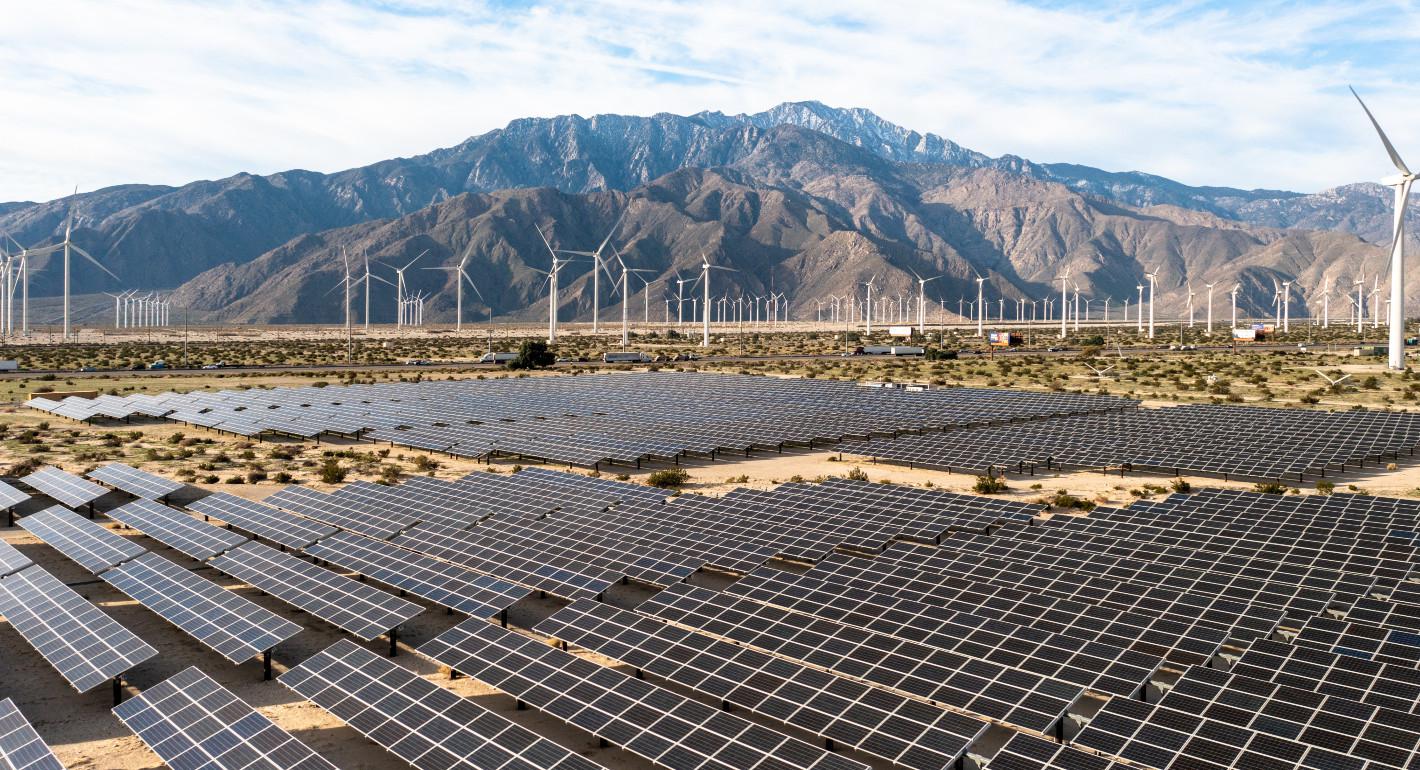
The urgency of the energy transition should caution U.S. policymakers against blocking Chinese green technology the way China blocked U.S. internet companies. Producing wind turbines at scale is a far more physically demanding process than creating a social media app, and in many cases the United States will need to import products from China to accelerate its energy transition. But when politics gets in the way of trade—such as with a recent expansion of tariffs on Chinese-made solar panels—Americans can still get creative and leverage grassroots connections to make the best of it.
This dynamic is already playing out in batteries for electric vehicles. China is the dominant global supplier and innovator for lithium batteries, and it’s also home to key research clusters for next-generation battery technologies. China’s world-leading battery company CATL had planned to announce the opening of a battery factory in the United States last summer but backed off due to escalating U.S.-China tensions over Taiwan.
Instead, CATL is licensing its battery technology to Ford Motor for use at a new battery factory to be built in Michigan. The factory will be 100 percent owned by Ford, with American engineers gaining experience working on new battery chemistries perfected in China. The factory is on U.S. soil due to last year’s Inflation Reduction Act, which has “Buy American” provisions that tie electric vehicle subsidies to American manufacturing. In that way, the deal is almost a mirror image of how China used U.S. firms to upgrade its own tech ecosystem: requiring local manufacturing, worker training, and technology transfers. The playbook is so familiar that Chinese regulators are reportedly scrutinizing the deal to ensure it doesn’t give away too much core technology.
But even this kind of win for U.S. manufacturing has drawn the ire of some American politicians. Virginia Governor Glen Youngkin withdrew his state’s bid for the Ford factory, calling it a “front for China,” and Senator Marco Rubio introduced legislation to block tax credits from going to American batteries made using Chinese technology. Versions of this dynamic will almost certainly play out in other states and municipalities across the country in the years ahead.
In that environment, California has a key role to play. The state has long been the center of subnational climate diplomacy with China. Last month California transportation leaders signed an agreement with the province of Hainan, which has pledged to eliminate fossil fuel vehicles by 2030, on exchanging information and best practices for accelerating transportation decarbonization. Equally if not more important are the ecosystem-level connections between researchers and companies working on low-carbon technology. Many of the key actors are in California’s universities, start-ups, and local governments. California remains the top destination for Chinese students, with nearly one-quarter of all engineering PhDs in the University of California system hailing from China. Research collaborations forged by this group will help seed low-carbon technologies in both countries. Cross-border venture capital firms in San Francisco and Beijing should continue drawing lessons and funding low-carbon products in both locales. And California mayors and state officials should continue forging ties on decarbonization with their counterparts in China.
All of these ground-up ties will be impacted by an increasingly confrontational U.S.-China relationship. Access to markets and the flow of people and investment between California and China will be influenced by policies in both Washington and Beijing. But within that constrictive environment, Californians still have room to make a difference.
Doing this will take courage and creativity. It requires recognizing where the United States can learn from China in low-carbon technologies and then getting creative in how the U.S. fosters its own clean tech ecosystem. Luckily, Americans have a playbook for that kind of a technology relationship, and all they need to do is reverse the roles.