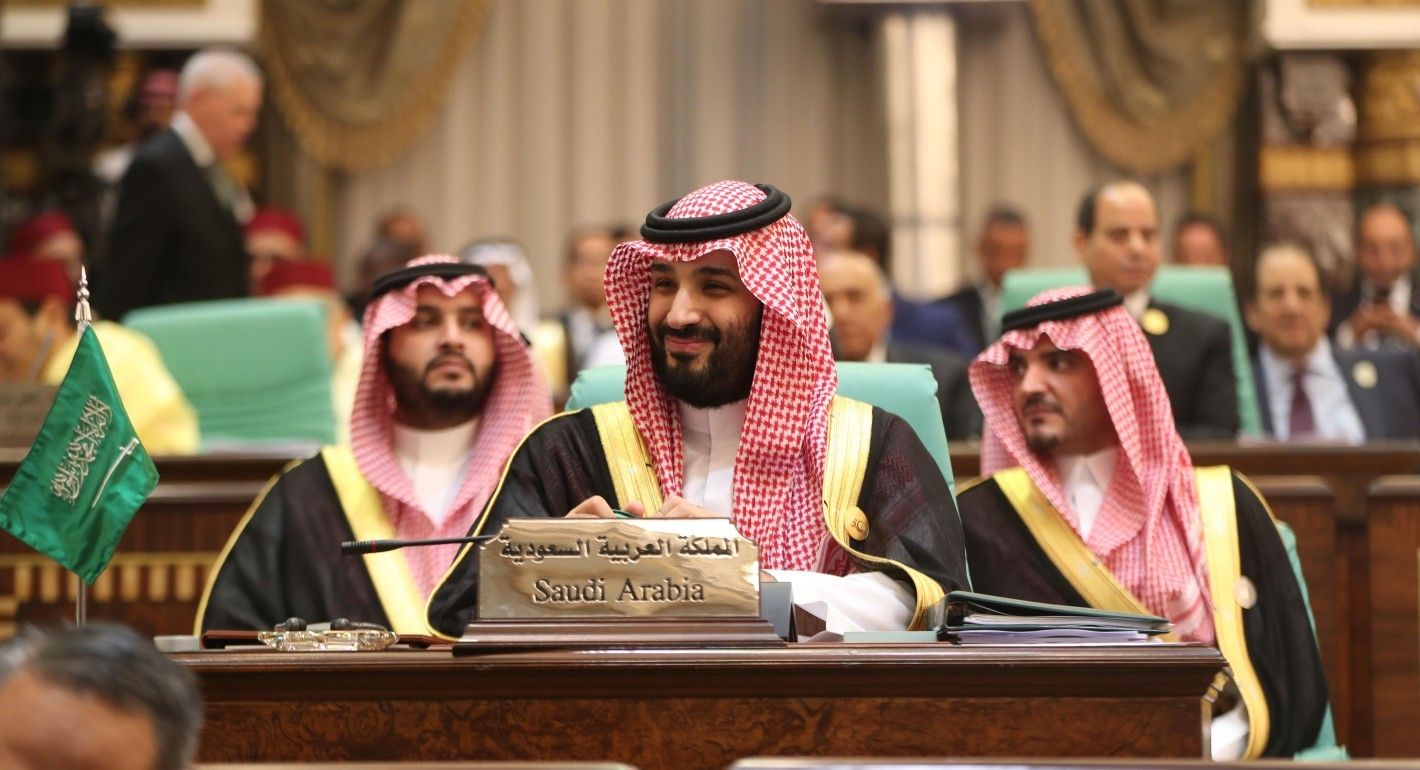
Crown Prince Mohammad bin Salman is struggling to navigate turbulent waters implementing domestic economic reforms while managing public sentiment that favors legitimate rights of Palestinians. Balancing these priorities could significantly reshape the region’s geopolitical landscape and define its future.
In the evolving landscape of the new Middle East, Saudi Arabia’s pivotal role is no longer merely about transcending diplomatic manoeuvres. It demands a comprehensive strategy that could redefine Saudi regional influence while integrating economic diversification and sustained leadership—all closely tied to maintaining peace and security throughout the region.
Challenges to Riyadh
Riyadh has approached normalization with Israel cautiously, but following the chaotic events of October 7, it has shifted its rhetoric from pursuing normalization to prioritizing Palestinian rights. It now insists that Palestinian statehood must be a prerequisite for any such arrangements. This position reflects the kingdom’s recognition that it cannot bear responsibility for the Palestinian issue alone despite being a regional centerpiece.
Qatar skillfully leverages its neutral stance and diplomatic acumen, allowing it to establish a prominent role as a mediator in resolving regional disputes. For instance, it facilitated dialogue between Israel and Hamas and worked alongside the United States and Egypt to negotiate a temporary humanitarian pause in fighting.. Doha also invests heavily in media outlets, enhancing its ability to shape public perception and effectively influence political narratives. This strategic media presence promotes Qatar’s interests and shapes the discourse surrounding pivotal regional events, reinforcing its stature as a formidable regional power.
Although Riyadh and Doha reconciled through the 2021 al-Ula agreement, competition remains a significant feature of their relationship. They vie for influence beyond politics, extending into media, sports, and soft power diplomacy. Similarly, Iran has cemented its regional standing by championing the Palestinian cause and reinforcing its so-called “axis of resistance,” thereby influencing regional politics. Tehran’s diplomatic manoeuvres emerged following the October 7 Hamas attacks when the-Iranian President Ebrahim Raisi strengthened ties with Riyadh by donning a Palestinian keffiyeh, demonstrating its adaptability and the potency of its alliances across the Middle East. Despite the recent Saudi-Iran détente, long-standing tensions still cast a shadow over their relationship, much like the dynamics in Saudi-Qatar relations.
Misguided Expectations
While the kingdom has taken some incremental steps toward cooperation with Israel, its stance aligns more with the Arab Peace Initiative (API), which prioritizes resolving the question of Palestinian statehood. This explains Saudi reluctance to formally join the Abraham Accords—a series of agreements facilitating Israel's recognition—despite several Arab nations, including the UAE, Bahrain, Sudan, and Morocco, signing the initiative. Meanwhile, Washington had expected that pursuing normalization efforts could mitigate security concerns that Iran and its proxies pose. These efforts could also enhance regional stability and foster cooperation among Gulf allies while effectively countering China’s monolithic presence, established through the Belt and Road Initiative (BRI). Washington aims to accomplish this by supporting new initiatives entering the Middle East, such as the India-Middle East-Europe Economic Corridor (IMEC).
Nevertheless, Riyadh’s pivot remains significant, making it even more crucial for the United States after the resurgence of the Palestinian statehood issue on October 7. Washington needs support in the region to strengthen its partnerships and effectively counterbalance its challengers. Securing Riyadh’s backing is crucial, as it holds diplomatic ties across the Arab world, including with Israel and Iran. With Saudi support, Washington can curtail Iranian and Chinese influence, address the Israel-Palestine crisis, and negotiate Iran’s nuclear agreement. Though many factors are at play, Saudi support will be invaluable in achieving these goals.
Balancing the Pivot
On one hand, Washington’s misjudgement of the US-Saudi-Israel alliance has created barriers, particularly in the context of its expectation for Saudi recognition of Israel, which may need to be reevaluated given the evolving regional dynamics. On the other hand, the Israel-Hamas escalation has resurrected the dormant Palestine issue, complicating the momentum at which Arab states were willing to normalize relations with Israel. This political rift also threatens to hinder future relations and undermine the sustainability of normalization efforts, especially if public pressure persists. Although immediate impacts are unlikely, prolonged Israeli attacks on Gaza could gradually jeopardize Saudi economic objectives and potentially challenge its pivotal standing as a regional leader.
The Muslim world scrutinizes Riyadh’s commitment to de-escalating the Gaza conflict in comparison to Tehran, which holds the crown as the active champion of the Palestine cause, potentially leaving Saudi Arabia on the defensive.
Considering these dynamics, Riyadh maintains a calibrated balance by choosing to support Palestinian rights, for the time being, against its broader strategic interests in exploring normalization with Israel. Should its policy shift in response to evolving circumstances, it would significantly redefine regional alliances and economic landscapes.
Regardless, reaching an agreement with Israel supports the kingdom’s regional ambitions and reinforces Mohammed bin Salman’s role as a transformative leader. His focus is on ambitious diplomatic and economic strategies aimed at seeking relief from a hyper-dependent oil economy, which necessitates a stable regional setting that is currently absent. Abraham Accords 2.0 may succeed with Palestinian inclusion as a stakeholder; without them, no agreement can guarantee lasting peace. Therefore, the prevailing geopolitical conditions indicate that collaborative efforts, rather than forceful tactics, are essential for fulfilling regional connectivity aspirations