

Commentary
Cornelius Adebahr
{
  "authors": [
    "Cornelius Adebahr"
  ],
  "type": "legacyinthemedia",
  "centerAffiliationAll": "dc",
  "centers": [
    "Carnegie Endowment for International Peace",
    "Carnegie Europe",
    "Malcolm H. Kerr Carnegie Middle East Center"
  ],
  "collections": [
    "Europe’s Southern Neighborhood",
    "Iranian Proliferation"
  ],
  "englishNewsletterAll": "ctw",
  "nonEnglishNewsletterAll": "",
  "primaryCenter": "Carnegie Europe",
  "programAffiliation": "EP",
  "programs": [
    "Europe"
  ],
  "projects": [],
  "regions": [
    "Middle East",
    "Europe",
    "Iran",
    "Eastern Europe",
    "Western Europe",
    "United Kingdom",
    "France",
    "Germany"
  ],
  "topics": [
    "Foreign Policy",
    "Political Reform",
    "Security",
    "Nuclear Policy",
    "Arms Control"
  ]
}
Source: Getty
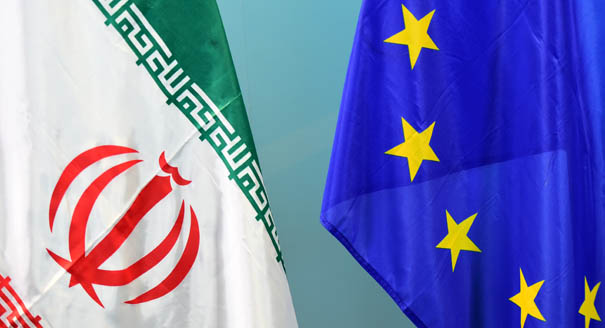
While a nuclear agreement with Iran would be a major diplomatic achievement, the EU should look to go much further than the nuclear issue in its relations with the country.
Source: EUROPP
Imagine if there is a nuclear deal with Iran and it still does not change much. That is, of course, too stark a view on what would still be a – maybe the – major diplomatic achievement of the past decade or so. Yet seeing a deal this way can also help to put things into perspective, especially for the Europeans who have championed diplomacy ever since France, Germany, and the United Kingdom – the E3 – began talks with Iran over its nuclear programme back in 2003.
The truth is, regardless of whether the latest round of talks will end with a comprehensive agreement, a breakdown, or some sort of extension of the status quo, things will only change gradually. Even the “deal” that some are hoping for and others dread would not turn Iran into an ally over night, but merely enlarge the extent of wider engagement with the country.
Here’s why the EU has a genuine interest in such a broadening of its policy on Iran. First, and unlike the United States, the EU and its member states have maintained their ties with the Islamic Republic, working on human rights as much as on economic exchanges, despite an overall strained relationship. Second, the country’s location at the crossroads between Europe, Russia, Central Asia, and South Asia makes it necessary to take into account Iran’s legitimate strategic concerns. Third, the country is a solid state with functioning institutions, an industrial base, and a society imbued by a strong national sentiment. And in spite of repression by the regime, civil society remains strong. Finally, Iranian people are rather pro-Western and not anti-American. These are certainly assets in an otherwise volatile region.Therefore, whatever the outcome of the nuclear talks, the EU must develop a more comprehensive policy that accounts for both Iran’s role in the region and broader global issues of EU concern. Beyond preventing Iran from acquiring a nuclear bomb (which is what the agreement is for), there are three main areas on which the EU should focus.
First, the EU should seek to reinforce the global nonproliferation regime. The EU should ensure that the inspection standards set by an Iran deal serve as an example for broader nonproliferation efforts, while being careful to stress that indigenous enrichment should not be the new norm. This means leading a drive to get all signatories of the Non-Proliferation Treaty to sign the Additional Protocol for enhanced inspection, while proposing concrete steps towards the goal of establishing a WMD-free zone in the Middle East: for instance by starting with a regional ban on biological and chemical weapons or even a subregional WMD-free zone around the Persian Gulf. In any case, if Iran wants to be taken seriously as a civilian nuclear power, it will have to adhere to international standards of nuclear safety regulation.
Second, the EU should aim to increase outreach to civil society. The promotion of democracy and human rights is central to the EU’s foreign policy identity, yet it often comes second or third on its list of policy priorities. The EU should seek to reach out to civil society actors in Iran, focusing on press freedom, labour rights, and Iran’s violations of its own domestic laws and the UN treaties it has signed. In addition, dialogue and engagement should prove fruitful on issues such as technical cooperation on environmental questions, earthquake assistance, and refugees, as well as increased exchanges in sports, culture, religion, science, and higher education.
Third, the EU should step up cooperation with Iran on regional conflict resolution. Iran has a role to play in a number of regional challenges, but so far has been largely excluded from international efforts to tame those conflicts. In light of the very different views on the civil war in Syria, this most pressing conflict is unlikely to see immediate cooperation, if only because Iran has become a quasi-combatant on the ground.
Instead, the EU – together with the United States – should start with the easier cases, such as working with Iran to maintain stability in Afghanistan or increase maritime security in the Persian Gulf. They should then move gradually to more difficult issues, such as tactically cooperating in the fight against Islamic State and, eventually, working to end the war in Syria. The EU’s role is to facilitate regionally owned arrangements, not to impose an order from outside, while providing political, technical, and economic support if requested.
To achieve these aims, the EU should improve its organisational capacity and step up its presence in the country as well as continue its close cooperation with the United States.
The European External Action Service (EEAS) should immediately set up a task force that brings together the different desks currently dealing with Iran. Its aim should be to explore, and later implement, areas of immediate cooperation as well as prepare for longer-term engagement. The task force should encompass all relevant desks, including those outside the EEAS such as the European Commission Directorate General for Trade. An EU special representative should head this Iran task force and should liaise closely with the EU negotiators and the Iranians. In Iran itself, the EU must establish a presence, possibly starting with an EU special representative field office that could be transformed into a fully-fledged EU delegation.
The EU should also work more closely with the United States, beyond the well-established cooperation between their negotiating teams. Broader outreach to U.S. policymakers and the American think tank community is necessary given that the EU’s role on the Iran file is generally poorly appreciated by the American public and that Congress plays a crucial part in many decisions regarding U.S. sanctions. In a concerted effort, the EU and its member states should work with the administration and Congress to secure the necessary U.S. support for sanctions relief if a comprehensive agreement is achieved – or to devise a new common approach to Iran if the talks break down.
All concerns about Iran’s nuclear programme have to be resolved by a clear, verifiable agreement. At the same time, the country’s pivotal regional role and genuine strategic concerns have to be factored into current efforts to stabilise the Levant and the Gulf. Iran is much more than its controversial nuclear programme, which is why the EU should look for broader terms of engagement.
With interest-based, not aspirational, policies, the EU should test the Iranian regime in a period of uncertainty. Brussels should provide Tehran with an incentive to prove its willingness to play by the rules. This could pave the way for a new bargain that Europe has every interest to explore.
Former Nonresident Fellow, Carnegie Europe
Cornelius Adebahr was a nonresident fellow at Carnegie Europe. His research focuses on foreign and security policy, in particular regarding Iran and the Persian Gulf, on European and transatlantic affairs, and on citizens’ engagement.
Recent Work
Cornelius Adebahr

Cornelius Adebahr, Barbara Mittelhammer
Carnegie does not take institutional positions on public policy issues; the views represented herein are those of the author(s) and do not necessarily reflect the views of Carnegie, its staff, or its trustees.

With its public finances in shambles, the far right polling at 35 percent ahead of the 2027 presidential election, and a growing protest movement, is France’s crisis a threat to the EU’s geopolitical awakening?

Rym Momtaz, ed.

Ahead of a tough winter for Ukraine, Donald Trump’s swing back toward Russia bodes ill. But instead of panicking, Kyiv’s European allies are focusing on action.
Rym Momtaz

Funding Ukraine remains a priority for European leaders. As Russia’s war of aggression heads into another winter, two feasible options to mobilize support for Kyiv should be fast-tracked.


Vladyslav Rashkovan, Gregory P. Wilson

While the EU and European governments are embracing the much-lauded middle-power moment, this entails three difficult conundrums.

Richard Youngs

Europe is facing rising populism internally as well as external pressures from Russia, China, Turkey, and the United States.

Dimitar Bechev