

Other
- +4
Ilana Feldman, Frederic Wehrey, Andrew Bonney, …
Source: Getty
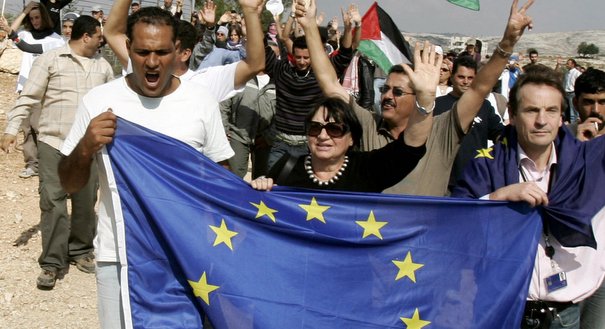
For the EU to be an effective player in the Middle East, it should seek an efficient division of labor with the United States and pursue greater political engagement in the Palestinian territories, Syria, and Lebanon.
Although Europe actively tries to manage Middle East crises it undermines its economic, political, and security interests by assuming a secondary role to the United States and following its policy line. For the EU to be an effective player in the Middle East peace process, it must pursue greater political engagement on three tracks: the Palestinian territories, Syria, and Lebanon.
Drawing on interviews with EU delegations and European embassies as well as a wealth of local actors in Lebanon, Syria, and the Palestinian territories, Muriel Asseburg assesses Europe’s on the ground efforts in conflict management and recommends a more effective European approach to the Arab–Israeli conflict.
Key Conclusions:
Asseburg concludes:
“It is time for Europeans to rethink their policy approaches, refocus their activities, and seek a more effective coordination and division of labor with the new U.S. administration. Not only are intensified efforts needed to reinvigorate the Israeli–Palestinian negotiations, Europeans should also stand ready to help advance the other tracks of the peace process. In the end, for Europeans, it is not about claiming a role as a ‘player,’ but about assuming that role and engaging in politics.”
Former Visiting Scholar, Middle East Center
Asseburg's current research focuses on the Middle East conflict, German and Middle East politics, the Euro–Mediterranean Partnership, and state building, political reform, and political Islam in the Middle East. She was previously with the Friedrich Ebert Foundation’s office in Jerusalem.
Recent Work

Ilana Feldman, Frederic Wehrey, Andrew Bonney, …
Muriel Asseburg
Carnegie does not take institutional positions on public policy issues; the views represented herein are those of the author(s) and do not necessarily reflect the views of Carnegie, its staff, or its trustees.

With its public finances in shambles, the far right polling at 35 percent ahead of the 2027 presidential election, and a growing protest movement, is France’s crisis a threat to the EU’s geopolitical awakening?

Rym Momtaz, ed.

Ahead of a tough winter for Ukraine, Donald Trump’s swing back toward Russia bodes ill. But instead of panicking, Kyiv’s European allies are focusing on action.
Rym Momtaz

While the EU and European governments are embracing the much-lauded middle-power moment, this entails three difficult conundrums.

Richard Youngs

Europe is facing rising populism internally as well as external pressures from Russia, China, Turkey, and the United States.

Dimitar Bechev

A notable degree of participative democracy has firmly arrived in Europe. But to have more far-reaching impact, democratic deliberation needs to move into a radically new phase.
Richard Youngs