

Commentary
Judy Dempsey
{
  "authors": [
    "Judy Dempsey"
  ],
  "type": "commentary",
  "blog": "Strategic Europe",
  "centerAffiliationAll": "",
  "centers": [
    "Carnegie Endowment for International Peace",
    "Carnegie Europe"
  ],
  "collections": [],
  "englishNewsletterAll": "",
  "nonEnglishNewsletterAll": "",
  "primaryCenter": "Carnegie Europe",
  "programAffiliation": "",
  "programs": [],
  "projects": [],
  "regions": [
    "Middle East",
    "Iraq",
    "Western Europe",
    "Germany",
    "Europe"
  ],
  "topics": [
    "Security",
    "EU",
    "Foreign Policy"
  ]
}
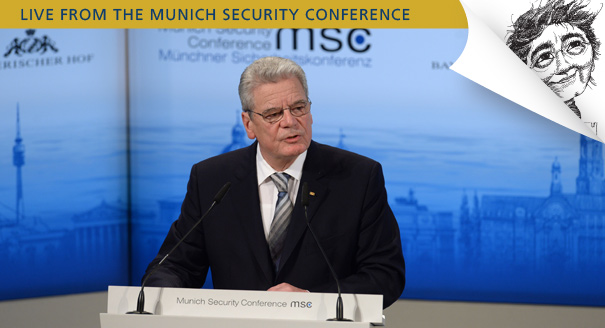
Source: Getty
In a major speech, the German president has urged his country to do more to recognize its global responsibilities. The challenge will be to transform those words into action.
Since becoming German president in 2012, Joachim Gauck has given some wonderful speeches. They deal with Germany’s past and present, and they touch upon the future.
But the address he gave to open this year’s Munich Security Conference was unusual, even for him. It was about Germany’s role in the world, particularly about the idea of German responsibility. Gauck, born and raised in Communist East Germany, where he joined the dissident opposition, pulled no punches.
“At this very moment, the world’s only superpower is reconsidering the scale and form of its global engagement,” he told the packed banqueting hall of the Hotel Bayerischer Hof in the Bavarian capital. “Europe, its partner, is busy navel-gazing. I don’t believe that Germany can simply carry on as before in the face of these developments.”
Yet Germany was doing precisely that, Gauck said. “We feel surrounded by friends, but hardly know how to deal with diffuse security threats such as the privatization of power by terrorists and cybercriminals. We rightly complain when allies overstep the mark when they use electronic surveillance to detect threats. And yet, we prefer to remain reliant on them and hesitate to improve our own surveillance capacities.”
In short, what Gauck was telling his audience of foreign and defense ministers, security experts, and human rights campaigners was that Germany wants it both ways. As he stated, his country has benefited from the global economic system, from European integration, and from the United States’ security umbrella. Now, Germany “must be ready to do more to guarantee the security that others have provided it with for decades.”
But how can Germany take that step?
Gauck did not duck this question. The former Protestant minister knows that it is not easy to take responsibility. “Some think that in reality Germany would have to pay more. Others think that Germany would have to send in more soldiers. And they are all convinced that ‘more responsibility’ means more trouble. . . . I see things differently.”
He certainly does—Gauck believes politicians have to take responsibility for their actions. “But they also have to live with the consequences of their omissions. He who fails to act bears responsibility, too,” he said.
The president wasn’t subtle in his criticism of those pacifists who exploit the past as a reason for doing nothing. “There are people who use Germany’s guilt for its past as a shield for laziness or a desire to disengage from the world,” he said.
How refreshing for a German head of state to take a stand on such controversial issues. It is hard to recall any German statesman, leader, or politician being so frank about how the past can be used to justify inaction. One exception is Joschka Fischer, the former foreign minister. He believed Germany needed to support the NATO bombing of Serbian targets during the Kosovo War in 1999 for moral reasons. Four years later, he was equally convinced that the United States had not presented compelling reasons for attacking Iraq.
In some ways, Gauck builds on what Fischer tried to do: to start a long-overdue strategic debate about Germany’s responsibility in the world.
In order to push the debate forward, Gauck made several proposals. He argued that it wasn’t enough to debate strategy once a year at the Munich Security Conference. “I wonder if isn’t time for all the universities to mobilize more than a handful of chairs where German foreign policy can be analyzed. Doesn’t research on security issues need to be invigorated?” Never a truer word.
As for the German parliament, or Bundestag, Gauck said that he was worried that not enough young parliamentarians were willing to focus on security and foreign policy because they felt that dossier was not good for their careers.
Indeed, the Bundestag has held fewer than ten fundamental debates on foreign and security policy since 1994, as Gauck pointed out. In contrast, it has held some 240 debates on overseas deployments of the German army. That is understandable: the parliament has to approve any new military missions or the prolongation of existing ones.
If Gauck really wants to push Germany into recognizing its responsibilities, he will need help from the country’s foreign and defense ministers. But above all, Chancellor Angela Merkel would have to broach the subject. Just imagine if she had made a speech like Gauck’s when she last attended the Munich Security Conference in 2011. Germany might be a very different foreign policy player today.

Nonresident Senior Fellow, Carnegie Europe
Judy Dempsey is a nonresident senior fellow at Carnegie Europe
Recent Work
Judy Dempsey
Judy Dempsey
Carnegie does not take institutional positions on public policy issues; the views represented herein are those of the author(s) and do not necessarily reflect the views of Carnegie, its staff, or its trustees.

Trump is distracted and Ukraine wants Europe to step up. The continent’s leaders must find their voice and assert it in talks with Russia.

Alissa de Carbonnel

Mounting economic strain and battlefield losses will not necessarily make the Kremlin less dangerous. They could instead push Moscow toward a more aggressive hybrid campaign designed to test NATO’s Eastern flank, exploit allied hesitation, and fracture European resolve.

Maksym Beznosiuk

Over the past ten years, NATO has held almost as many summits as it did during the entirety of the Cold War. Are they still useful, or is it time to stop holding annual meetings?

Rym Momtaz, ed.
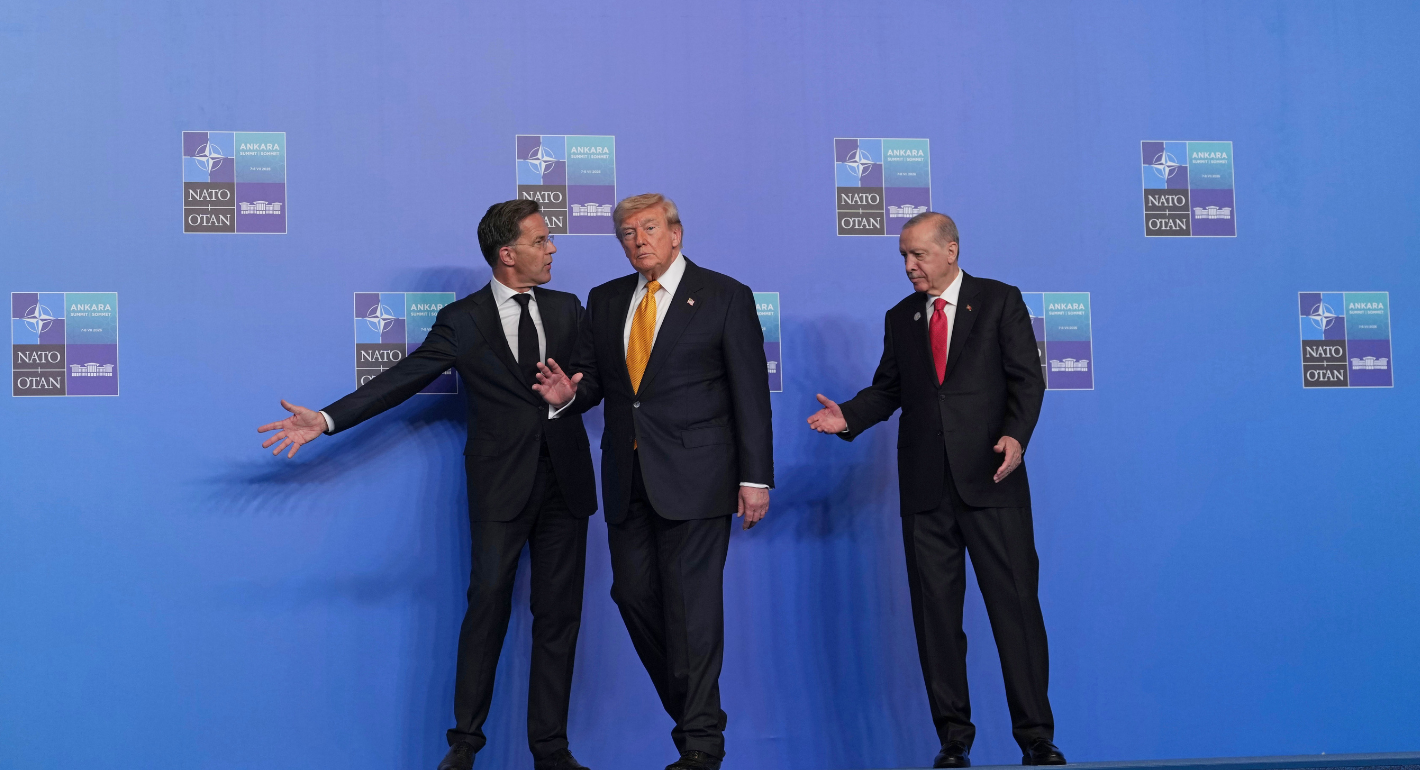
Nearly a year and a half after Europeans leaned into sucking up to Trump, the strategy has produced some benefits when it comes to Ukraine.
Rym Momtaz
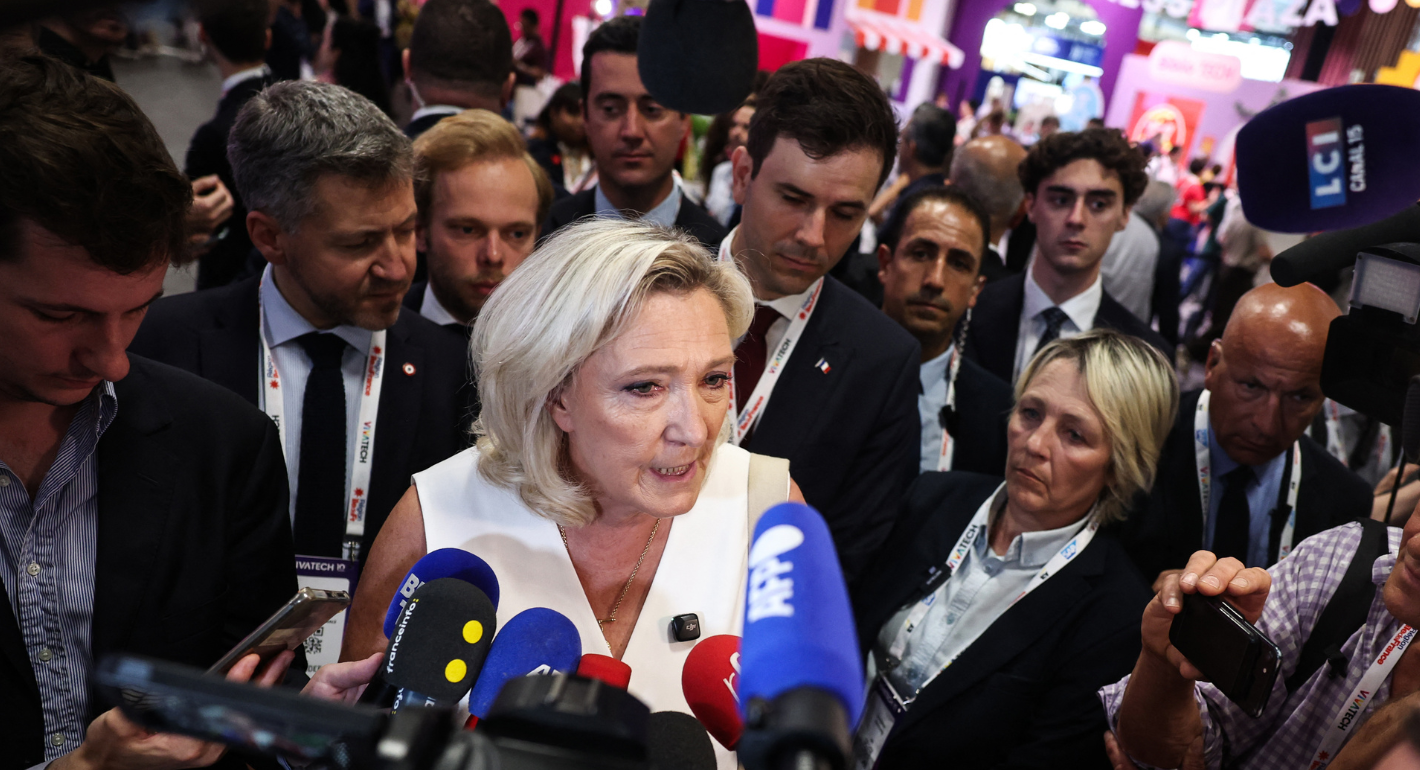
Far-right leader Marine Le Pen can—and will—run in France’s next presidential election. What does the outcome of her appeal against a 2025 embezzlement conviction mean for the country’s political future?
Catherine Fieschi