

Commentary
Judy Dempsey
{
  "authors": [
    "Judy Dempsey"
  ],
  "type": "commentary",
  "blog": "Strategic Europe",
  "centerAffiliationAll": "",
  "centers": [
    "Carnegie Endowment for International Peace",
    "Carnegie Europe"
  ],
  "collections": [],
  "englishNewsletterAll": "",
  "nonEnglishNewsletterAll": "",
  "primaryCenter": "Carnegie Europe",
  "programAffiliation": "",
  "programs": [],
  "projects": [],
  "regions": [
    "Eastern Europe",
    "Russia",
    "Ukraine",
    "Western Europe",
    "Europe"
  ],
  "topics": [
    "Democracy",
    "Foreign Policy",
    "EU",
    "Security",
    "Civil Society"
  ]
}
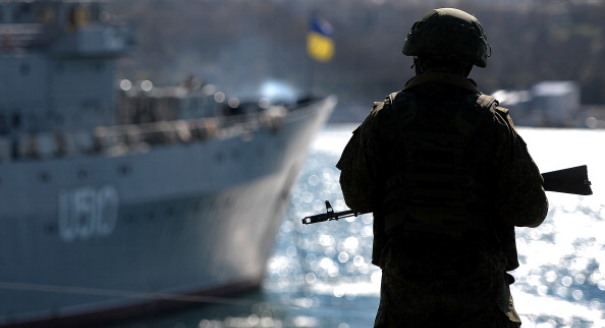
Source: Getty
The longer the EU and the United States ponder what measures to take against Russia, the more Vladimir Putin may be encouraged to meddle in more than just Crimea.
Russia is fast establishing facts on the ground in Crimea. Over recent days, more soldiers have entered the region. The Kremlin denies that they are under Russian command. Yet they drive vehicles with Russian military plates. When interviewed by Western reporters, the soldiers say they are from Russia.
On March 6, Crimea’s regional parliament voted for the peninsula to join Russia. Russian President Vladimir Putin told German Chancellor Angela Merkel and British Prime Minister David Cameron that in doing so, the Crimean authorities were acting on the basis of international law. Their aim was to protect the “legitimate interests of the population of Crimea,” Putin added.
The Crimean parliament also announced that it would hold a referendum on its decision on March 16. Both Merkel and Cameron warned Putin against holding such a vote. The outcome is a foregone conclusion. EU and U.S. leaders seem powerless to stop it. They keep calling on Russia not to escalate the crisis and to negotiate with the interim government in Kiev.
So far, Moscow has ignored all such requests. And Russia has snubbed Germany’s diplomatic efforts. In recent weeks, German Foreign Minister Frank-Walter Steinmeier has gone out of his way to give diplomacy a chance, yet Russia seems uninterested. And the longer EU and U.S. diplomats try to pursue the path of mediation, the more Putin can play for time. That means consolidating his grip over Crimea.
Besides its growing military presence, Russia is gaining control in other ways, too. The Organization for Security and Cooperation in Europe, of which Russia is a member, has been prevented from sending observers into Crimea. Its unarmed monitors have been forced back several times. At one stage, shots were fired at them.The OSCE’s representative for freedom of the media issued a grim report on March 8. Dunja Mijatović said that several television channels have had their signals cut and have been replaced by Russian state television. The Internet connection of the Crimean Tatar channel ATR is down. Unidentified assailants have attacked journalists and confiscated their equipment, Mijatović added.
If the Crimean authorities are so confident of popular support for joining Russia, why are they afraid of allowing OSCE monitors, journalists, and nongovernmental organizations access to the region?
What is happening now in Crimea mirrors developments in Russia. Putin’s rule is becoming ever more repressive and paranoid about diverging opinions, possibly reflecting the mentality of his KGB background. Those trends speeded up after Putin was elected president for the second time in 2012, and have accelerated further over recent weeks.
In Moscow, independent-minded television presenters and reporters have been sacked because they dared to criticize Putin’s takeover of Crimea or report in an unbiased way about the interim government in Kiev.
The Kremlin has reinforced its crackdown on nongovernmental organizations and independent public opinion polling institutes. Members of the Pussy Riot band were recently attacked in a restaurant in Moscow. Russian opposition leader Alexei Navalny has been put behind bars, and not for the first time. It seems that any opinions that do not reflect the Kremlin’s view on Ukraine are being muzzled.
The EU and the United States can still act. Waiting for diplomacy to work merely plays into Putin’s hands. He has already started unilaterally changing Europe’s borders. He has set a dangerous precedent in Crimea, and he could be tempted to go further. Poland, the Baltic states, and Sweden understand what is unfolding in Europe: the continent’s post–Cold War order and values are now vulnerable.
Steps by the EU to boycott this year’s G8 summit in Sochi or suspend talks on visa-free travel are, at best, symbolic measures. They will not alter the facts on the ground. What would make a difference is a freeze on assets held by Russian banks and oligarchs throughout Europe and the United States. The EU should seriously consider such sanctions. If European leaders do not act soon, more than Crimea will be lost. The EU’s soft tools will be deemed useless.

Nonresident Senior Fellow, Carnegie Europe
Judy Dempsey is a nonresident senior fellow at Carnegie Europe
Recent Work
Judy Dempsey
Judy Dempsey
Carnegie does not take institutional positions on public policy issues; the views represented herein are those of the author(s) and do not necessarily reflect the views of Carnegie, its staff, or its trustees.

Trump is distracted and Ukraine wants Europe to step up. The continent’s leaders must find their voice and assert it in talks with Russia.

Alissa de Carbonnel

Mounting economic strain and battlefield losses will not necessarily make the Kremlin less dangerous. They could instead push Moscow toward a more aggressive hybrid campaign designed to test NATO’s Eastern flank, exploit allied hesitation, and fracture European resolve.

Maksym Beznosiuk
Over the past ten years, NATO has held almost as many summits as it did during the entirety of the Cold War. Are they still useful, or is it time to stop holding annual meetings?

Rym Momtaz, ed.
Nearly a year and a half after Europeans leaned into sucking up to Trump, the strategy has produced some benefits when it comes to Ukraine.
Rym Momtaz
Far-right leader Marine Le Pen can—and will—run in France’s next presidential election. What does the outcome of her appeal against a 2025 embezzlement conviction mean for the country’s political future?
Catherine Fieschi