

Commentary
Judy Dempsey
{
  "authors": [
    "Judy Dempsey"
  ],
  "type": "commentary",
  "blog": "Strategic Europe",
  "centerAffiliationAll": "",
  "centers": [
    "Carnegie Endowment for International Peace",
    "Carnegie Europe"
  ],
  "collections": [
    "Europe’s Eastern Neighborhood",
    "Ukraine’s Long Shadow"
  ],
  "englishNewsletterAll": "",
  "nonEnglishNewsletterAll": "",
  "primaryCenter": "Carnegie Europe",
  "programAffiliation": "",
  "programs": [],
  "projects": [],
  "regions": [
    "Russia",
    "Europe",
    "Eastern Europe",
    "Ukraine",
    "Western Europe"
  ],
  "topics": [
    "Foreign Policy",
    "EU",
    "Security",
    "Political Reform"
  ]
}
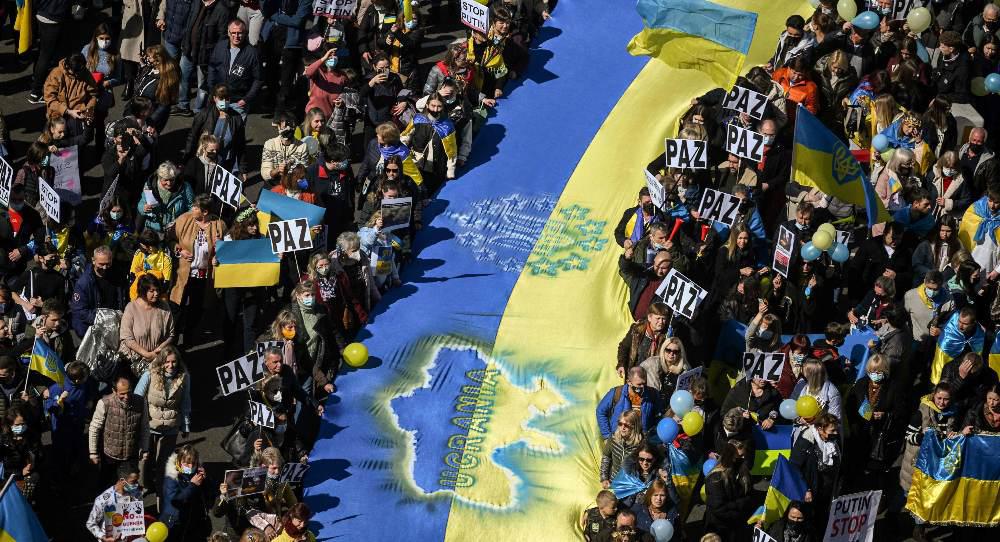
Source: Getty
Ten years after Strategic Europe was launched, the EU, with Germany playing a pivotal role, may finally start acting strategically. It will mean shattering illusions about war, peace, and stability.
When Strategic Europe was founded a decade ago, the very title of the blog was designed to raise questions about why the EU could not—but should—do strategy.
There were several reasons why a prosperous bloc, often basking in a comfort zone despite the arc of instability in its eastern and southern neighborhoods, avoided acting strategically.
There was no common threat perception among the member states. There was little effort to defend the rule of law and uphold an independent judiciary inside the EU itself. There was no coherent, consistent foreign and security policy that should have emerged after the Yugoslav Wars of the 1990s. The one big and enduring success was the enlargement of the EU, aimed at making Europe whole and united.
More recently, there has been much self-congratulating when the member states agreed an enormous spending fund so that European economies would recover from the COVID-19 pandemic. There was also an element of smugness about how it was the EU that was the leading the way for dealing with climate change. And the bloc even harbored illusions that it was time to develop its own kind of “strategic autonomy.”
The Donald Trump years, so lambasted by most European governments, created a delusionary notion that the EU could go it alone in having its own strategic compass, but without understanding what was happening to the West during the post–Cold War era.
Little came of those ambitions related to autonomy. Germany, led by Chancellor Angela Merkel from 2005 until November 2021, worked to shape foreign and economic policy to fit Berlin’s own agenda and interests, not Europe’s. Russia and China are cases in point.
Russia’s invasion of Ukraine on February 24, 2022 has finally shattered Germany’s illusions. Berlin now faces the immense challenge of making Europe strategically and politically relevant.
Chancellor Olaf Scholz has already moved with a speed that has shaken his own Social Democratic Party, pacifists, pro-Russia factions as well as the political establishment and the powerful business lobbies.
In a raft of decisions, with the United States pushing Berlin to discard its sentimental and delusionary beliefs about the post–Cold War status quo, Scholz tore up a rulebook that made relations with Russia central to Berlin’s economic, energy and foreign policies.
He agreed to send weapons to Ukraine. He supported the exclusion of Russia from the SWIFT international payment system. He halted the controversial Nord Stream 2 gas pipeline project. As for defense spending, something which Merkel wasn’t interested in, let alone the parlous state of the country’s armed forces, Scholz said Germany would now be meeting the NATO target of spending 2 percent of its gross domestic product on defense.
In short, the post–1991 peace dividend and the reunification of Germany, despite the subsequent wars in Afghanistan, in Iraq, the turmoil following the Arab Spring of 2011, didn’t fundamentally lead to a reassessment of Berlin’s role in Europe—or the West. Russia’s invasion of Ukraine has changed all that.
How this war ends will have profound implications for Germany, the EU, and the West. There are many uncertainties. But one thing is sure: Europe can no longer return to its comfort zone.
Strategically, the EU, with Berlin playing a major role, has to tackle several uncomfortable issues.
First, the union needs a strategic policy toward Eastern partners. This means reassessing the enlargement template and the neighborhood policy, which is still so unclear about its goals.
Russia’s invasion of Ukraine begs big questions about the EU’s relations with Moldova, Armenia, Georgia, and of course Ukraine and Belarus. Russia’s military onslaught against Ukraine has made these countries insecure and vulnerable. They will require substantial economic and political assistance anchored in a new perspective about their long-term relationship with the EU.
Second, now that the certification of Nord Stream 2 is stopped and big energy companies, including BP and Shell are quitting Russian ventures, Europe will have to speed up building liquefied natural gas terminals. The bloc’s commitment to accelerating the shift to renewable energy while reducing its dependence on Russian energy has big implications for the German coalition. Merkel’s decision to phase out all nuclear energy plants by this year may have to be revisited. If so, it will meet resistance from Scholz’s Green coalition partners that oppose nuclear power.
Third, Europe must do much more to support civil society, an independent civil service, and judiciary aimed at weakening corruption, strengthening state institutions, and increasing their security.
Fourth, the EU must find a way to evolve into a viable defense and security player that will dovetail with NATO.
There is no doubt that without U.S. President Joe Biden at the helm, NATO would not have moved quickly to bolster its eastern and southern flanks and European governments would have dragged their feet over tougher sanctions on Russia.
As developments unfold in Ukraine hour by hour, NATO and the EU surely will come under pressure to consider a no-fly zone over Ukraine.
This carries huge risks related to how Russia would react. But the war in Ukraine has already upended the post–1991 European security order. Picking up the pieces is no longer possible. Shaping the future of Europe, the West—and Russia—is fast becoming a prerogative that Germany, with its allies, has to seize. Strategically.

Nonresident Senior Fellow, Carnegie Europe
Judy Dempsey is a nonresident senior fellow at Carnegie Europe
Recent Work
Judy Dempsey
Judy Dempsey
Carnegie does not take institutional positions on public policy issues; the views represented herein are those of the author(s) and do not necessarily reflect the views of Carnegie, its staff, or its trustees.

Trump is distracted and Ukraine wants Europe to step up. The continent’s leaders must find their voice and assert it in talks with Russia.

Alissa de Carbonnel

Mounting economic strain and battlefield losses will not necessarily make the Kremlin less dangerous. They could instead push Moscow toward a more aggressive hybrid campaign designed to test NATO’s Eastern flank, exploit allied hesitation, and fracture European resolve.

Maksym Beznosiuk

Over the past ten years, NATO has held almost as many summits as it did during the entirety of the Cold War. Are they still useful, or is it time to stop holding annual meetings?

Rym Momtaz, ed.
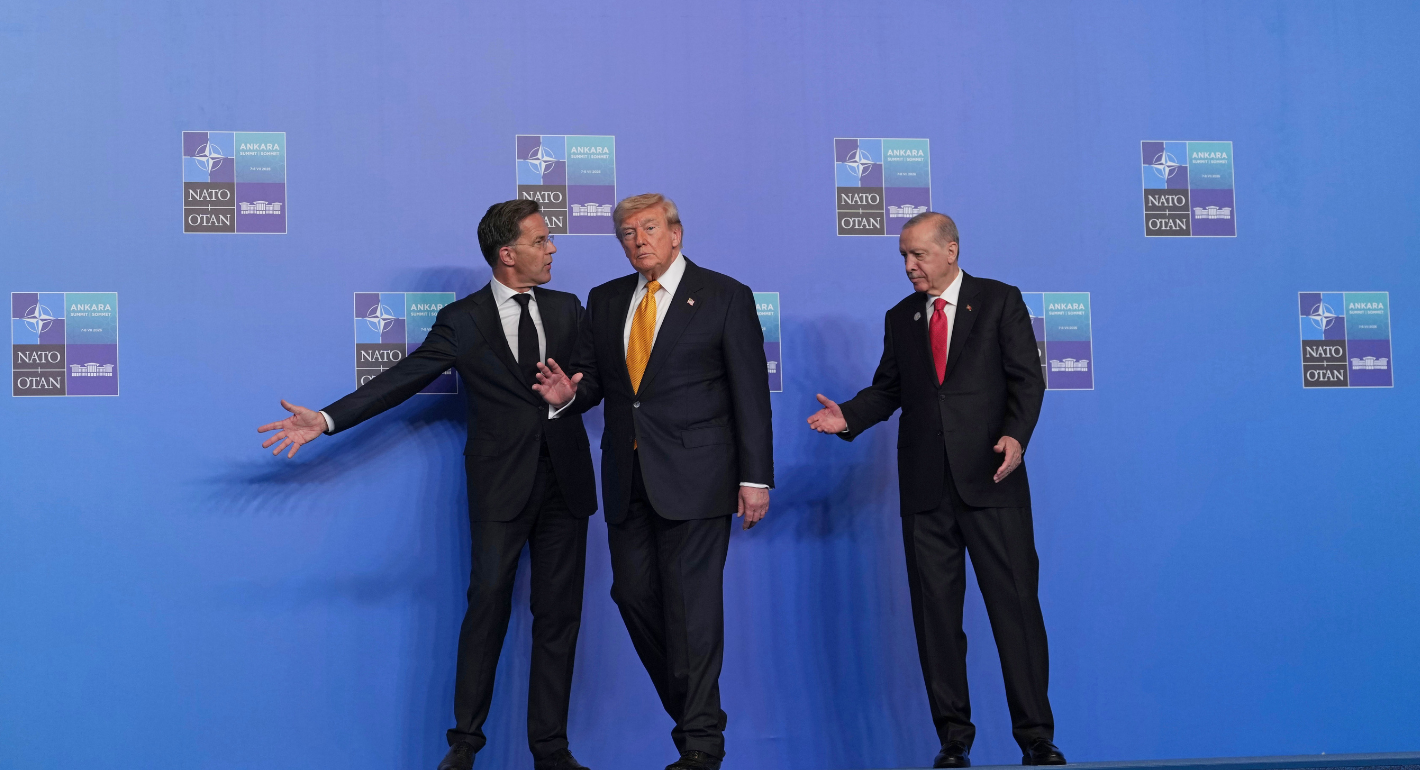
Nearly a year and a half after Europeans leaned into sucking up to Trump, the strategy has produced some benefits when it comes to Ukraine.
Rym Momtaz
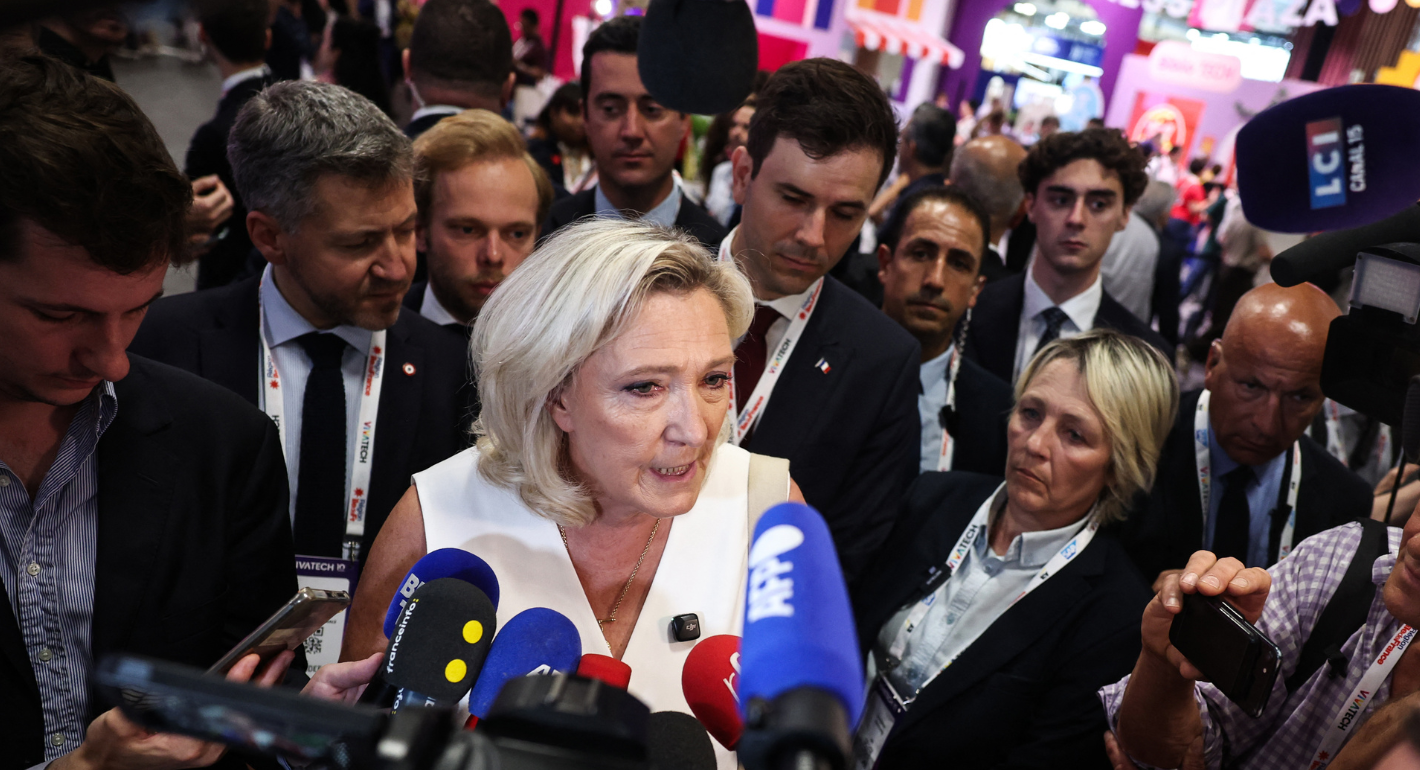
Far-right leader Marine Le Pen can—and will—run in France’s next presidential election. What does the outcome of her appeal against a 2025 embezzlement conviction mean for the country’s political future?
Catherine Fieschi