

Commentary
Judy Dempsey
{
  "authors": [
    "Judy Dempsey"
  ],
  "type": "commentary",
  "blog": "Strategic Europe",
  "centerAffiliationAll": "",
  "centers": [
    "Carnegie Endowment for International Peace",
    "Carnegie Europe"
  ],
  "collections": [
    "Europe’s Eastern Neighborhood"
  ],
  "englishNewsletterAll": "",
  "nonEnglishNewsletterAll": "",
  "primaryCenter": "Carnegie Europe",
  "programAffiliation": "",
  "programs": [],
  "projects": [],
  "regions": [
    "Russia",
    "Europe",
    "Western Europe",
    "Germany",
    "Eastern Europe"
  ],
  "topics": [
    "Foreign Policy",
    "Economy",
    "Climate Change",
    "EU"
  ]
}
Source: Getty
The EU’s unity on Ukraine could unravel as energy prices soar and Germany continues to buy Russian gas. Berlin’s strategic and leadership is urgently needed.*
There’s no end to the doom and gloom. And it’s not only about what’s happening in Ukraine.
Hardly a day goes by without the German media, energy agencies, and politicians warning about how energy prices will rise even further.
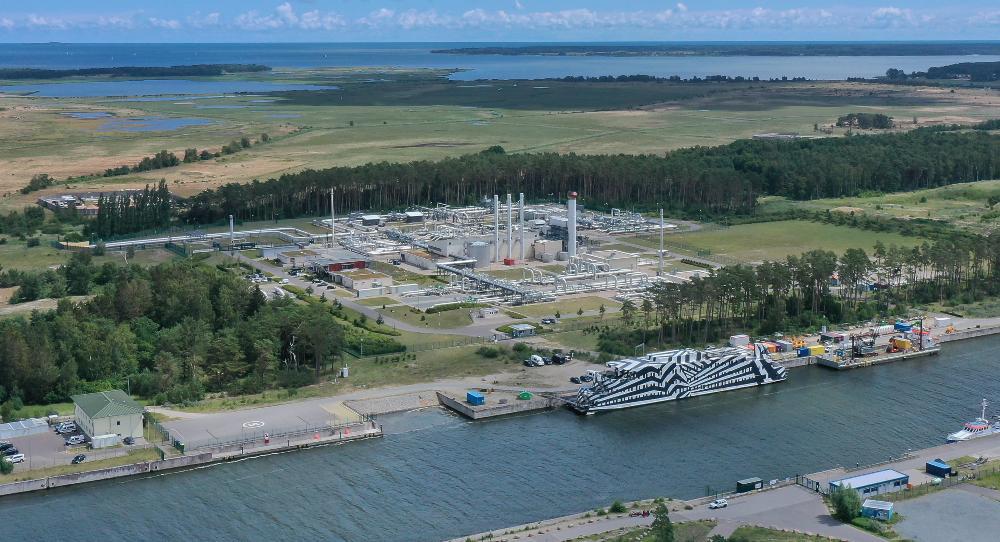
The EU’s decision to curb imports of Russian energy and Berlin’s decision to stop the Nord Stream 2 pipeline, which was meant to transmit gas directly from Russia to Germany, will test the public’s support for Ukraine. And it will test the unity of the EU.
The cost of energy for German consumers has doubled. The latest forecast is that it could triple. The Green party’s Robert Habeck, minister for economy and climate action, hopes that the country will be able to cope during the coming winter.
The storage facilities, currently filled to 65 percent capacity, will be filled to 90 percent by December 2022. It would help, Habeck, argues, if Germans used less energy. Imposing a speed limit, opposed by one of the coalition partners, the liberal Free Democrats, would be one obvious measure. But the powerful car lobby still prevails. In the meantime, there are plans to support those who cannot pay their steep energy bills.
Habeck, who has spent much of the past six months seeking alternative energy supplies, is holding his nerve, unlike Chancellor Olaf Scholz.
Either Scholz fears a backlash against the energy prices from industry and consumers and how it will hit growth, or he doesn’t want to make a clean break with Russia when it comes to energy imports. Whatever the reason, his policies toward Moscow and Kyiv affect Europe’s commitment to supporting Ukraine.
Take Scholz’s recent decision to persuade the Canadian government to return an essential turbine it was servicing for Siemens so that the Nord Stream 1 pipeline could resume operations. This could easily backfire.
Russia suspended deliveries via that pipeline on the grounds that the pipeline needed regular servicing. Now that that the turbine is on the way back to Germany—with accusations that Ottawa bypassed some sanctions against Russia—it is unsure if Russian President Vladimir Putin will set conditions to Berlin for resuming gas deliveries. This is a card he has so often played.
Having used energy exports to Ukraine and some EU countries as a geostrategic if not blackmailing instrument, Putin is now preying on the German public’s fears about a cold and expensive winter. One can imagine how Scholz and the German industry and consumers will thank Putin if he opens the Nord Stream 1 tap.
Doing that would mean transferring payments to Moscow that will help finance and prolong its brutal war in Ukraine, including the continuing indiscriminate killing of Ukrainian civilians and the indiscriminate destruction of cities, towns, and villages. That is not in Germany’s or Europe’s interests. But don’t underestimate the war fatigue—something incomprehensible to Ukrainians—in some European countries might set in.
As for Scholz’s government, it is easy to criticize it. Since Germany is the EU’s largest economy, there is often the hope its status would be complemented by leadership at the European level.
In the case of Russia’s invasion of Ukraine, this has not happened. It’s not just because Scholz is reluctant to militarily defend Ukraine, or unwilling to stop all oil and gas imports from Russia. It is because Berlin shuns leadership in the European and transatlantic context.
For decades, successive German governments embedded their economy, trade policies, and democracy into the EU, while pursuing their own bilateral policies with regard to Russia and China.
For decades too, Berlin could rely on the security guarantees provided by the United States, without too much input when it came to Germany increasing its defense spending or modernizing its armed forces.
The post–1945 Euro-Atlantic structures—NATO, America’s security umbrella, and the EU—made this defensible at first, but over time, it became increasingly convenient for Germany to avoid a leadership role.
Certainly, more recently, former chancellor Angela Merkel persuaded the EU to impose sanctions on Russia after it illegally annexed Crimea in 2014. She also kept the Eurozone together during the global financial crisis. But these were short-term measures—not strategic decisions. The latter would have meant asking what kind of long-term relationship the Europeans needed and wanted with its Eastern neighbors and Russia, and what kind of direction the EU should take.
These issues require a strategic mindset that is anchored in leadership, not ambiguity. One anchored in courage, not fear, which Putin skillfully exploits. Such a mindset requires communicating hard choices, not obfuscation. The EU might have a very different outlook—even a strategic one—if Germany opted for that mindset. The war in Ukraine makes it all the more urgent.
* Strategic Europe goes on summer vacation on July 19 and will return on August 23. We wish all our readers, contributors, friends, and colleagues a safe, healthy, and restful summer. ~ Judy Dempsey

Nonresident Senior Fellow, Carnegie Europe
Judy Dempsey is a nonresident senior fellow at Carnegie Europe
Recent Work
Judy Dempsey
Judy Dempsey
Carnegie does not take institutional positions on public policy issues; the views represented herein are those of the author(s) and do not necessarily reflect the views of Carnegie, its staff, or its trustees.

The EU can impose sanctions but struggles to enforce them without the United States. With Washington increasingly disinterested in backing European interests, the bloc must now fend for itself.


Nicu Popescu, Tiago Antunes

Russia is testing the waters of NATO’s mutual defense clause. What do strikes in Romanian territorial waters mean for the alliance’s posture toward Moscow?

Dimitar Bechev

With its public finances in shambles, the far right polling at 35 percent ahead of the 2027 presidential election, and a growing protest movement, is France’s crisis a threat to the EU’s geopolitical awakening?

Rym Momtaz, ed.

Ahead of a tough winter for Ukraine, Donald Trump’s swing back toward Russia bodes ill. But instead of panicking, Kyiv’s European allies are focusing on action.
Rym Momtaz

While the EU and European governments are embracing the much-lauded middle-power moment, this entails three difficult conundrums.

Richard Youngs