

Commentary
Marc Pierini
{
  "authors": [
    "Marc Pierini"
  ],
  "type": "commentary",
  "blog": "Strategic Europe",
  "centerAffiliationAll": "",
  "centers": [
    "Carnegie Endowment for International Peace",
    "Carnegie Europe"
  ],
  "collections": [],
  "englishNewsletterAll": "",
  "nonEnglishNewsletterAll": "",
  "primaryCenter": "Carnegie Europe",
  "programAffiliation": "",
  "programs": [],
  "projects": [],
  "regions": [
    "Europe",
    "Türkiye",
    "Middle East",
    "Western Europe",
    "Russia"
  ],
  "topics": [
    "Foreign Policy",
    "Security",
    "Economy",
    "Political Reform",
    "EU",
    "Democracy"
  ]
}
Source: Getty
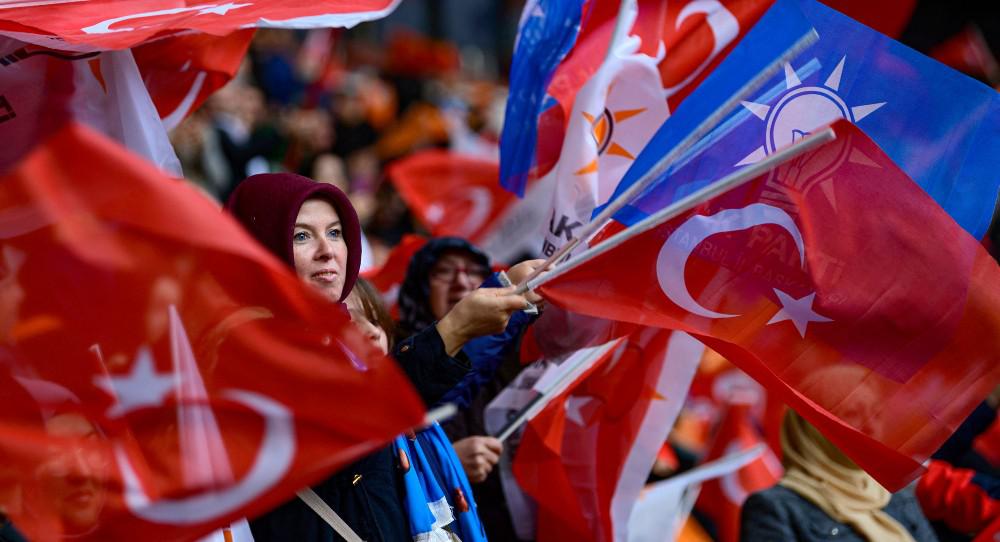
Turkey has been undergoing important political, economic, and foreign policy shifts that impact its European partners. But with Turkish parliamentary and presidential elections approaching, what matters most is the kind of society voters want for themselves.
Since the Justice and Development Party (AKP) came to power in November 2002, Turkey has gone through its first decade of positive economic and normative transformation, in tune with European countries and institutions.
2013 constituted a first watershed, when then prime minister Recep Tayyip Erdoğan was confronted with the Gezi protests—which he labelled “terrorism”—and, later in December, with accusations of corruption, which were never investigated. The political outcome was a divorce between the AKP and its hitherto ally, the Gülen Movement.
After a failed coup in July 2016 was blamed on Gülenists, a massive purge of state institutions, countless prosecutions, and a rapprochement with Moscow occurred. Following the adoption of a hyper-presidential system in an April 2017 constitutional referendum, the presidential election of June 2018 led to the actual reinforcement of President Erdoğan’s personal powers. By that time, Turkey’s political architecture was already very distant from European and Western standards.
2019 constituted a second watershed, both internally—the AKP lost massively in the March municipal elections, including in Istanbul despite a June rerun—and externally with the delivery of Russian S-400 missile systems in July, which was a massive blow to NATO’s missile defense architecture.
2020 saw hostile moves against France and Greece, some based on preexisting litigations on maritime borders and exploration rights. Despite the widened gap with European standards, Ankara continued to declare that EU accession was its ultimate objective and that it was fully committed to NATO.
On the domestic political front, Turkey is currently undergoing a bout of election fever. For the first time in twenty years, Recep Tayyip Erdoğan is theoretically in a position to lose his presidential seat, his AKP-Nationalist Movement Party (MHP) majority in parliament, or both.
As a precaution, a tailor-made electoral toolbox is at work.
This includes the modification of the electoral law in favor of the incumbent coalition; judicial actions against the opposition People’s Democratic Party (HDP) or individuals, for example Istanbul’s Mayor Ekrim İmamoğlu; the muzzling of the media and civil society—like the “fake news law” aimed at controlling social media and the Kavala case aimed at intimidating citizens.
On top of that, state institutions and media are at the service of the incumbent leadership. There are doctored statistics on inflation and hard currency reserves. There is a raft of electoral spending. And the recurrent nationalist narratives against Western partners.
On the economic front, Turkey’s authorities have opted for a non-conventional policy based on the premise that low interest rates would bring inflation down. This has so far failed to produce tangible results for the average citizen while strongly discouraging Western capital inflows such as short-term money and direct investment. Moreover, the increased trade and financial relations with Russia, Gulf countries, and other non-Western partners is resulting in a growing disconnect from Turkey’s American and European providers of capital, innovation, and technology.
On the foreign policy front, behind a proclaimed “balanced policy” between the West and Russia, a pivot away from NATO and Europe has taken place. Ankara is entrusting its missile defense to Russia, allowing it to gain a major strategic benefit by effectively eliminating Patriot or Eurosam missiles as well as F-35 stealth aircraft from its southern border with NATO.
Turkey is multiplying threats against Greece, at a crucial moment in NATO’s history. It is blocking Finland’s and Sweden’s accession to NATO, one of the most significant enlargements of the alliance in its seventy-four-year history in light of Russia’s aggression against Ukraine. It is refraining from joining Western sanctions against Moscow. It is engineering a boom in trade and financial relations with Russia, ultimately compensating in part Western sanctions. It is reversing its Syria policy to meet Moscow’s requirements, with the ensuing risks for Syrian refugees in Turkey. And it is now advocating a two-state solution in Cyprus. Simultaneously, Ankara has significantly developed its military industry, aiming at a higher degree of autonomy.
In sum, the transformation of Turkey’s political, defense, economic, and foreign policy fundamentals is very profound. Some of these elements are immune from the election results, others are not.
All this matters for Europe and for the West in general in three domains.
In the security domain, Ankara’s pursuit of independence from the West was transformed by Moscow into a policy of increasingly anchoring Turkey to Russia, with ensuing losses for NATO and the EU.
The new defense architecture, the refusal to sanction Russia, the hostile narratives against Greece, and the new Syria policy will translate, irrespective of the election results, into lasting divergences with Western partners. The incumbent leadership’s victory in the elections would definitely help Moscow advance its long-term goals, at the expense of NATO and the EU.
Similarly, in the economic and trade fields, Turkey will inevitably lose part of its European anchor. Fixed European industrial assets in Turkey, for example in the automotive industry, will remain, but they will not grow further.
As foreign direct investment is a vehicle for technology and innovation, Turkey will lose an irreplaceable source of technological progress, while European countries will miss out on dynamic Turkish industrial partners. Russia and the Gulf countries have nothing to offer in terms of industrial skills.
In the political arena, Turkey might find itself estranged from the democratic world if it continues to follow—and internalize—the Russian brand of governance. This would be bad news for European countries, as they would have to cope with a permanently disruptive neighbor.
Even more importantly, the citizens of Turkey would have to suffer from an entrenched autocratic system of governance, based on no rule of law and permanent conspiracy theories. Ultimately, in Turkey’s upcoming elections, the stakes for foreign countries are secondary. What matters is the kind of society voters want for themselves, for their children, and for the country. The Chinese, Iranian, Russian, or Syrian brands of autocracy may be appealing to many, but Turkey has a lot to lose in imitating them.

Senior Fellow, Carnegie Europe
Marc Pierini is a senior fellow at Carnegie Europe, where his research focuses on developments in the Middle East and Turkey from a European perspective.
Recent Work
Marc Pierini
Marc Pierini
Carnegie does not take institutional positions on public policy issues; the views represented herein are those of the author(s) and do not necessarily reflect the views of Carnegie, its staff, or its trustees.
The battle over free speech has taken center stage since U.S. Vice President JD Vance accused Europe of censorship. From travel bans to social media regulation, especially around the Israel-Palestine conflict, are liberal democratic governments weaponizing free speech?

Rym Momtaz, ed.
Europe seems to have accepted its sidelining in the Middle East. The EU must reassert its support for the international rules-based order and step up engagement.
Rym Momtaz

Amid uncertainty caused by the Iran war, the global drive for nonproliferation has stalled. With Europe diplomatically marginalized and countries reassessing their nuclear options, efforts to curb the spread of nuclear weapons risk becoming irrelevant.

Jane Darby Menton
Preparing candidate countries for EU membership is no longer enough. As the enlargement process becomes a reality, the union must also prepare its own societies.

Iliriana Gjoni
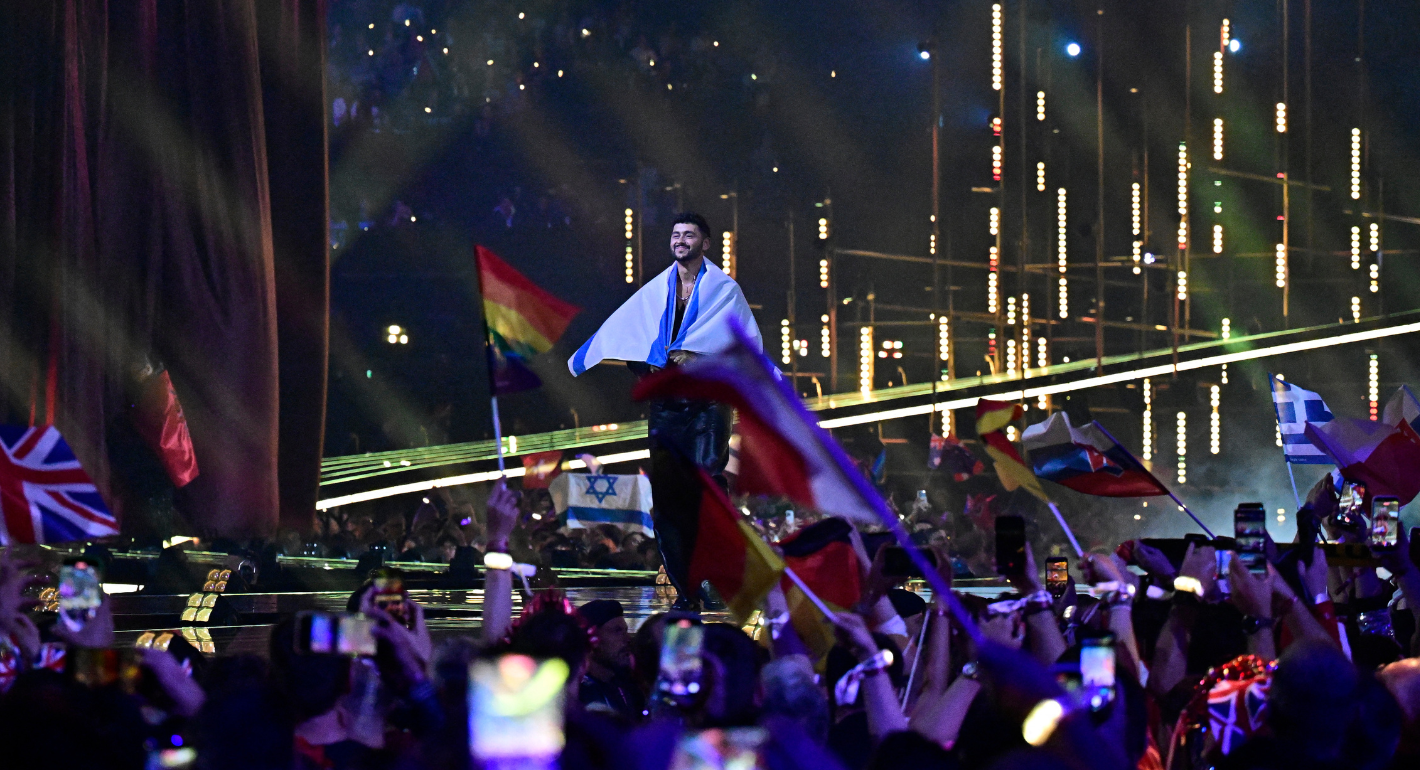
Five countries staged the biggest political boycott in Eurovision history over Israel’s participation. With the FIFA World Cup and other sporting or cultural touchstones on the horizon, are boycotts effective?
Rym Momtaz, ed.