

Commentary
Judy Dempsey
{
  "authors": [
    "Judy Dempsey"
  ],
  "type": "commentary",
  "blog": "Strategic Europe",
  "centerAffiliationAll": "",
  "centers": [
    "Carnegie Endowment for International Peace",
    "Carnegie Europe"
  ],
  "collections": [
    "Europe’s Eastern Neighborhood"
  ],
  "englishNewsletterAll": "",
  "nonEnglishNewsletterAll": "",
  "primaryCenter": "Carnegie Europe",
  "programAffiliation": "",
  "programs": [],
  "projects": [],
  "regions": [
    "Europe",
    "North America",
    "Eastern Europe",
    "Ukraine",
    "Western Europe"
  ],
  "topics": [
    "Foreign Policy",
    "EU",
    "Security",
    "Democracy"
  ]
}
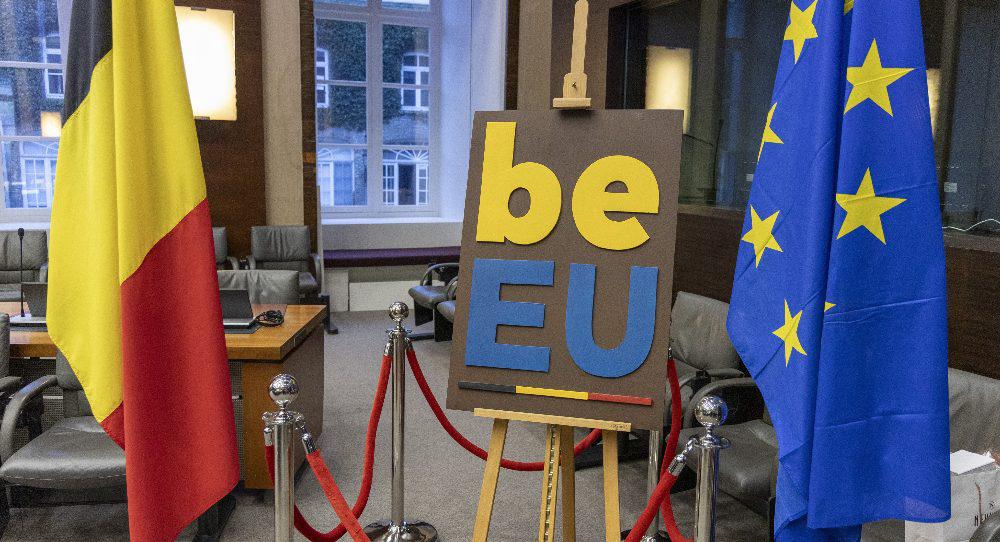
Source: Getty
In an election-filled year, the EU cannot afford to look inward. Amid rising populism, the union must forge a common threat perception and bolster support for Ukraine.
The doomsayers are having a good run.
As many European countries—and the European Parliament—gear up for elections, pundits and opinion polls are predicting big wins for far-right and populist parties.
Over in the United States, unless the courts can hinder him, former president Donald Trump is in an unassailable position to clinch the Republican party nomination to run for the White House.
All these elections are important. They are about confirming the strengths of the democratic system. They are about the role of the citizens and how they view their country. And they are about leadership. The outcomes will shape the future security of the old continent.
As it is, Europe is faced with multiple crises, from the continuing Russian war against Ukraine and Israel’s war against Hamas, to the Iran-backed Houthi attacks on the Red Sea with big consequences for global trade. Tempting as it may be, the upcoming European elections should not be an excuse to look inward.
That’s easier said than done. Voters generally care about bread and butter issues such as inflation—and, increasingly, migration. But leaders can shape the agenda if they have the political will and conviction to communicate what is at stake as Europeans enter an uncertain 2024.
At stake are two issues. If these are not addressed during the election campaigns, the union as we know it can close shop in the sense of abandoning any foreign policy ambition to make a difference.
The first issue is sovereignty.
After creating a post–1945 European architecture staunchly encouraged by the United States, the European house is in danger of fraying. Although member states willingly and legally ceded a degree of national sovereignty to the institutions in Brussels, a backlash has been taking place in several EU countries.
Whether it is in Hungary or the Netherlands, Slovakia, or among governing or opposition parties in France, Finland, Germany, Italy, or Poland, the idea and language of national sovereignty prevails.
It’s not about leaving the EU, which Britain chose to do. These nationalist forces know the financial, economic, and social advantages of being in the union. But—and this is a real weakness of their rhetoric about sovereignty—they don’t explain precisely what they mean by sovereignty apart from limiting “interference” from Brussels. They also don’t support closer integration or suggest how to make the institutions more accountable and democratic.
Indeed, Poland’s new pro-EU Civic Coalition led by Prime Minister Donald Tusk is in no rush to endorse a more integrated EU, especially in the field of foreign policy. He is no fan of abolishing the veto for foreign-policy decisions, and neither are many other countries. That aspect of sovereignty clashes with the EU’s ambitions to be a global player.
Here, reality sets in. The EU is not a global player.
If it was such a player, it would have a credible foreign, security, and defense policy. It would be able to play some role in the Middle East, where over the years it has bankrolled the discredited Palestinian Authority and established special political, economic, and technological ties with Israel. Europe’s divided reaction to what is taking place between Israel and Hamas confirms yet again its decades-long lack of influence or strategy in the Middle East.
But as a regional player, Europe could make a difference.
Since its security, defense, and strategic outlook remain weak and confused, it should focus on establishing water-tight defense and security ties with NATO, as the EU’s civilian capabilities could complement the alliance’s military role. That would give the European continent a greater sense of safety and responsibility at a time when the United States’ security umbrella cannot be taken for granted.
Closer cooperation with NATO could also make a difference to Ukraine.
The EU’s political and economic support for Kyiv has been laudable. But it’s not enough. Promises of providing one million artillery shells are lagging behind because of the way Europe’s armaments industries are organized. The EU, collectively, cannot do defense.
There is a second, even more compelling issue EU leaders need to address ahead of the European elections. Ukraine is the union’s neighbor. The outcome of the war will shape the future of the continent and Russia’s role within it. It will fundamentally affect the security of Europe.
Yet this point is not being conveyed to most EU citizens. Poland, the Baltic states, and the Czech Republic understand what the war is about—but not several other EU countries. As a bloc, the union still lacks a common threat perception when it comes to Russia’s intentions. Better communication from the top about the significance of supporting Ukraine is critical.
If the EU cannot do global foreign policy, it should instead focus on its region. This is a chance for Europe to make ambition work.

Nonresident Senior Fellow, Carnegie Europe
Judy Dempsey is a nonresident senior fellow at Carnegie Europe
Recent Work
Judy Dempsey
Judy Dempsey
Carnegie does not take institutional positions on public policy issues; the views represented herein are those of the author(s) and do not necessarily reflect the views of Carnegie, its staff, or its trustees.

Trump is distracted and Ukraine wants Europe to step up. The continent’s leaders must find their voice and assert it in talks with Russia.

Alissa de Carbonnel

Mounting economic strain and battlefield losses will not necessarily make the Kremlin less dangerous. They could instead push Moscow toward a more aggressive hybrid campaign designed to test NATO’s Eastern flank, exploit allied hesitation, and fracture European resolve.

Maksym Beznosiuk

Over the past ten years, NATO has held almost as many summits as it did during the entirety of the Cold War. Are they still useful, or is it time to stop holding annual meetings?

Rym Momtaz, ed.
Nearly a year and a half after Europeans leaned into sucking up to Trump, the strategy has produced some benefits when it comes to Ukraine.
Rym Momtaz
Far-right leader Marine Le Pen can—and will—run in France’s next presidential election. What does the outcome of her appeal against a 2025 embezzlement conviction mean for the country’s political future?

Catherine Fieschi