

Commentary
Judy Dempsey
{
  "authors": [
    "Judy Dempsey"
  ],
  "type": "commentary",
  "blog": "Strategic Europe",
  "centerAffiliationAll": "",
  "centers": [
    "Carnegie Endowment for International Peace",
    "Carnegie Europe"
  ],
  "collections": [
    "Transatlantic Cooperation"
  ],
  "englishNewsletterAll": "",
  "nonEnglishNewsletterAll": "",
  "primaryCenter": "Carnegie Europe",
  "programAffiliation": "",
  "programs": [],
  "projects": [],
  "regions": [
    "Russia",
    "Europe",
    "North America",
    "Western Europe",
    "Germany"
  ],
  "topics": [
    "Foreign Policy",
    "Security",
    "Economy",
    "Climate Change"
  ]
}
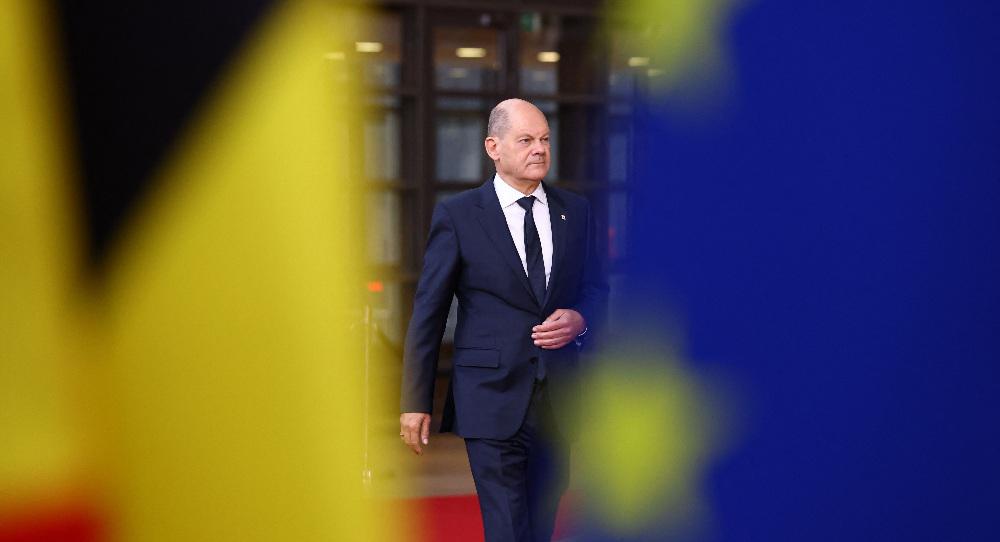
Source: Getty
Past German governments have relied on Russian gas and the U.S. security umbrella. With Putin’s war in Ukraine and the prospects of a Trump presidency, Berlin needs a strategic mindset to lead Europe.
When the German economy was in full swing, the government of the day rarely matched its economic prowess with political leadership at home or in the EU. Berlin didn’t use its booming economy to introduce much-needed reforms.
But back in 2003, during a deep economic crisis former chancellor Gerhard Schröder, a Social Democrat, pushed through a radical reform package to shake up the labor market. He wanted to pull the country out of an economic and social trough. It cost him the election in 2005.
His successor Angela Merkel spent her sixteen years in office failing to capitalize on Schröder’s reforms. Her biggest achievement was giving safety to over 1 million refugees fleeing the war in Syria. Her biggest failure was increasing Germany’s dependence on Russian gas.
Like her successor Olaf Scholz, who leads a three-party center-left coalition plagued by differences over economic, political, foreign, and defense policies, Merkel was an intrinsically risk-averse politician.
In Scholz’s case, that trait is complemented by an indecisive leadership over a coalition that lurches from crisis to crisis. This is holding up vital changes to an economic model that is not embracing digitalization, that is not reducing the maze of bureaucratic hurdles, that is failing to invest in education.
The Mittelstand, small and medium-sized companies that are the backbone of the economy, regard bureaucracy as one of the key impediments to doing business, ranking right after the shortage of skilled workers and high energy costs, according to Deutsche Bank.
Above all, Scholz is giving no political or strategic leadership to a Europe that is ill-prepared for a possible rupture of the transatlantic relationship after the U.S. presidential election in November.
Similarly, neither Germany nor Europe is prepared to withstand the growing influence of regimes that challenge the traditional prominence of the West. Europe’s way of life, anchored in democracy, human rights, and security, is on borrowed time unless its governments take steps to reverse this trend. For now, don’t count on Germany.
Domestically, German opinion polls and economic statistics confirm the flagging popularity of Scholz and show how Germany is the worst performing Eurozone and G7 economy. The International Monetary Fund reckons Germany will be the only G7 economy that shrank in 2023. At 0.9 percent, its growth in 2024 is forecast to remain below the average of 1.4 percent for advanced economies.
One could blame the recent ruling of the German Constitutional Court. As the German Institute for Economic Research (DIW Berlin) explains, the government used an emergency exemption in 2020 to allocate more than €200 billion ($218 billion) in special funds to mitigate the pandemic’s economic impact.
“Scholz’s government tried to use the same exemption to channel€60 billion ($66 billion), or 1.5% of GDP, from these special funds toward industrial subsidies and climate-related initiatives. (…) The [Constitutional] Court blocked the government’s plan on the grounds that it did not meet the ‘constitutional requirements for emergency borrowing’,” writes Marcel Fratzcher, DIW Berlin president.
The result is that the government has a €60 billion ($66 billion) shortfall for subsidies and programs. When it tried to find some savings by cutting the diesel fuel subsidies for farmers, it was met with nation-wide demonstrations.
Compounding the problems—and something that predates the court ruling—is the slowing down of the economy and the inflation that is pushing up wages. Strikes by the powerful GDL train drivers’ union have often left the railway network at a standstill, not to mention the costs to the economy.
Germany has been there before but relied on its export-driven economy to pull through. It also relied on Russia to feed the energy-intensive industrial sectors. Both lulled German governments and industry into a false sense of security. Despite all the warnings about dependence, energy resources were not diversified.
This time, the cushions the German economy and government relied upon are gone. The wars in Ukraine and the Middle East, the uncertainty of the United States’ global influence, and China’s growing influence have immense consequences for Germany—and Europe.
Berlin cannot afford to look inward and deal with issues from a domestic standpoint. It is laudable that after Washington, it ranks second in military, financial, and economic support to Ukraine. But something more fundamental is at stake. It’s the German attitude toward security—and leadership—over a war whose outcome will have fundamental consequences for Europe.
“Military support appears to be guided by what is politically acceptable in Germany, rather than by what Ukraine needs to achieve its goal of liberating its own territory,” argue Claudia Major and Christian Mölling.
“Germany still has a hard time not only taking the lead, but also making up its mind, thereby making it difficult for partners to support German policies as well as to make their own choices,” they add.
And there’s one other major political disrupter. The far-right anti-immigrant Alternative or Germany is now leading the polls. Scholz’s popularity has plummeted. And a new radical left-wing party led by Sahra Wagenknecht, a staunch East German communist, is riding high in the polls.
The point is that the political parties established post–1945, with their constituencies in the churches, communities, trade unions—but also their economic industrial-based models—are fumbling. They lived on the insurance of American security, of cheap Russian gas, of a Mittelstand that had world market share, and an EU that gave it economic clout.
This scaffolding is being dismantled. Germany faces a new reality.

Nonresident Senior Fellow, Carnegie Europe
Dempsey is a nonresident senior fellow at Carnegie Europe
Recent Work
Judy Dempsey
Judy Dempsey
Carnegie does not take institutional positions on public policy issues; the views represented herein are those of the author(s) and do not necessarily reflect the views of Carnegie, its staff, or its trustees.
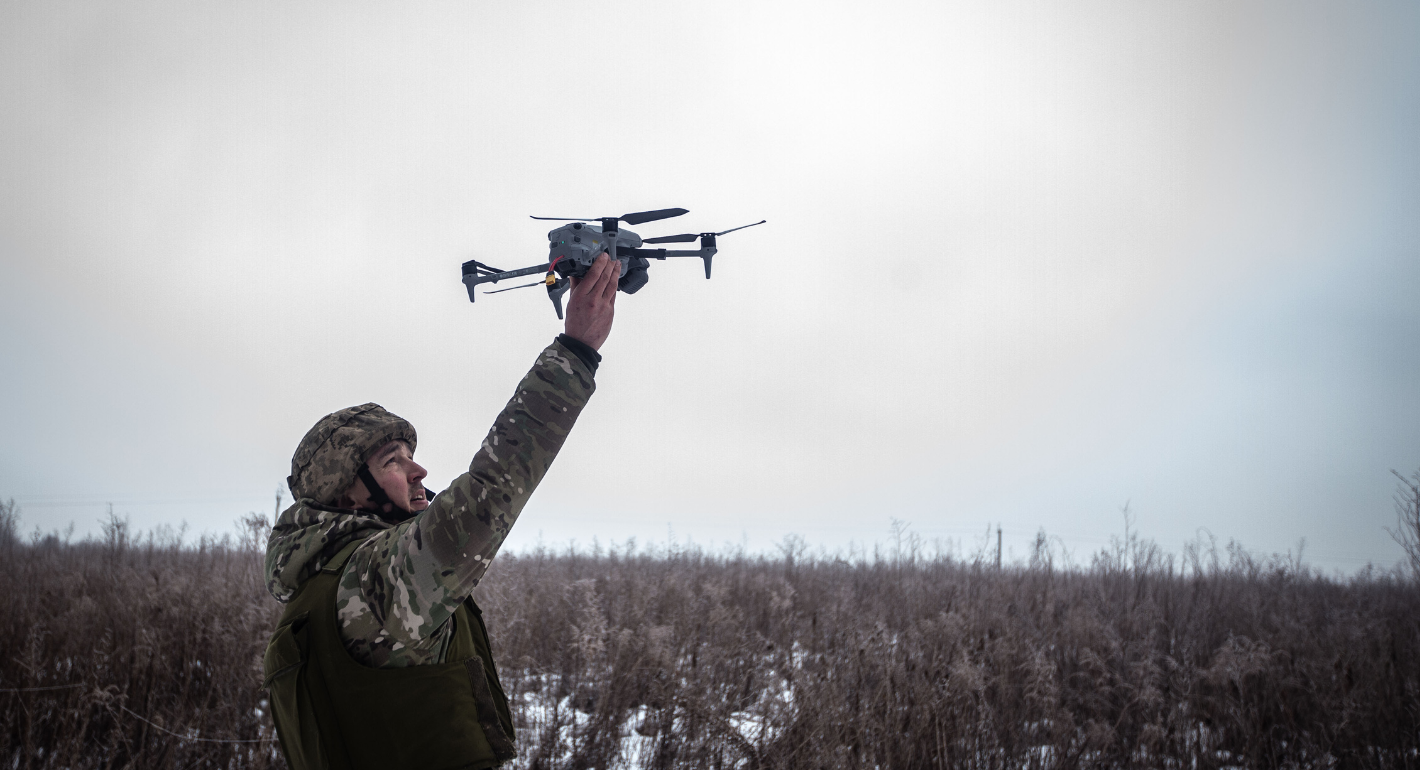
In Ukraine, Gaza, and Iran, AI warfare has come to dominate, with barely any oversight or accountability. Europe must lead the charge on the responsible use of new military technologies.

Raluca Csernatoni
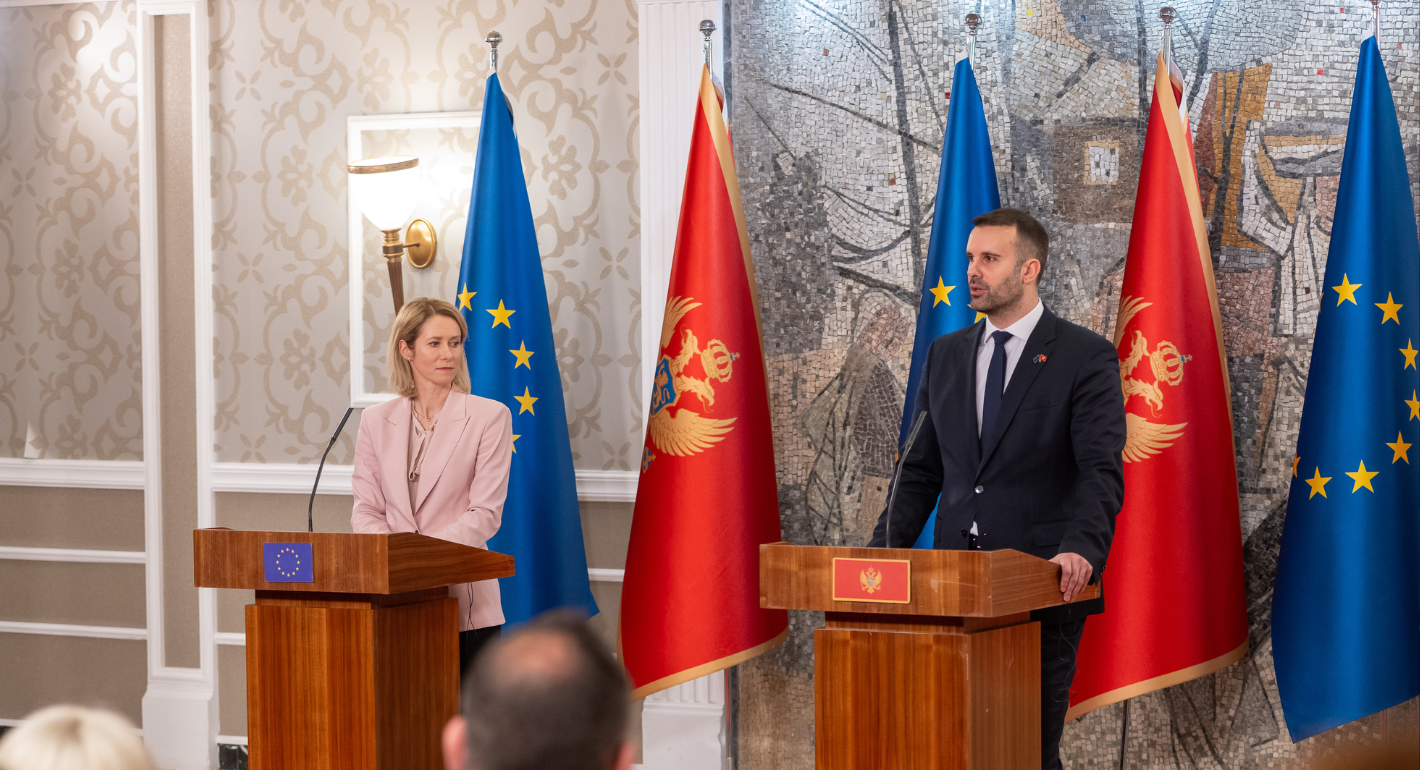
Montenegro and Albania are frontrunners for EU enlargement in the Western Balkans, but they can’t just sit back and wait. To meet their 2030 accession ambitions, they must make a strong positive case.


Dimitar Bechev, Iliriana Gjoni
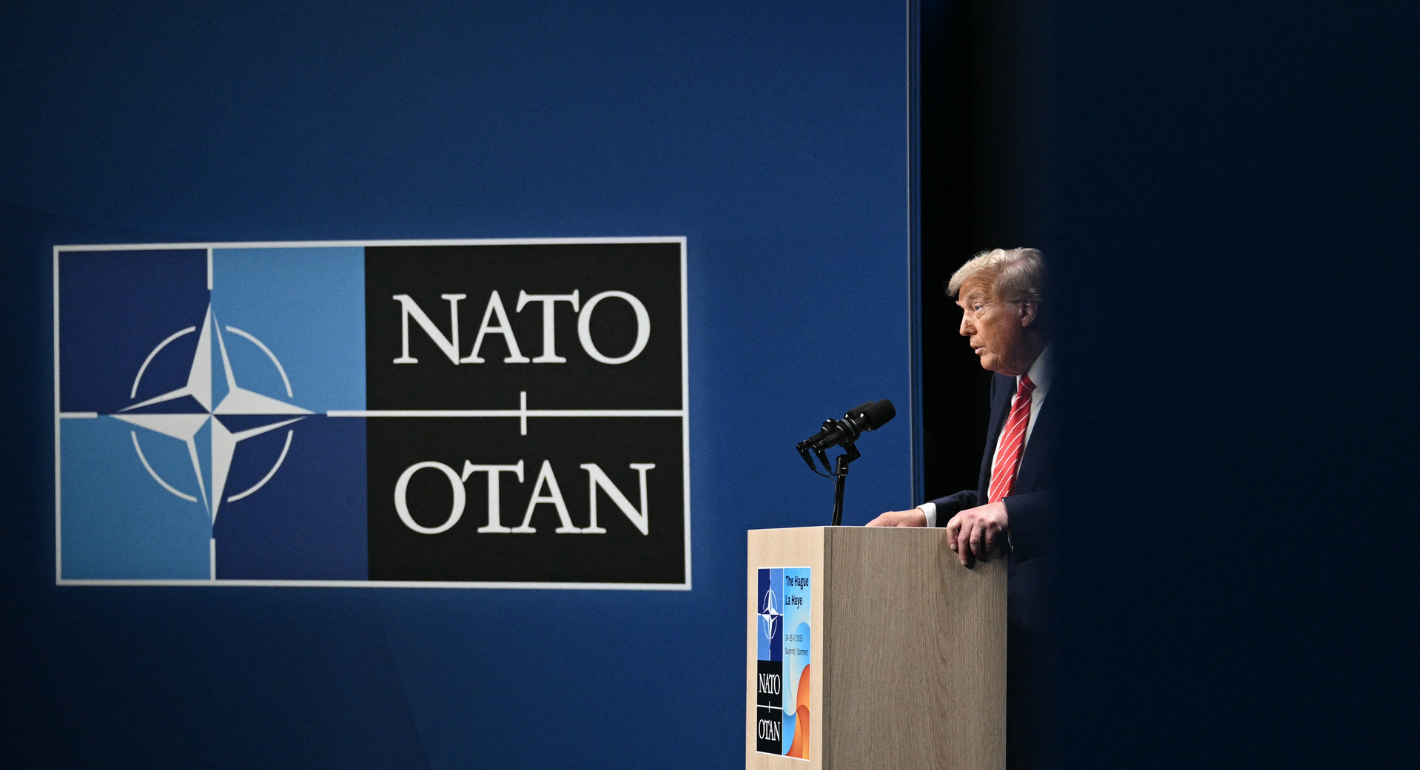
Donald Trump has repeatedly bashed NATO and European allies, threatening to annex Canada and Greenland and deploring their lack of enthusiasm for his war of choice in Iran. Is this latest round of abuse the final straw?

Rym Momtaz, ed.
Donald Trump’s repudiation of NATO goes against the Make America Great Again vision of a U.S.-centered foreign policy. If the goal is to preserve the alliance by boosting Europe’s commitments, leaning into France’s vision is the most America First way forward.
Rym Momtaz
Hungarians head to the polls on April 12 for an election of national and European consequence. Three different outcomes are on the cards, each with their own implications for the EU.
Zsuzsanna Szelényi