

Article
Stefan Lehne
{
  "authors": [
    "Stefan Lehne"
  ],
  "type": "commentary",
  "blog": "Strategic Europe",
  "centerAffiliationAll": "",
  "centers": [
    "Carnegie Endowment for International Peace",
    "Carnegie Europe"
  ],
  "englishNewsletterAll": "",
  "nonEnglishNewsletterAll": "",
  "primaryCenter": "Carnegie Europe",
  "programAffiliation": "",
  "programs": [],
  "projects": [],
  "regions": [
    "Europe",
    "Western Europe"
  ],
  "topics": [
    "Political Reform",
    "Foreign Policy",
    "EU",
    "Security"
  ]
}
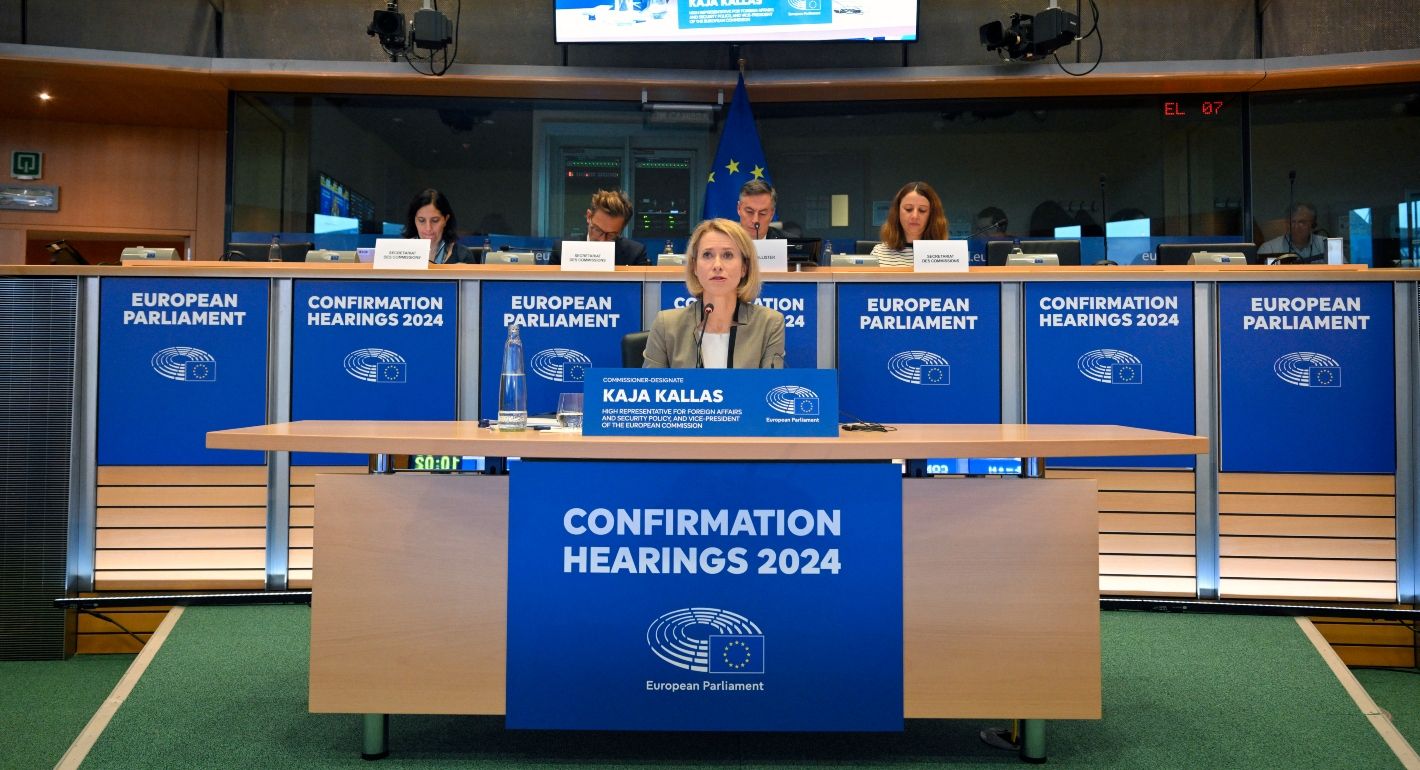
Source: Getty
Faced with Donald Trump’s return to the White House and his threat to transatlantic relations, the EU is woefully ill-equipped to act swiftly on foreign policy and security issues. An EU Security Council would go a long way in empowering it to respond more effectively.
As Washington and Brussels assemble their policy leadership teams for the coming years, the transatlantic disconnect could not be starker. Exploiting the strong mandate he received from U.S. voters, President-elect Donald Trump is rapidly nominating hardline “Make America Great Again” loyalists committed to implementing a disruptive national and international agenda. By contrast, the parliamentary hearings of the new European commissioner-designates are marked by divisions and factional point-scoring between parliamentary groups, with little regard to the ability of candidates to drive the urgent changes needed to save Europe.
It is difficult to avoid the impression that the EU has not yet fully grasped the urgency and severity of the Trump challenge. And that Europe remains woefully ill-equipped to manage what America is likely to unleash.
In a new Trump era, U.S. commitment to Europe’s security will likely come under threat, a rash U.S.-Russian deal over Ukraine could put the country’s survival in question, the Middle East turmoil could intensify, and the Chinese-American rivalry could become increasingly confrontational. Furthermore, Trump’s foreign policy team—helped by their ideological affinity with a number of leading European politicians—will strive to deepen divisions among EU member states.
If on trade issues, the EU proved its ability to effectively counter Trump’s tariffs and persuade him to deescalate during his first mandate, the same capacity does not exist in the realm of foreign and security policy. The EU’s institutions and procedures in this area are weaker, slower, more complex, and clearly ill-suited to cope with the challenges of the Trump era. Yet, it is equally evident that reforming them through treaty change is currently out of reach.
Against this backdrop, it makes sense to revive an idea originally proposed by French President Emmanuel Macron and then German chancellor Angela Merkel following the UK’s decision to leave the EU: the creation of a European Security Council.
When it was first proposed, the details were kept vague and once it became clear that then UK prime minister Boris Johnson had no interest in any involvement in the EU’s foreign and security policy, the proposal lost much of its raison d’être. With a more constructive government in London and a more turbulent international environment, the idea deserves to be revisited.
Through such a security council, the EU would be capable of responding faster and more effectively to global developments, than through cumbersome deliberations among its twenty-seven member states. The new body would encourage the bigger EU countries to step up their engagement for a common EU foreign and security policy and to enhance coordination among themselves in a more inclusive and transparent fashion than they do in the various existing informal consultation groups. Stronger leadership by an inner circle of members would also make it more difficult for outside forces to undermine EU unity. Finally, an EU Security Council would provide a forum for aligning EU and UK foreign policies, which would benefit both sides, as they will face similar challenges during the second Trump administration.
The new body could include the most populous countries—France, Germany, Italy, Spain, and Poland—as permanent members as well as three to five other EU member states on a rotational basis, which would aim at ensuring a continuing geographical balance. The European Commission would also have a seat and the UK could participate as an observer. Chaired by the EU high representative, the security council would discuss international developments, devise strategies, coordinate policies, and lead the response to international crises.
When it recommends EU action, such as financial assistance, military or civilian operations, or sanctions, the normal EU decisionmaking procedures would apply. Thus, the new security council would not infringe on existing competencies of the EU institutions. This should make it more acceptable to smaller member states but also easier to set up initially on an informal basis, without the need for treaty amendments. As such, it would follow the model of one of the more impressive episodes of EU foreign policy: the EU’s work on the Iranian nuclear program. In that instance, France, Germany, and the UK took the political lead together with the EU high representative—an approach that was fully supported by the rest of the member states.
The idea of an EU Security Council should not be seen as a silver bullet that would suddenly address the many weaknesses of the EU’s foreign and security policy. It is just one of several options to enhance the effectiveness of the EU as an international actor. There are other proposals, such as expanding the use of majority voting or asking individual foreign ministers of member states to take the lead on particular foreign policy issues on behalf of the EU. However, one fact is undeniable: Without significant efforts to reinforce the institutions and processes of the EU’s foreign and security policy, the flimsy structures currently in place will not withstand the geopolitical storms of the coming years.
The EU can either upgrade its capacity to shape international developments or resign itself to growing irrelevance. If it cannot manage to be at the table where the decisions are made, it could soon be on the menu.

Senior Fellow, Carnegie Europe
Stefan Lehne is a senior fellow at Carnegie Europe in Brussels, where his research focuses on the post–Lisbon Treaty development of the European Union’s foreign policy, with a specific focus on relations between the EU and member states.
Recent Work
Stefan Lehne
Stefan Lehne
Carnegie does not take institutional positions on public policy issues; the views represented herein are those of the author(s) and do not necessarily reflect the views of Carnegie, its staff, or its trustees.

The aftermath of the Ceuta crisis shows Europe has drawn the wrong lessons. Rather than doubling down on failed migration policies, the EU needs to address the underlying roots of such episodes.

Richard Youngs

An overwhelming victory by a far-right-wing party in a small state in eastern Germany will have major repercussions for Chancellor Friedrich Merz’s coalition.

Judy Dempsey

Canadian Prime Minister Mark Carney has twice inspired praise for standing up to U.S. President Donald Trump: at the 2026 World Economic Forum in Davos and on Canada-U.S. trade negotiations. Is Carney showing a third way better than the EU has in dealing with the Trump administration?

Rym Momtaz, ed.

The EU’s responses to two recent incidents expose the gulf between European perceptions and capabilities. Unless the union can bridge that gap, it will never become a real geostrategic power.
Rym Momtaz

In supporting Europe’s far-right, MAGA and Russia both want the same thing: a weaker EU. Europe must defend itself without abandoning the openness these forces exploit.

Armida van Rij