

{
  "authors": [
    "Douglas H. Paal",
    "Richard Bush"
  ],
  "type": "event",
  "centerAffiliationAll": "dc",
  "centers": [
    "Carnegie Endowment for International Peace"
  ],
  "collections": [],
  "englishNewsletterAll": "asia",
  "nonEnglishNewsletterAll": "",
  "primaryCenter": "Carnegie Endowment for International Peace",
  "programAffiliation": "AP",
  "programs": [
    "Asia",
    "South Asia"
  ],
  "projects": [],
  "regions": [
    "South Asia",
    "India",
    "East Asia",
    "South Korea",
    "China",
    "Southeast Asia",
    "North Korea"
  ],
  "topics": [
    "Political Reform",
    "Economy",
    "Trade",
    "Climate Change",
    "Foreign Policy"
  ]
}
A Clear Strategic Vision for Asia
Thu, June 26th, 2008
Washington, D.C.
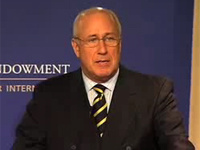
The next president must go beyond paying lip service to the rise of Asia and take concrete steps to shape a future in which China and India will be major players, both economically and strategically. Previous presidents have noted that the global center of gravity is shifting steadily eastward but paid only sporadic attention to the region. The next president must appoint a high-level advocate for Asia to maintain focus on the United States’ growing interests in the region. Douglas Paal discussed these and other conclusions of his new policy brief, Asia: Restoring American Prestige and Shaping the Future, at a Carnegie event moderated by Richard Bush, director of the Center for Northeast Asian Policy Studies at the Brookings Institution.
The Pacific Century Is Here
Paal’s policy recommendations flow from China and India’s steadily increasing importance, as evidenced by the rising percent of global investment absorbed by Asia and the choice of major Asian powers to reinvest in their military capabilities. The next president must anticipate a future – perhaps only a few decades away – in which America’s strength will decline relative to Asia’s. To that end, the United States should lay the foundations now for structures to protect and advance common interests. As a start, the administration should consider inviting China and India to join the G8.
Proactive Policy Recommendations
- Formulate a coherent approach to China early on, and signal to China where constructive cooperation will lead.
- Continue the Strategic Economic Dialogue, and elevate the “Senior Dialogue” to a regular meeting between the Secretary of State and China’s foreign minister.
- Avoid coalitions based on democracy and common values. As appealing as they are domestically, such coalitions are not an effective way to pursue American interests, and they send the wrong signals to China.
- Ditch the “war on terror” rhetoric. It makes all Muslims, in Southeast Asia and elsewhere, enemies; casting the conflict in these terms denies the United States needed support and invites opposition.
- Get creative with Burma policy. Twenty-six years of isolation has not worked. The United States should work through ASEAN to, at the least, increase humanitarian assistance to the Burmese people.
Paal concluded by stressing that while the incoming administration will face many foreign policy challenges, the sooner the next president takes pragmatic steps on the necessary issues, the greater the likelihood will be of lasting accomplishments in Asia.
Carnegie does not take institutional positions on public policy issues; the views represented herein are those of the author(s) and do not necessarily reflect the views of Carnegie, its staff, or its trustees.
Event Speakers
Distinguished Fellow, Asia Program
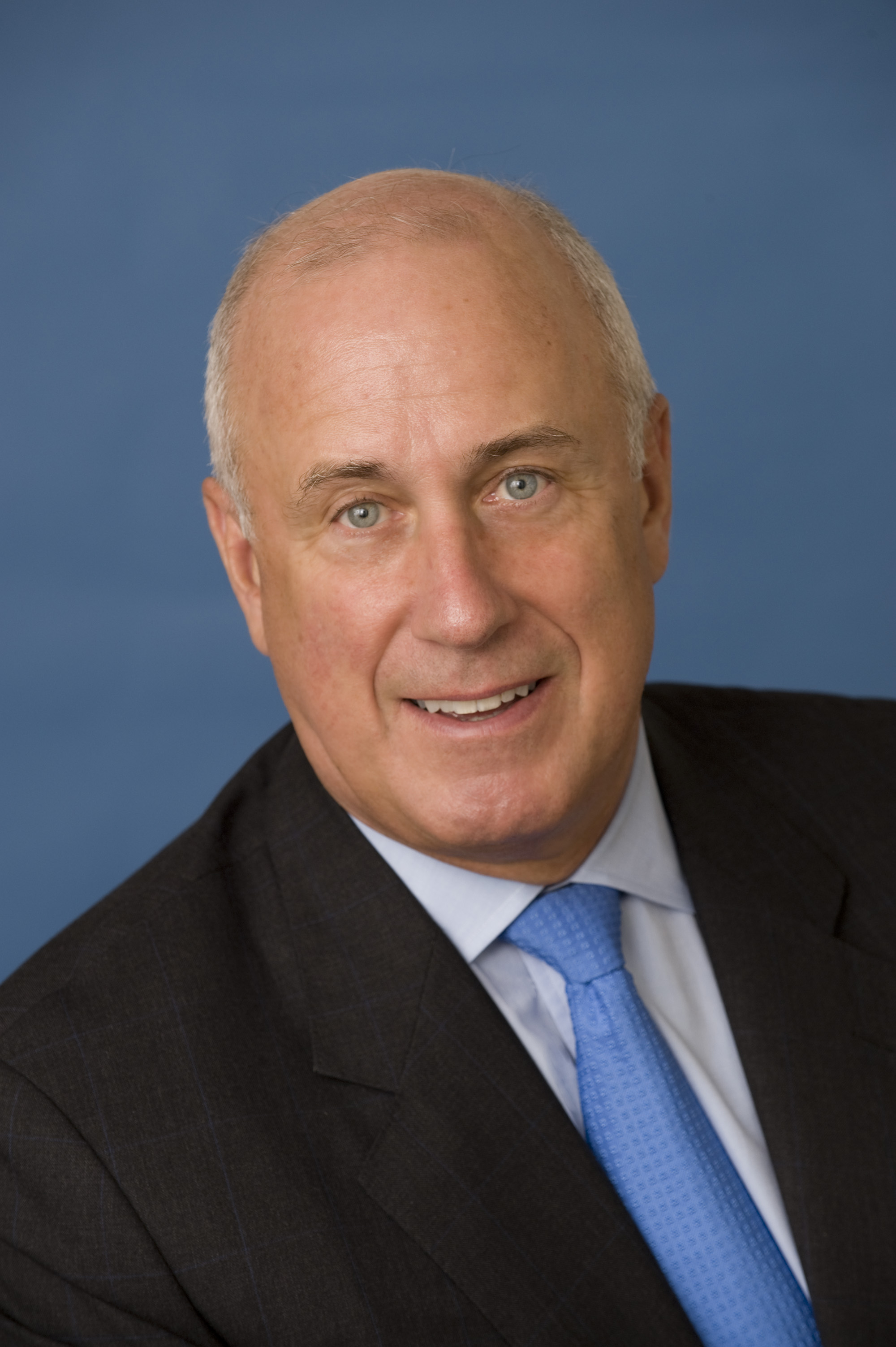
Paal previously served as vice chairman of JPMorgan Chase International and as unofficial U.S. representative to Taiwan as director of the American Institute in Taiwan.
Richard Bush
Richard C. Bush III is a senior fellow at the Brookings Institution, holds the Chen-Fu and Cecilia Yen Koo Chair in Taiwan Studies, and is director of its Center for East Asia Policy Studies. He previously served as chairman and managing director of the American Institute in Taiwan.