

Other
Mr. Shlomo Avineri
{
  "authors": [
    "Shlomo Avineri"
  ],
  "type": "legacyinthemedia",
  "centerAffiliationAll": "dc",
  "centers": [
    "Carnegie Endowment for International Peace"
  ],
  "collections": [],
  "englishNewsletterAll": "menaTransitions",
  "nonEnglishNewsletterAll": "",
  "primaryCenter": "Carnegie Endowment for International Peace",
  "programAffiliation": "MEP",
  "programs": [
    "Middle East"
  ],
  "projects": [],
  "regions": [
    "Middle East",
    "Israel",
    "Palestine"
  ],
  "topics": []
}
REQUIRED IMAGE
The way out of the Israeli-Palestinian impasse may be two sets of unilateral steps: a unilateral Israeli withdrawal from most of the Palestinian territories still under its control, coupled with both consolidation to most of the larger and contiguous Israeli settlements and abandonment of the smaller and isolated ones–and, on the Palestinian side, a unilateral declaration of independence.
Source: Internationale Politik
The only way forward out of the current crisis in Israeli-Palestinian relations is unilateral.
At the moment the climate for negotiations–trust, political will, courageous leadership–just does not exist. Statesmen and analysts on all sides do not like to admit this, but it is the truth. The Oslo process–as distinct from the indispensable Oslo goal of establishing a Palestinian state that could live in peace with Israel–has outlived its usefulness. Because negotiations do not appear at the moment to lead anywhere, the way out of the impasse may be two sets of unilateral steps: a unilateral Israeli withdrawal from most of the Palestinian territories still under its control, coupled with both consolidation to most of the larger and contiguous Israeli settlements and abandonment of the smaller and isolated ones–and, on the Palestinian side, a unilateral declaration of independence.
For all their achievements, past negotiations have suffered from three main misconceptions: aiming too high, aiming too low, and overestimating the power of the outsider US, to influence what is one of the most complicated current conflicts. Aiming too high: in July 1999 at Camp David Prime Minister Ehud Barak, encouraged by President Bill Clinton, aimed too high. His goal was to achieve a final settlement between Israel and the Palestinians and come back home and offer his people an End-of-the-Conflict Agreement.
This was well intentioned: Barak is a problem-solver; he ran and won the elections on a peace platform, and he wanted to go down in history as the statesman who brought peace with security to his people and the region. But everyone even faintly familiar with the Arab-Israeli conflict knew that a final settlement must address the issue of Jerusalem, and here even the most moderate Israeli and Palestinian positions remain far apart. For this reason all former Israeli prime ministers who wanted to achieve a settlement, including Yitzhak Rabin and Shimon Peres, knew that you have to proceed carefully, step by step, and not overreach yourself. Any attempt to tackle the Jerusalem issue was bound to fail–and bring down with it the whole proposed agreement.
Precisely this happened at Camp David. Once Barak–showing courage and imagination, but little political judgment–brought up Jerusalem, the negotiations were doomed. What Barak should have done was to offer to Palestinian leader Yassir Arafat all the territorial concessions he did in fact offer at Camp David, as well as strong support for a Palestinian state–which he was also ready to offer–but also insist that Jerusalem would have to be postponed for further negotiations.
Would Arafat have accepted this? Nobody knows. But he could have come back from Camp David with a state and a serious Israeli commitment to negotiate Jerusalem later on. By trying for a final settlement, Barak once again proved that the best is the enemy of the merely good.
Aiming too low: For years, Israelis were ready to accept that even if peace exists between their country and Egypt and Jordan, basic perceptions about Israel in these two Arab societies have not changed. Egyptian and Jordanian textbooks continued to portray Israel as an illegitimate, colonia-list, expansionist "crusader state." Professional associations–writers, journalists, lawyers, doctors–boycotted contacts with Israel. There were no friendly soccer matches, youth exchanges, or twin cities agreements.
All this was overt government policy; civil society, after all, is extremely weak in countries like Egypt. And new Palestinian school textbooks issued last September did not have Israel on the map. No attempt was made to portray Israel as anything except a brutal "occupying power." For the Arabs, Israel continues to remain the enemy, the negative Other–basically an illegitimate entity. Nothing like the Frenco-German reconciliation after World War II has ever taken place.
Little wonder that when a crisis occurred in September, there was no safety net on the Arab side; it took less than 24 hours for street mobs to call for "death to Jews," ritually burn the Israeli flag, and hang Barak in effigy. Some of this was spontaneous; most of it was encouraged by the authorities.
The limits of outside powers: The US can have enormous leverage in Middle Eastern affairs, but basically only in two contradictory scenarios: when there is an extreme crisis or war, or when the regional leaders have already reached agreements, but have to be pushed the extra mile.
Thus, when Israel invaded Lebanon, one phone call from President Ronald Reagan to Prime Minister Menachim Begin caused Israeli troops to withdraw from West Beirut–and during the Gulf War American pressure dissuaded Israel from responding militarily after its cities were hit by Iraqi missiles. Conversely, Begin and Egyptian President Anwar Sadat before Camp David, and Rabin and Arafat after Oslo successfully conducted most of their negotiations directly. But when political will is lacking, as it was at Camp David II, all the persuasion of the strongest power in the world avails nothing.
The next American president will come into power under domestic conditions that will greatly diminish his stature and clout. He will have to tread carefully–and what the Americans cannot do, the European Union (let alone the United Nations) surely cannot do. They just do not have the clout or the necessary mechanisms.
The lessons, then, are: Don't try to solve all problems at once. Avoid known pitfalls like Jerusalem. Insist that agreements between diplomats and lawyers be accompanied by measures to address people's hearts and minds. Don't overestimate the power of outsiders. And, at this point, try a modest unilateral route.
Shlomo Avineri, Director of Hebrew University‘s European Studies Institute in Jerusalem, is a Visiting Scholar at the Carnegie Endowment, Washington.
Former Visiting Scholar
Recent Work
Mr. Shlomo Avineri
Mr. Shlomo Avineri
Carnegie does not take institutional positions on public policy issues; the views represented herein are those of the author(s) and do not necessarily reflect the views of Carnegie, its staff, or its trustees.

The books, podcasts, and films that explain the world it made.

Andrew Leber
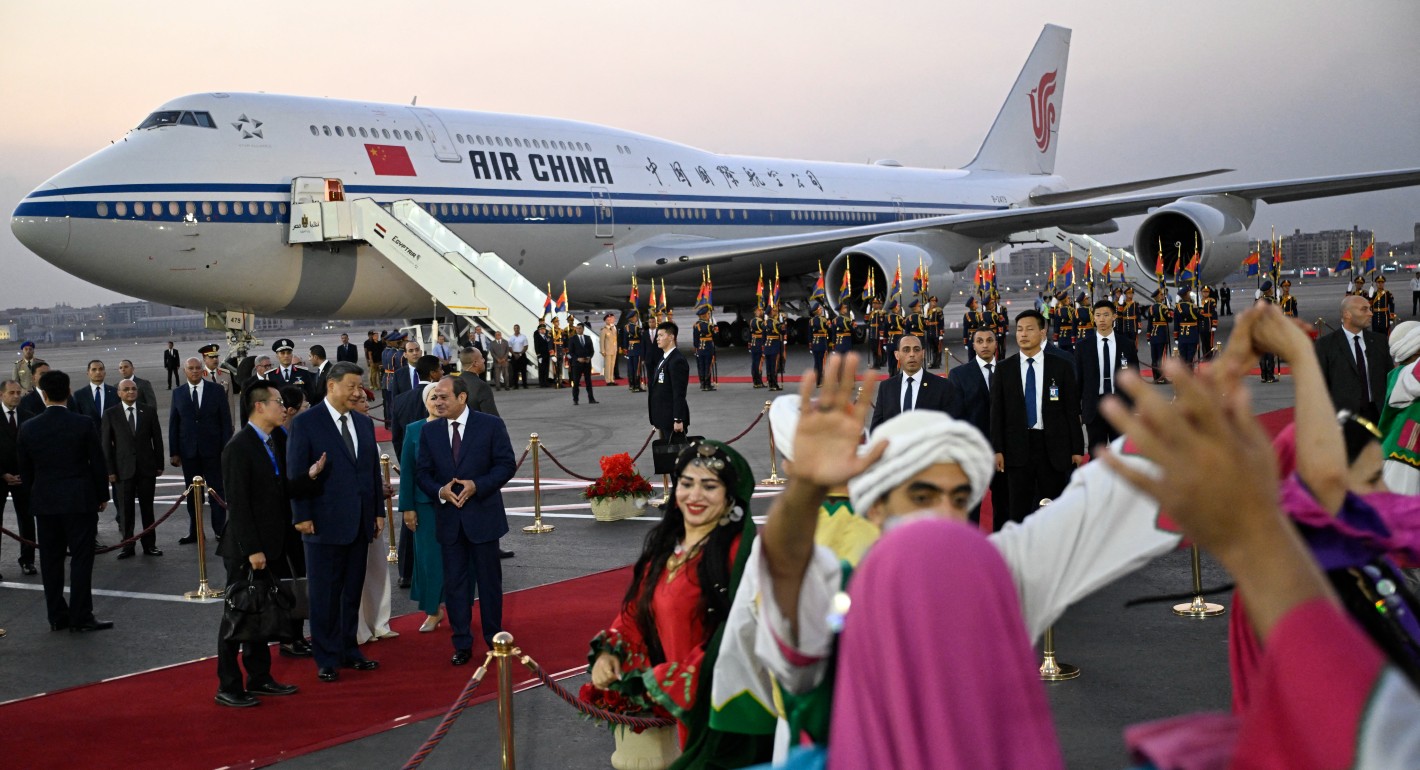
Amid celebrations of bilateral ties was a deeper focus on stability in the Middle East.

Amr Hamzawy
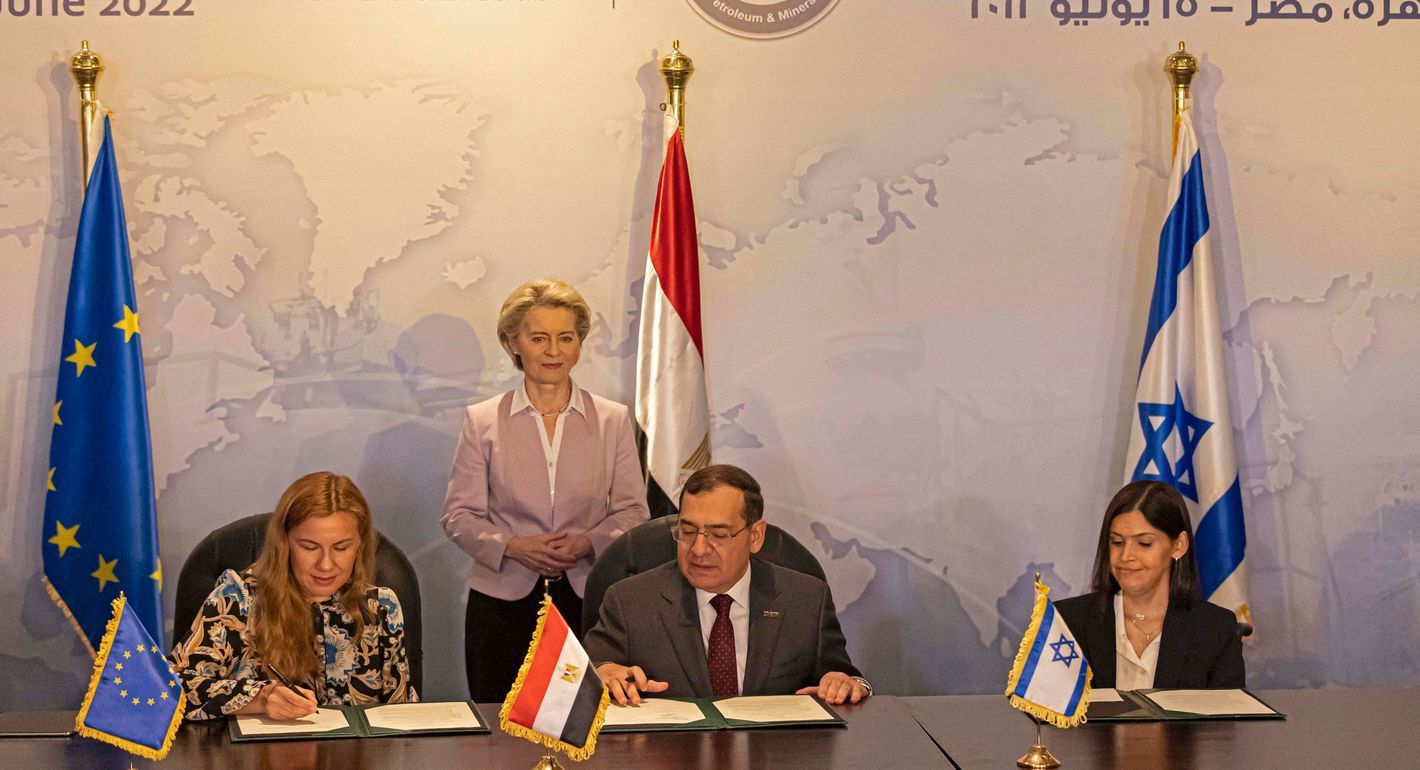
Can economic ties help contain conflict between Egypt and Israel, or do they simply postpone confrontation? Drawing on the German-Russian experience, the article examines how the gas deal creates mutual dependence, keeps channels of cooperation open, and raises the cost of conflict, without necessarily delivering lasting peace.

Nourhan Hefzy

The targeting of Damietta Port appears to be more than a mere security message.
Amr Hamzawy

Is the Gulf moving beyond the dollar? This article examines how China is expanding the renminbi's role across Gulf markets, what that means for regional finance, and why the future of global currencies is more complex than the de-dollarization debate suggests.

Andrew Bonney