

Commentary
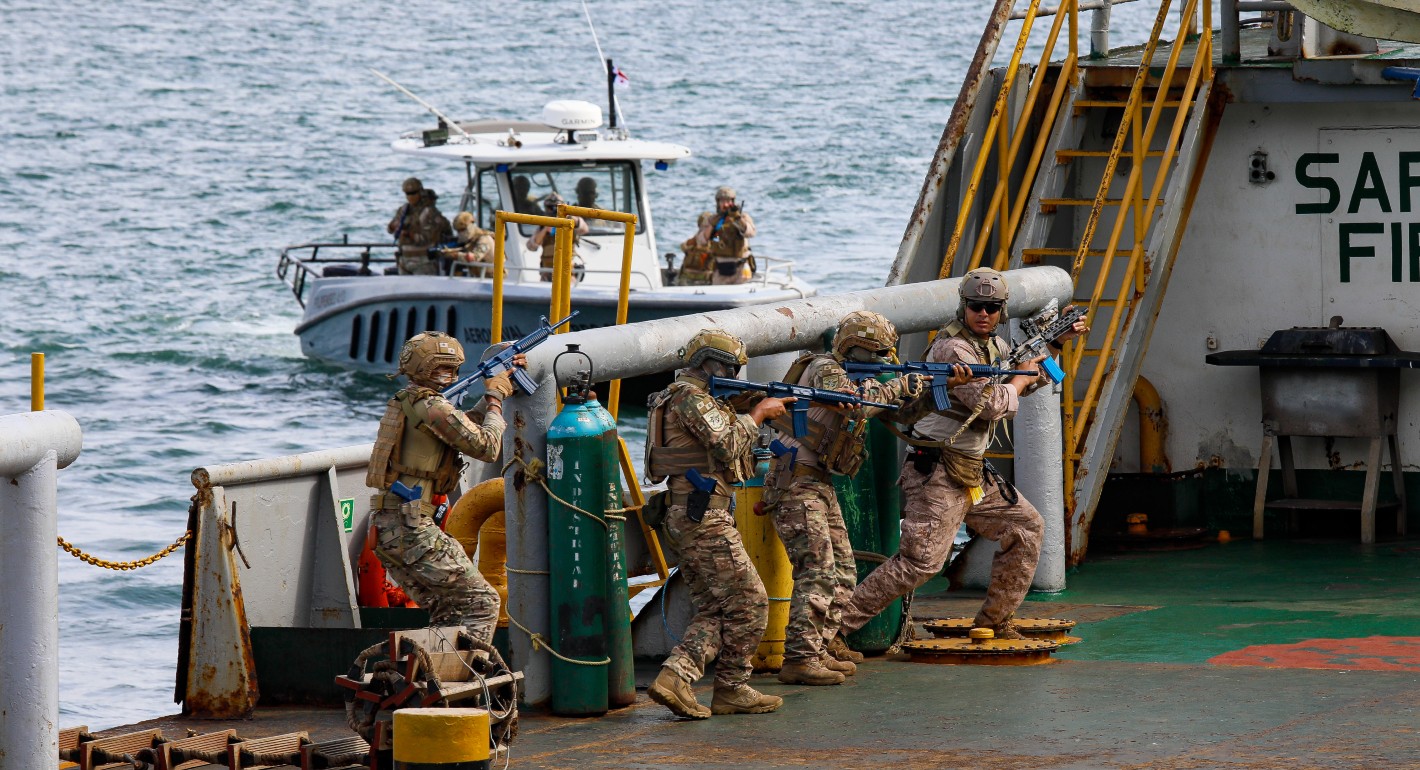
By focusing only on hard security, the Shield ignores the conditions that fuel cartel power.
Alejandro Martin Rodriguez, Kayly Ober
{
  "authors": [
    "Michael D. Swaine",
    "Alan Romberg"
  ],
  "type": "legacyinthemedia",
  "centerAffiliationAll": "dc",
  "centers": [
    "Carnegie Endowment for International Peace"
  ],
  "collections": [],
  "englishNewsletterAll": "asia",
  "nonEnglishNewsletterAll": "",
  "primaryCenter": "Carnegie Endowment for International Peace",
  "programAffiliation": "AP",
  "programs": [
    "Asia"
  ],
  "projects": [],
  "regions": [
    "North America",
    "United States",
    "East Asia",
    "South Korea",
    "China",
    "Japan",
    "Caucasus",
    "Russia",
    "North Korea"
  ],
  "topics": [
    "Security",
    "Military",
    "Foreign Policy",
    "Nuclear Policy",
    "Nuclear Energy"
  ]
}
REQUIRED IMAGE
If the United States, China, South Korea, Japan and Russia can reach a basic understanding on how to handle North Korea, the effort to convince Pyongyang to abandon its nuclear weapons program and accept a reasonable "more-for-more" agreement, while not easy, should enjoy a reasonable chance of success.
Source: Arms Control Today
If the United States, China, South Korea, Japan and Russia can reach a basic understanding on how to handle North Korea, the effort to convince Pyongyang to abandon its nuclear weapons program and accept a reasonable "more-for-more" agreement, while not easy, should enjoy a reasonable chance of success.
The entire article can be read in Arms Control Today May 2003.

Former Senior Fellow, Asia Program
Swaine was a senior fellow at the Carnegie Endowment for International Peace and one of the most prominent American analysts in Chinese security studies.
Alan Romberg
Alan Romberg is distinguished fellow and the director of the East Asia program at the Stimson Center. Before joining Stimson he served for 27 years in the U.S. Department of State, with over 20 years as a Foreign Service officer.
Carnegie does not take institutional positions on public policy issues; the views represented herein are those of the author(s) and do not necessarily reflect the views of Carnegie, its staff, or its trustees.
By focusing only on hard security, the Shield ignores the conditions that fuel cartel power.

Alejandro Martin Rodriguez, Kayly Ober

In any defense establishment, change is an ongoing process. However, despite the best of intentions, existing bureaucracies, bound by habit and years of socialization, have their limits in implementing transformative change.

Anit Mukherjee

In supporting Europe’s far-right, MAGA and Russia both want the same thing: a weaker EU. Europe must defend itself without abandoning the openness these forces exploit.

Armida van Rij

The conflict has sent economic and political shock waves through a country with no representation at the negotiating table—and Kenya is not alone.
Georgia Schaefer-Brown, Jane Munga

Political pressure and economic headwinds are closely intertwined problems for Russian publishers and booksellers. Together, they risk propelling Russia into a “post-literate” era.
Galina Yuzefovich