• Research
  • Emissary
  • About
  • Experts
Carnegie Global logoCarnegie lettermark logo
DemocracyIran
  • Donate
{
  "authors": [
    "Anatol Lieven"
  ],
  "type": "legacyinthemedia",
  "centerAffiliationAll": "dc",
  "centers": [
    "Carnegie Endowment for International Peace"
  ],
  "collections": [],
  "englishNewsletterAll": "ctw",
  "nonEnglishNewsletterAll": "",
  "primaryCenter": "Carnegie Endowment for International Peace",
  "programAffiliation": "russia",
  "programs": [
    "Russia and Eurasia"
  ],
  "projects": [],
  "regions": [
    "Caucasus",
    "Russia"
  ],
  "topics": [
    "Political Reform",
    "Democracy",
    "Economy",
    "Trade"
  ]
}
REQUIRED IMAGE

REQUIRED IMAGE

In The Media

Is Khodorkovsky Really the Victim?

Link Copied
By Anatol Lieven
Published on Jun 10, 2005
Program mobile hero image

Program

Russia and Eurasia

The Russia and Eurasia Program continues Carnegie’s long tradition of independent research on major political, societal, and security trends in and U.S. policy toward a region that has been upended by Russia’s war against Ukraine.  Leaders regularly turn to our work for clear-eyed, relevant analyses on the region to inform their policy decisions.

Learn More

Source: The International Herald Tribune

Washington-With the Khodorkovsky trial in Russia now concluded, Western journalists and commentators need to ask themselves some hard questions about the record of their profession.

They might begin by making a comparison between the amount of space, and outrage, devoted by the Western media to this trial and the limited attention and anger directed by the same Western media to the process by which Mikhail Khodorkovsky and the other "oligarchs" acquired their immense wealth in the first place.

It is not just that while Khodorkovsky's trial was deeply flawed, the legal case against him was well-based and credible. More important is the comparative damage done to Russia by the two processes.

Khodorkovsky's trial has undermined to some degree Western and Russian domestic investment in the Russian energy sector. The massive theft of Russian state resources by Khodorkovsky and others in the 1990s had infinitely worse effects.

This was the single greatest example of such plundering in the whole of modern history. It crippled the ability of the Russian state to provide basic services to its population - including for long periods even wages and pensions. As for state services, the collapse of state revenues had a disastrous effect on their funding, pay and morale.

Before indulging in self-righteous denunciations of the Russian government, Westerners also need to ask themselves where Russia's stolen billions went. Jupiter? Pluto? No. The stolen funds of the Russian people largely went into Western banks, Western real estate, and Western luxury goods. Russians may have been the thieves, but Westerners were their fences.

It is universally recognized that official corruption in Russia is a disastrous barrier to that country's development. The defense of Khodorkovsky, however, essentially rests on the idea that the enormous corruption of the 1990s should now be legitimized, while ordinary Russian policemen, judges and officials should be required to live on their miserable salaries for the sake of honesty and patriotism. This proposition is intellectually, politically, psychologically and above all morally vacuous.

Outside Britain and the United States, the great majority of states in the world exercise dominant influence over their energy sectors. Why then is the effort of the Russian state to regain this influence so widely portrayed as a "return to the Soviet Union"? Across much of the world, oligarchical pseudo-democracies like the Philippines have failed to deliver economic growth and even basic human rights to their peoples. Why then is it so widely assumed that a Russia dominated by the likes of Khodorkovsky would be preferable to one dominated by Vladimir Putin and his followers?

In some cases, this peculiar approach to Russia reflects obsessive hatred left over from the cold war. Probably more widespread, however, is a Western attitude which genuinely wishes Russia well, but which is based on fundamental misconceptions.

Of these, the most important is the belief that developments in Russia can legitimately be compared to those in Central Europe over the past 15 years. This is obviously wrong given Russia's immense size and multi-ethnic character, and the way in which Russian wealth is concentrated in the natural resources sector.

Even more significant, however, is the differing role of nationalism. In Central Europe, society could be mobilized behind painful reforms in part because of a nationalist desire to escape from the hated domination of Moscow.

Russian nationalism obviously could not operate in this way. Instead, in the 1990s Russia had to go through not just wrenching socioeconomic change but the loss of empire - something which, as the French in particular would do well to remember, has been an extremely painful and ugly process even for some long-established democracies.

Finally, the Central Europeans were spurred on to reform by the genuine offer of membership in the European Union and NATO - something which is hardly possible for Russia, and which has certainly never been sincerely offered, even as a remote possibility.

If Russia is compared with Poland or Hungary, then obviously it looks gravely defective from the point of view of both democratic and economic progress. If a fairer comparison is made with the larger countries of the "developing world," then things do not look nearly so bad.

The greatest economic reformer Russia has ever known, Count Sergei Witte, once said not long before the Russian Revolution that instead of complaining that Russia did not have a government like France or England, Russian liberals should thank God that it did not have a government like China's. That is something for which Mikhail Khodorkovsky too has cause to be thankful.

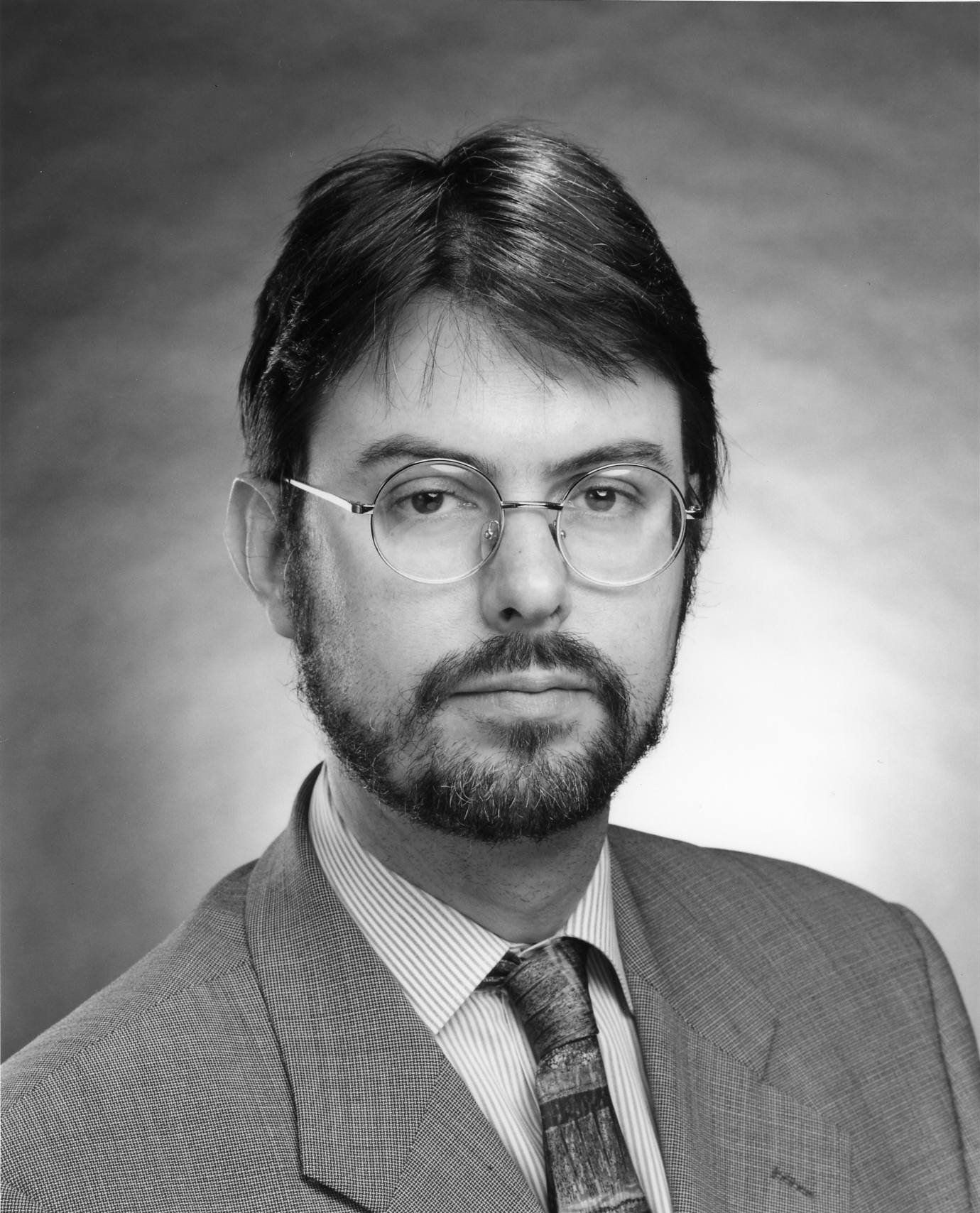
(Anatol Lieven is a senior associate at the Carnegie Endowment for International Peace in Washington. His latest book is ''America Right or Wrong: An Anatomy of American Nationalism.'')

About the Author

Anatol Lieven

Former Senior Associate

    Recent Work

  • Other
    A Spreading Danger: Time for a New Policy Toward Chechnya

      Fiona Hill, Anatol Lieven, Thomas de Waal

  • Other
    The Hinge to Europe: Don't Make Britain Choose Between the U.S. and the E.U.

      Anatol Lieven

Anatol Lieven
Former Senior Associate
Anatol Lieven
Political ReformDemocracyEconomyTradeCaucasusRussia

Carnegie does not take institutional positions on public policy issues; the views represented herein are those of the author(s) and do not necessarily reflect the views of Carnegie, its staff, or its trustees.

More Work from Carnegie Endowment for International Peace

  • One man tossing a sack to another to stack on a truck
    Commentary
    Emissary
    The Other Global Crisis Stemming From the Strait of Hormuz’s Blockage

    Even if the Iran war stops, restarting production and transport for fertilizers and their components could take weeks—at a crucial moment for planting.

      • Noah  Gordon ​​​​

      Noah Gordon, Lucy Corthell

  • Commentary
    Strategic Europe
    Taking the Pulse: Is France’s New Nuclear Doctrine Ambitious Enough?

    French President Emmanuel Macron has unveiled his country’s new nuclear doctrine. Are the changes he has made enough to reassure France’s European partners in the current geopolitical context?

      • Rym Momtaz

      Rym Momtaz, ed.

  • Heavily armed security personnel standing atop an armored vehicle
    Commentary
    Emissary
    When Do Mass Protests Topple Autocrats?

    The recent record of citizen uprisings in autocracies spells caution for the hope that a new wave of Iranian protests may break the regime’s hold on power.

      • McKenzie Carrier

      Thomas Carothers, McKenzie Carrier

  • Commentary
    Strategic Europe
    The EU Needs a Third Way in Iran

    European reactions to the war in Iran have lost sight of wider political dynamics. The EU must position itself for the next phase of the crisis without giving up on its principles.

      Richard Youngs

  • High-tech data center with server racks
    Article
    The Architecture of Digital Repression

    Internet service providers can facilitate internet access but also draconian control.

      Irene Poetranto

Get more news and analysis from
Carnegie Endowment for International Peace
Carnegie global logo, stacked
1779 Massachusetts Avenue NWWashington, DC, 20036-2103Phone: 202 483 7600Fax: 202 483 1840
  • Research
  • Emissary
  • About
  • Experts
  • Donate
  • Programs
  • Events
  • Blogs
  • Podcasts
  • Contact
  • Annual Reports
  • Careers
  • Privacy
  • For Media
  • Government Resources
Get more news and analysis from
Carnegie Endowment for International Peace
© 2026 Carnegie Endowment for International Peace. All rights reserved.