

Report
Mr. Husain Haqqani, Ashley J. Tellis
{
  "authors": [
    "Husain Haqqani"
  ],
  "type": "legacyinthemedia",
  "centerAffiliationAll": "dc",
  "centers": [
    "Carnegie Endowment for International Peace"
  ],
  "collections": [],
  "englishNewsletterAll": "ctw",
  "nonEnglishNewsletterAll": "",
  "primaryCenter": "Carnegie Endowment for International Peace",
  "programAffiliation": "SAP",
  "programs": [
    "South Asia"
  ],
  "projects": [],
  "regions": [
    "South Asia",
    "Pakistan"
  ],
  "topics": [
    "Political Reform",
    "Democracy",
    "Security"
  ]
}
REQUIRED IMAGE
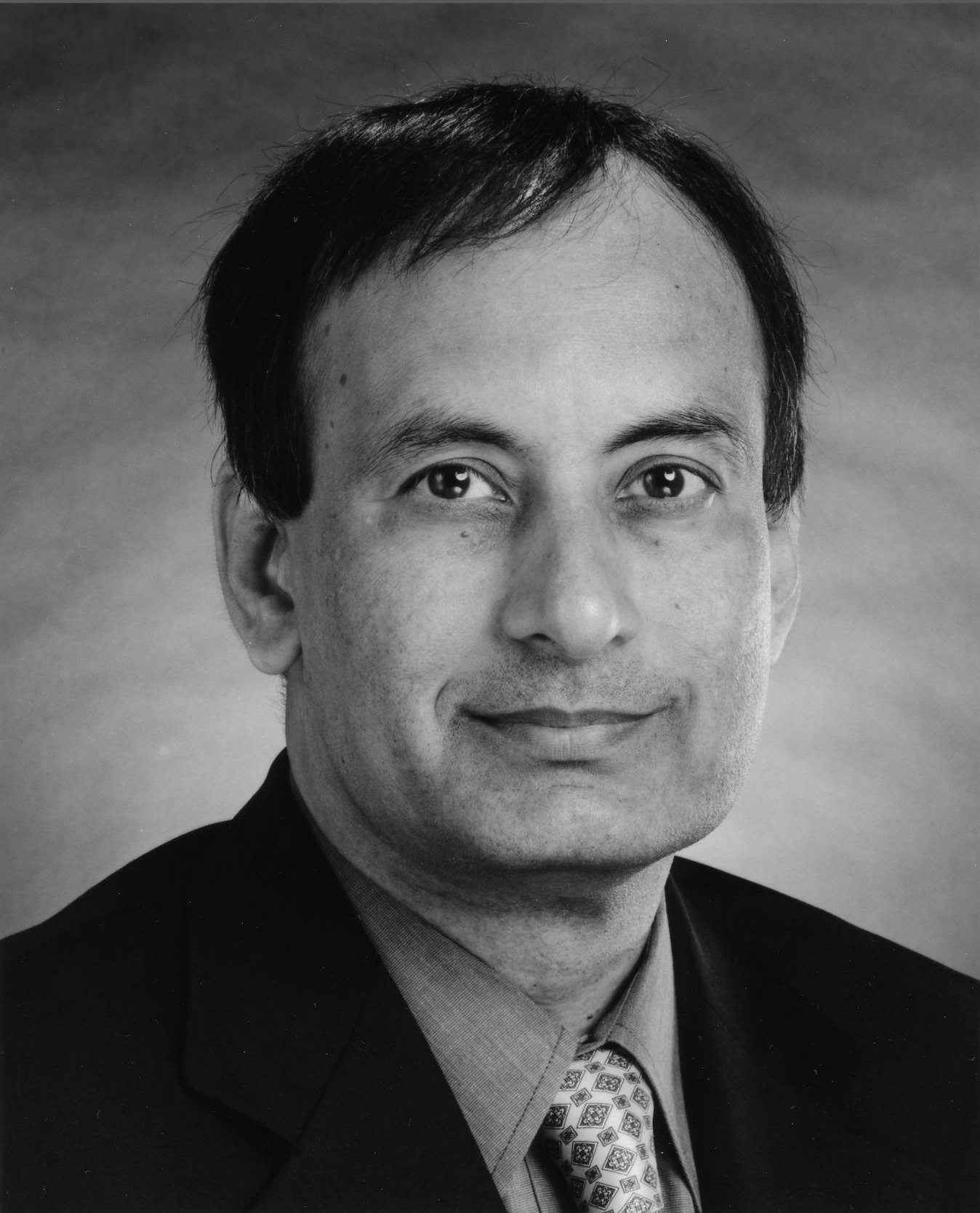
Husain Haqqani argues that Pakistan's decision to bar 1,400 foreigners from studying at the country's madrasas is not the solution to terrorism.
Source: The Indian Express
The Pakistani government's decision to bar 1,400 foreigners from studying at the country's madrasas is not the solution to terrorism. None of the terrorists involved in international attacks linked to Pakistan , even tenuously, over the last several years have been regular foreign madrasa students. Pakistan 's real problem is the training camps established by Jihad ist groups in the country, which were tolerated by the Pakistani state for strategic reasons. Some of these camps operated under the cover of madrasas. By focusing on madrasas, and then only on foreigners within the madrasas, Pakistani officials are again missing the opportunity to move forward with a complete roll back of Jihad ism.
Blaming foreigners has become a convenient excuse in Pakistan , and elsewhere in the Muslim world, to avoid condemning the extremist Jihad ists' ideology of hatred. It is not necessary for everyone in Europe or the Muslim world to agree with all aspects of US or British policy to acknowledge that many Muslims have been so consumed by hatred of the West that they have lost their moral compass. Terrorism is reprehensible. Extremist ideologies that feed, justify or condone terrorism deserve unequivocal condemnation. Instead, non-steps such as expulsion of foreign madrasa students continue to distract Gen Musharraf's regime.
Pakistan 's madrasas breed hostility towards modernity, produce students without contemporary knowledge, and feed obscurantism. But madrasas have existed for centuries without generating terrorists. Producing theology is not the same as producing radicalism. The reason so many Islamist radicals from all over the world congregated or passed through Pakistan was the strategic decision by Pakistan 's rulers to use Jihad as an instrument of influence in Afghanistan and Kashmir . If Pakistan is to move beyond the phase of officially tolerated Jihad ism, it is not the madrasas but the training camps and the militias spawned by them that need to be shut down.
For Pakistan 's intelligentsia, too, this is a moment of truth. The perceived or real flaws of Europeans and Americans must not be used as the basis for shifting responsibility for Islamist terrorism from its ideology of hate to specific US policy decisions. The bulk of the recent victims of global terror have been Muslims, slaughtered by those claiming to speak in the name of a purer Islam. This slaughter is hardly a rational response to ‘‘occupation of Iraq , Afghanistan and Palestine ,'' as some commentators describe terrorist attacks.
A booklet by the Lashkar-e-Toiba declares the U.S. , Israel and India as existential enemies of Islam and lists eight reasons for global Jihad . These include the restoration of Islamic sovereignty to all lands where Muslims were once ascendant, including Spain , Bulgaria , Hungary , Cyprus , Sicily , Ethiopia , Russian Turkistan and Chinese Turkistan, and even parts of France . Blaming the US for the delusions of these admittedly small groups confers a degree of legitimacy on Islamist extremists and undermines moderate Muslim struggling for the soul of their faith.
Some of the post-July 7 rhetoric in Pakistan and Britain against the U.S. is based on factually incorrect assertions, such as claims that the current global Jihad ist movement was somehow created by the U.S. or that America created radical madrasas in the Muslim world.
The deliberate ignorance of blame-the-U.S. commentators is pervasive. Left-wing activist Tariq Ali wrote in The Guardian the day after the London bombings that ‘‘the principal cause of this violence is the violence inflicted on the people of the Muslim world.'' He suggested, and other critics of the U.S. agree, that ‘‘it is safe to assume that the cause of these bombs is the unstinting support given by New Labour and its prime minister to the US wars in Afghanistan and Iraq.''
Reporting on the links of three of the four London bombers to a Pakistani madrasa, a BBC reporter said, ‘‘Madrasas mushroomed in the 1980s funded by religious radicals in Saudi Arabia and the U.S. as training and arming centres for thousands of mujahedeen fighting Soviet forces in Afghanistan.”
The truth is that some Muslims have interpreted Islamic teachings to include hatred of non-believers and, especially since the decline of Muslim power, advocated unconventional warfare against the disproportionately more powerful West. In the 19th century, the first anti-modernity Jihad ist group called Tehrik-e-Mujahedeen emerged in India and operated in the country's northwest frontier, including parts of present-day Pakistan and Afghanistan . This puritanical militant movement first fought the region's Sikh rulers and later targeted the British.
The movement's founder, Sayyid Ahmed of Bareili (d. 1831) organised cells throughout India to supply the frontier movement with men and money. Calling themselves mujahedeen , the movement's followers interpreted the Islamic concept of jihad in its literal sense of holy war. India 's Jihad ists killed British officials and civilians and their campaign of terror lasted for several decades. That 19th century movement spawned the contemporary ideology of jihad and serves as the prototype for subsequent the jihad network of Al Qaeda and its associated groups in the region.
Sayyid Ahmed was influenced by the ideas of the founder of the Wahabi movement in present-day Saudi Arabia . Islamic revivalist movements have been active through much of the Muslim world long before America 's engagement with the greater Middle East . If the Islamists' ideology precedes U.S. involvement in the region by more than a century, how can Britain 's support for U.S. security policy alone be the instigator of Islamist violence in London ?
Similarly, the U.S. support for the guerrilla campaign against Soviet occupation of Afghanistan cannot be described as American endorsement of Jihad ist ideology. The Soviets occupied Afghanistan in an effort to bolster a weak client regime, which was fighting a mass-based resistance supported initially by Pakistan .
From the US perspective, it made strategic sense to force the Soviets out of Afghanistan . The US channeled its support for the Afghan resistance through its ally, Pakistan , and also encouraged another ally, Saudi Arabia , to support the Afghans. The Afghan resistance included secular nationalists as well as Islamist Jihad ists. It was the Saudis and Pakistan 's military ruler Gen Zia-ul-Haq who decided to allow Islamists from all over the world to congregate in Pakistan to train for war across the border.
The decision to radicalise madrasas that had previously shunned Western values without fighting against them was also taken by the Saudis and Pakistan 's rulers. Saudi Arabia sought to assert itself as the leader of the Sunni Islamic world in competition with Shia revolutionary Iran . Pakistan planned on using the Jihad ists as a tool for establishing a client regime in Afghanistan and to wrest disputed Kashmir from India .
The U.S. did not directly train, fund or equip the global Jihad ists during the Afghan war even though it channeled approximately $2 billion to the mujahedeen through Pakistan 's intelligence. It erred in trusting the judgment of its allies during the Afghan war, while these allies failed to recognise the potential consequences of the Jihad ist ideological or strategic agendas. US's intelligence apparatus and intellectual community, focused on fighting communism, did not identify the potential of radical Islamists to emerge as a major global security threat. That error must now be rectified by sharing the responsibility and blame.
URL: http://www.indian-express.com/columnists/full_column.php?content_id=75539
Former Visiting Scholar
Recent Work
Mr. Husain Haqqani, Ashley J. Tellis
Mr. Husain Haqqani
Carnegie does not take institutional positions on public policy issues; the views represented herein are those of the author(s) and do not necessarily reflect the views of Carnegie, its staff, or its trustees.

With its public finances in shambles, the far right polling at 35 percent ahead of the 2027 presidential election, and a growing protest movement, is France’s crisis a threat to the EU’s geopolitical awakening?

Rym Momtaz, ed.

Putin’s conservative staffing policies and search for ever greater control have cemented parliament’s transformation into a bureaucratic appendage of the executive branch.

Andrey Pertsev

Russia’s AI-driven propaganda campaigns operate in a fragmented, chaotic, and often illogical manner. That’s not necessarily a problem for the Kremlin, though: It’s much easier to mimic genuine public debate that way.

Ilya Klishin

Russian strikes are weakening the economy sustaining Ukraine’s war effort. Closing the growing funding gap will require more European support and politically contentious reforms in Kyiv.

Balázs Jarábik

Ex-president Gurbanguly Berdimuhamedov remains interested in politics, but his son Serdar, Turkmenistan’s current president, is becoming increasingly independent and willing to break with his father’s legacy. If their covert rivalry goes too far, both risk losing power.

Galiya Ibragimova