

Q&A
Mark Medish
{
  "authors": [
    "Mark Medish"
  ],
  "type": "legacyinthemedia",
  "centerAffiliationAll": "dc",
  "centers": [
    "Carnegie Endowment for International Peace"
  ],
  "collections": [],
  "englishNewsletterAll": "ctw",
  "nonEnglishNewsletterAll": "",
  "primaryCenter": "Carnegie Endowment for International Peace",
  "programAffiliation": "russia",
  "programs": [
    "Russia and Eurasia"
  ],
  "projects": [],
  "regions": [
    "Caucasus",
    "Russia"
  ],
  "topics": [
    "Foreign Policy"
  ]
}
Source: Getty
Source: Globalist

The dogs bark, and the caravan passes. At his January 2006 press conference, this was how Russian President Vladimir Putin confidently
In an ideal world, Russia — as the preeminent Eurasian power — belongs in the leaders’ group. But neither the world nor Russia is ideal.
dismissed criticism of Russia's hosting the Group of Eight summit in July at St. Petersburg.
Some 30 years after its inception, the annual moving caravan of the world's leading powers may be reaching the limits of usefulness. The St. Petersburg meeting will be fraught with problems, and will be a test of the forum's viability.
On one side, there is a nagging question whether Russia really belongs in the group, let alone as host.
Does Russia belong?
On the other side, compelling logic argues for enlarging the group permanently to include rising powers such as China, India, and Brazil — a Group of Eleven. (Indeed, these three countries will be special guests at St. Petersburg.)
Some analysts say the group should have as many as 20 countries in order to achieve greater global representivity and legitimacy.
G8 Origins
The G8 started as the G6 in 1975 at Rambouillet, France. It was an informal pow-wow among the leaders of the United States, United Kingdom, France, Germany,
Some analysts say the G8 should have as many as 20 countries — in order to achieve greater global representivity and legitimacy.
Italy, and Japan. Canada was invited a year later, making it the G7.
The group originally described itself as a club of "advanced industrialized democracies".
At its best, the leaders group has served as an annual opportunity to advance major multilateral initiatives, such as debt relief for Africa at Gleneagles in 2005, and to work on other issues of common concern.
Russia's presence — an agenda item
Today Russia itself has become an issue of common concern. Russia was asked to join the group in steps in the mid-1990s. President Bill Clinton and Prime Minister Tony Blair were among those who pushed for Russian membership. They saw it as a way to reward then President Boris Yeltsin for his bold reform path and induce him to stay the course.
Yeltsin was invited first as a guest observer, later as a full participant. This year, Russia will host the summit for the first time.
Movement in the non- G7 direction
In an ideal world, Russia — as the preeminent Eurasian power — belongs in the leaders' group. But neither the world nor Russia is ideal.
If China were one day included, as some advocate, then Russia would begin to look downright Western in political terms.
What started as a clever tactic to leverage the prestige of membership has turned into a rather dubious strategy.
In the past few years, Russia has quietly but steadily moved in a non-G7 direction — that is, away from being a modern democracy.
The final word on Russia is not in, but certain current trends are deeply worrisome. Think of the Yukos affair, the apparent rise of corrupt state capitalism, the freeze of open media and civil society, the ongoing brutality in and around Chechnya, the heavy-handed use of "energy diplomacy" against neighbors. The list goes on.
Shared values
For the G7 group to be meaningful, it must enjoy a high common denominator of shared values.
Russia's presence increasingly undermines this important criterion. It is premature to call for Russia's ouster or for a boycott, but it is not too early to confront the problem frankly.
Questions raised by enlargement
Of course, if China were one day included, as some advocate in view of its enormous economic weight, then Russia would begin to look downright Western in political terms.
For the G7 group to be meaningful, it must enjoy a high common denominator of shared values. Russia’s presence increasingly undermines this criterion.
Enlargement raises wider questions of global governance — including the UN Security Council — that also must be addressed in coming years. Getting the global leadership roster right is not obvious.
It is interesting to note that, despite strong political pressures, finance officials have so far managed to keep Russia out of the traditional G7 process involving finance ministers and central bankers, who meet strictly "at seven".
Finance ministers evidently know how to say "nyet" to lowering their standards.
Litmus test
The St. Petersburg summit should be a litmus test of how open Russia's "window on the West" really is.
This year's G8 agenda is still a work in progress. But its fuzzy rhetoric about the "war on terrorism" and "energy security" is not enough. Indeed, these slogans tend to be counterproductive hype.
Diversification and conservation
The "war on terrorism" too easily serves as cover for authoritarian tactics. And true energy security will be achieved only through diversification and conservation, not through special deals among the G-8.
Finance ministers evidently know how to say “nyet” to lowering their standards.
Instead the agenda should aim to test and influence — to "jiu jitsu", if you will — the host country's normative commitment by insisting on higher standards about concrete issues.
Will President Putin re-direct his errant administration and resume the more progressive initiative of his early years? Can the Kremlin demonstrate a constructive role in the neighborhood — for example, by solving rather than exacerbating "frozen conflicts" such as Transnistria, Nagorno-Karabakh, Abkhazia and South Ossetia?
Equally important, will Russia enhance its cooperation with the West on the urgent challenges of Iranian and North Korean nuclear proliferation?
Year of the dog
The answers to these questions will determine the success of the St. Petersburg summit, beyond the colorful photo-ops. At issue is Russia's direction. At stake, too, is the viability of the G8 as a forum for serious problem-solving.
According to the Chinese calendar, 2006 is the year of the dog. Perhaps the caravan drivers should pay more attention to all the barking.
Republished with the permission of the Globalist, www.theglobalist.com.
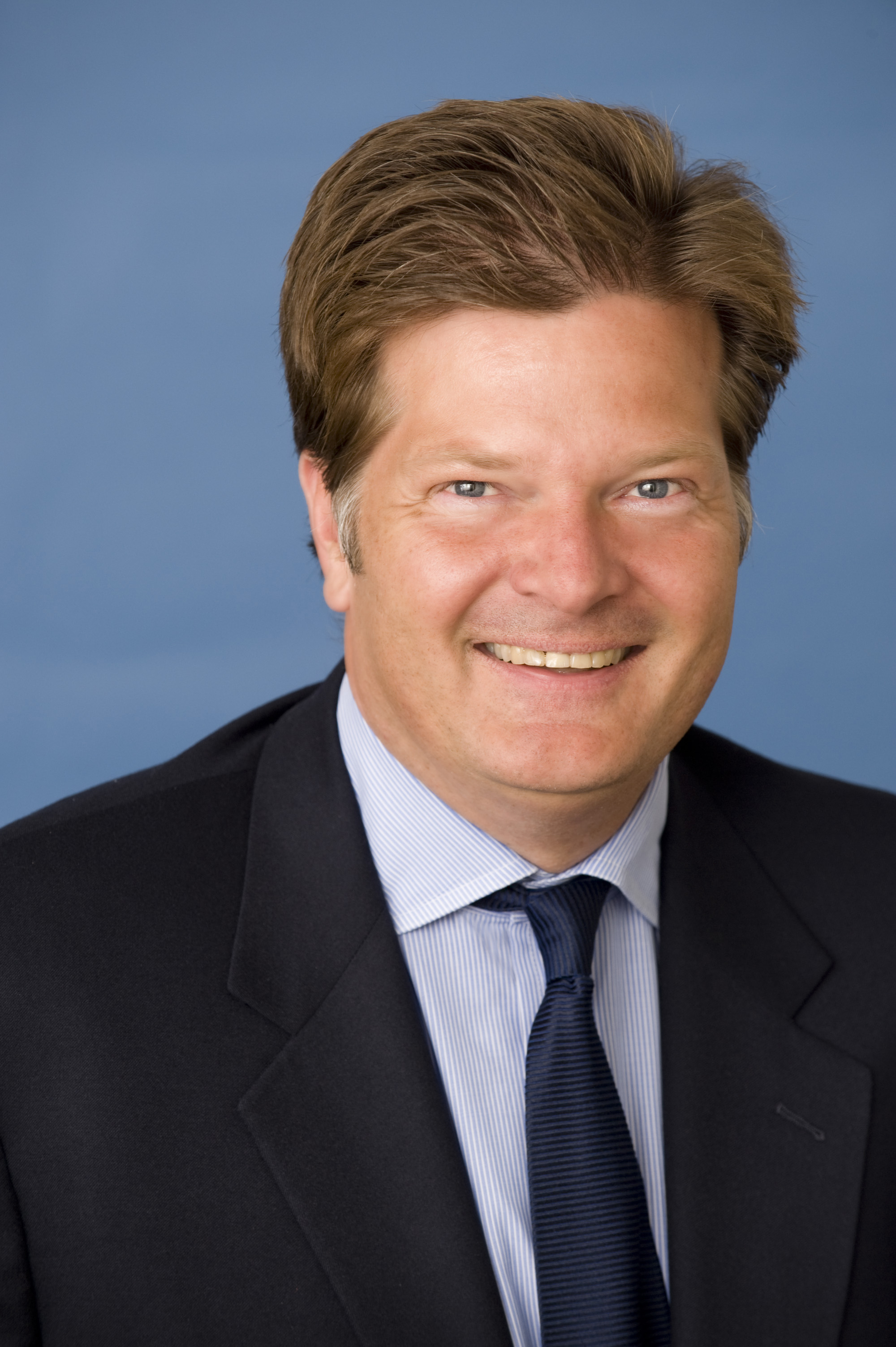
Former Visiting Scholar
Medish served in the Clinton administration as special assistant to the President and senior director for Russian, Ukrainian, and Eurasian Affairs on the National Security Council from 2000 to 2001.
Recent Work
Carnegie does not take institutional positions on public policy issues; the views represented herein are those of the author(s) and do not necessarily reflect the views of Carnegie, its staff, or its trustees.

Minsk clearly expected the dialogue with Washington to yield more results, in particular the lifting of EU sanctions and permission to export potash.

Artyom Shraibman

A summer of escalation in the Black Sea has hurt Ukraine economically and is exacerbating world food security. A truce is needed—as is a broader reframing of Europe’s Ukraine strategy.

Thomas de Waal
Why governance of rapidly evolving technology will be distributed and complex.


Stewart Patrick, Scott Singer
It should address the shortcomings of previous crisis communication efforts and adapt to the demands of frontier AI.

Lucy Luo
Washington’s decision to support some UN functions while letting others wither is pulling the organization apart at the seams.
Stewart Patrick, Theodore Zaritsky