

In The Media
Minxin Pei
{
  "authors": [
    "Minxin Pei"
  ],
  "type": "legacyinthemedia",
  "centerAffiliationAll": "dc",
  "centers": [
    "Carnegie Endowment for International Peace"
  ],
  "collections": [],
  "englishNewsletterAll": "asia",
  "nonEnglishNewsletterAll": "",
  "primaryCenter": "Carnegie Endowment for International Peace",
  "programAffiliation": "AP",
  "programs": [
    "Asia"
  ],
  "projects": [],
  "regions": [
    "China"
  ],
  "topics": []
}
Source: Getty
Source: Foreign Policy

Of these four, Keidel offers the most compelling, and optimistic, case for China. Sadly, the Chinese government he describes is not one I recognize. So we are arguing about facts, not just an interpretation of facts. For example, Keidel asserts that China has undertaken land reform. True—sort of. Although China abolished collective agriculture in the late-1970s and early 1980s, it has not implemented any land-ownership reforms, which is directly responsible for the rampant land grabs that local officials are committing today. Keidel also insists that corruption is “vigorously prosecuted” in China. If that’s true, why does corruption remain so rampant? His belief that “freedom of speech and assembly … are widespread” is simply false. In reality, the Chinese government maintains tight controls on the media, and it forbids nearly all forms of assembly. Keidel cites a long list of economic factors on his way to arguing that China’s fast-paced growth can continue in perpetuity. But any country that is experiencing rising income inequality, increasing social unrest, and severe environmental degradation (three indisputable facts we all agree on) is more likely to falter than succeed.
Li thinks China’s current leadership is responding boldly and effectively to the country’s social problems. He is only partially right. The new leaders have spewed populist rhetoric and announced additional spending on health and education in rural areas. But these promised policy adjustments are inadequate in light of the huge buildup of social problems over the past 15 years, and the government’s strategy of throwing money at such problems is treating the symptoms, not the root causes. If Beijing wanted meaningful reform, it would change the current land-acquisition system, the main source of rural injustice, discontent, and inequality in China. It would also require administrative and political reforms in the countryside to make local governments more accountable. One can bet that the bulk of the new spending that Li celebrates will benefit rural bureaucrats, not peasants.
Should China experience a massive shock, Gilley thinks the country will land on its feet. He incorrectly says that I predict a new authoritarianism or even anarchy if the current regime folds. I purposefully refrained from making these kinds of hazardous predictions. Nevertheless, I sympathize with Gilley’s optimistic outlook should China succeed in ending its 2,000-year-old authoritarian political system. Based on other democratic transitions in large developing nations, including Indonesia, Mexico, and the Philippines, the odds that China can make a peaceful transition from neo-Leninism to democracy are good. But history also shows that a seismic shock to China’s political system could cause a lot of pain for its people, without leading to lasting change. Here, the Russian experience comes to mind. The fall of communism there has brought not a liberal democracy, but a soft authoritarianism.
The most unpleasant possibility is that political stagnation in China will continue for many decades to come. The Chinese Communist Party has been quick to adapt and make tactical adjustments. These crisis-management skills may help it survive even repeated shocks while maintaining its grip on power. Whatever happens, one thing is certain: a regime so burdened by corruption, cynicism, and decay will hardly turn China into the next great superpower.
This article was originally printed in the May/June 2006 edition of Foreign Policy.
Former Adjunct Senior Associate, Asia Program
Pei is Tom and Margot Pritzker ‘72 Professor of Government and the director of the Keck Center for International and Strategic Studies at Claremont McKenna College.
Recent Work
Minxin Pei
Minxin Pei
Carnegie does not take institutional positions on public policy issues; the views represented herein are those of the author(s) and do not necessarily reflect the views of Carnegie, its staff, or its trustees.

The interventions in Iran and Venezuela are in keeping with Trump’s strategy of containing China, but also strengthen Russia’s position.

Mikhail Korostikov
Arguing that Chinese policy is hung on alliances—with imputations of obligation—misses the point.

Evan A. Feigenbaum

A new draft regulation on “anthropomorphic AI” could impose significant new compliance burdens on the makers of AI companions and chatbots.


Scott Singer, Matt Sheehan
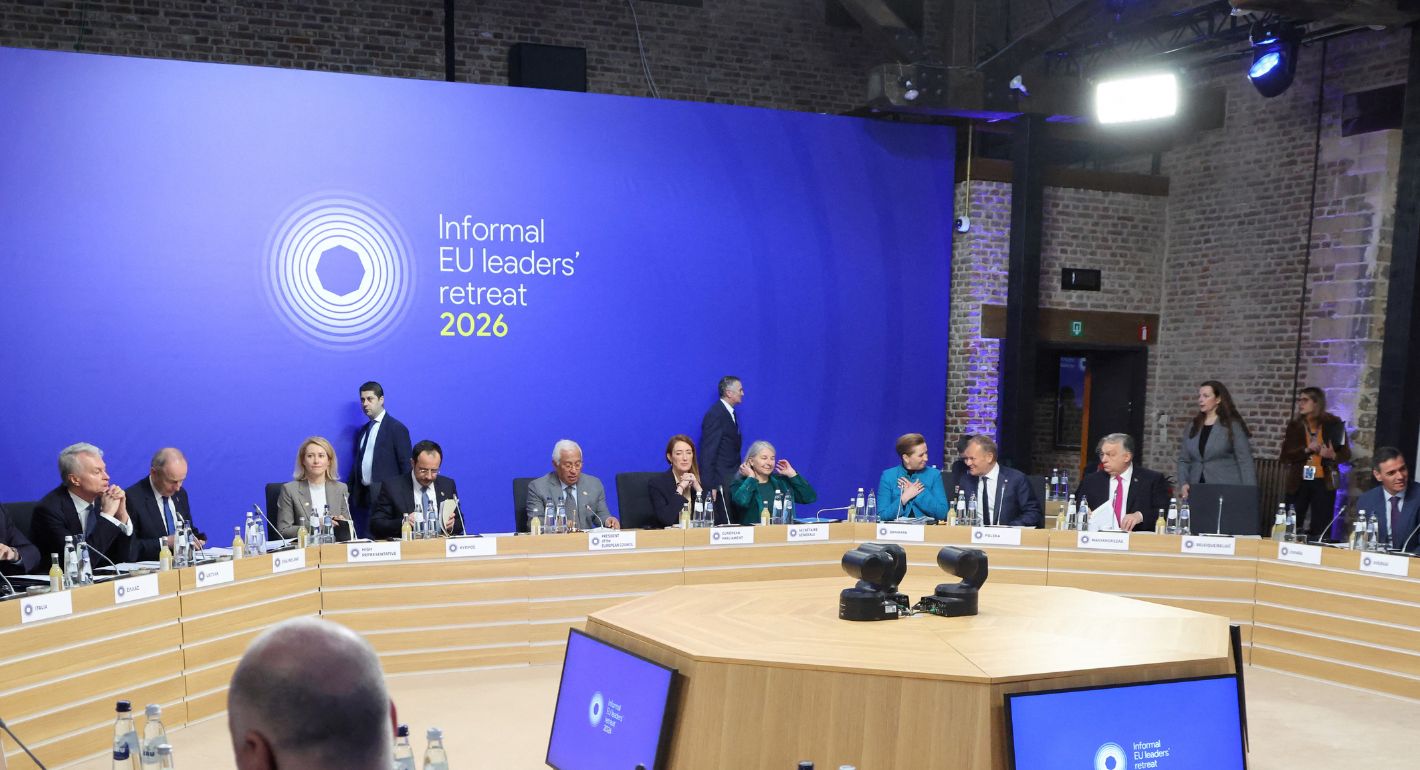
EU member states clash over how to boost the union’s competitiveness: Some want to favor European industries in public procurement, while others worry this could deter foreign investment. So, can the EU simultaneously attract global capital and reduce dependencies?

Rym Momtaz, ed.

For a real example of political forces engaged in the militarization of society, the Russian leadership might consider looking closer to home.

James D.J. Brown