

In The Media
Minxin Pei
{
  "authors": [
    "Minxin Pei"
  ],
  "type": "legacyinthemedia",
  "centerAffiliationAll": "dc",
  "centers": [
    "Carnegie Endowment for International Peace",
    "Carnegie China"
  ],
  "collections": [],
  "englishNewsletterAll": "asia",
  "nonEnglishNewsletterAll": "",
  "primaryCenter": "Carnegie China",
  "programAffiliation": "AP",
  "programs": [
    "Asia"
  ],
  "projects": [],
  "regions": [
    "China",
    "East Asia",
    "Japan"
  ],
  "topics": []
}
Source: Getty
Source: The Financial Times

To be sure, Sino-Japanese relations have warmed considerably since the much-applauded visit to Beijing by Shinzo Abe, Japan’s prime minister, last October. Because Mr Abe has so far refrained from visiting the Yasukuni shrine (where the spirits of some second world war criminals are honoured), the most contentious quarrel in recent years has been temporarily contained. The Chinese government has also since then quietly censored the fiery anti-Japanese rhetoric in the Chinese print media and cyberspace.
But it would be naive to see the improvement in atmosphere between Tokyo and Beijing as a substantive step towards removing tensions between the two countries. Few detect a fundamental shift in either’s policy. Neither China nor Japan has made real concessions on key bilateral disputes.
For example, Beijing and Tokyo have failed to achieve progress on their conflicting claims over the rights to the natural gas fields in the East China Sea. While accommodating Chinese leaders on the shrine visit, Mr Abe maintains a tough position on other bilateral issues. He openly opposes the lifting of the European Union’s arms embargo against China. Tokyo continues to fret about China’s military modernisation programme and criticise its lack of transparency. Taro Aso, Japan’s foreign minister, has begun to champion “value-based” diplomacy and an “arc of freedom and prosperity”, which would include democracies in Pacific-Asia but pointedly exclude China, a one-party state.
For China’s part, Beijing has not ended its opposition to Japan’s bid for a permanent seat on the United Nations Security Council. China continues to eye warily Japan’s reinvigorated security alliance with the US, fearing that it is designed to contain China and, in the worst case, aid and abet Taiwan’s move to juridical independence.
Japan’s efforts to strengthen its national security apparatus and Mr Abe’s push to revise the pacifist constitution are also met with scepticism in China. The underlying strategic rivalry has not ceased. Persistent tensions make it difficult for Hu Jintao, China’s president, and Mr Abe, who have both staked enormous political capital on repairing bilateral ties, to demonstrate that Sino-Japanese rapprochement is producing concrete results.
With such fragile foundations, that rapprochement could quickly falter as a result of mounting domestic criticism of its fruitlessness or an accident that unleashes the mutual animosities bubbling underneath in both societies. To add fresh momentum, Beijing and Tokyo need to undertake a three-step strategy immediately.
First, they must quickly settle the less contentious bilateral issues. For example, an equitable solution to the East China Sea natural gas dispute, involving a 50-50 split of costs and output, ought to be attainable. The Sino-Japanese expert group set up to examine conflicting versions of history should be asked to produce a road map and timetable on how the most divisive topics will be handled. Specific steps to promote co-operation in energy efficiency and environmental protection are sure winners. As an additional goodwill gesture, China should welcome Japanese companies to participate in the mega-project of building the Shanghai-Beijing high-speed rail link.
Second, Beijing and Tokyo need to implement confidence-building measures to reduce anxiety about each other’s defence posture and military activities. Top of the list should be an expanded programme of military-to-military exchanges that promote contacts among senior defence officials and a deeper understanding of each country’s strategic intentions and defence priorities. Measures to increase defence transparency on China’s part, such as publishing more detailed military budgets and defence white papers, would help to allay Japan’s worries. An incidents-at-sea agreement designed to avoid and manage accidental naval intrusions and contacts should be concluded promptly.
Third, Tokyo and Beijing must learn to “walk and chew gum” at the same time. China and Japan are not allies, but they do not have to be adversaries. For the foreseeable future, the geopolitical rivalry, differences in their political institutions, the bitter legacy of history and the lack of mutual trust will continue to limit the upside potential of Sino-Japanese relations.
Deepening economic interdependence and a strong desire to avoid another strategic conflict will restrain bilateral frictions. The dual nature of Sino-Japanese relations – simultaneous competition and co-operation – requires that both sides engage in an honest dialogue about, but defer resolution of, the most intractable issues such as territorial disputes, Taiwan and Japan’s permanent seat on the UN Security Council.
Beijing calls Mr Wen’s trip to Tokyo an “ice-melting” mission. But many follow-up initiatives will be needed to keep Sino-Japanese ties from being frozen over again.
The writer is the director of the China Programme at the Carnegie Endowment for International Peace in Washington DC.
This article was originally published in the Financial Times, April 9, 2007.

Former Adjunct Senior Associate, Asia Program
Pei is Tom and Margot Pritzker ‘72 Professor of Government and the director of the Keck Center for International and Strategic Studies at Claremont McKenna College.
Recent Work
Minxin Pei
Minxin Pei

The Plaza Accord was not an externally imposed punishment of Japan but part of a broader restructuring that Japanese economists and policymakers themselves recognized was necessary. Its effects were undermined, however, when Tokyo responded to the resulting slowdown with policies that exacerbated investment, credit expansion, and the very imbalances the adjustment was intended to resolve.

Michael Pettis
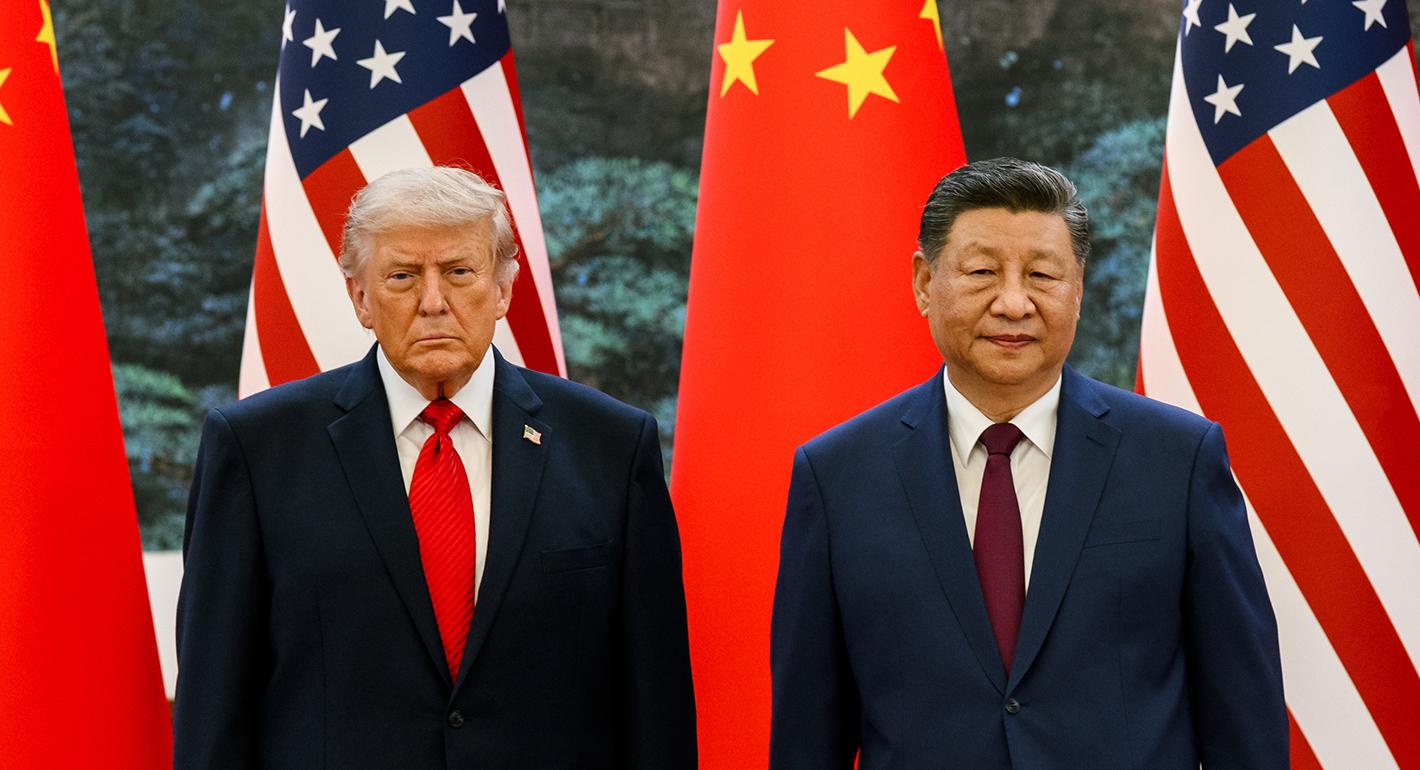
The real test may come after the leaders leave the room.



Sheena Chestnut Greitens, Oriana Skylar Mastro, Yukon Huang, …

The nuclear relationship between China and the United States is increasingly shaped by widening perception gaps rather than deliberate strategic design.

Tong Zhao

Why governance of rapidly evolving technology will be distributed and complex.


Stewart Patrick, Scott Singer

It should address the shortcomings of previous crisis communication efforts and adapt to the demands of frontier AI.

Lucy Luo