

Article
Marina Ottaway, Omar Hossino
{
  "authors": [
    "Marina Ottaway"
  ],
  "type": "legacyinthemedia",
  "centerAffiliationAll": "dc",
  "centers": [
    "Carnegie Endowment for International Peace"
  ],
  "collections": [],
  "englishNewsletterAll": "democracy",
  "nonEnglishNewsletterAll": "",
  "primaryCenter": "Carnegie Endowment for International Peace",
  "programAffiliation": "DCG",
  "programs": [
    "Democracy, Conflict, and Governance",
    "Middle East"
  ],
  "projects": [],
  "regions": [
    "Middle East",
    "North Africa"
  ],
  "topics": [
    "Political Reform",
    "Democracy"
  ]
}
Source: Getty
Secular parties independent of governments are experiencing a deep crisis in most Arab countries. The decline affects liberal and socialist-oriented parties alike. While the crisis is real, continued decline is not inevitable: there still exist in the Arab world large potential constituencies that are disenchanted with incumbent regimes but not willing to commit to Islamist parties either.
Source: bitterlemons-international.org

The crucial question is whether secular parties can develop programs and form organizations capable of capturing some of those uncommitted constituencies. Unless secular parties revive, politics in the Arab world will turn increasingly into a confrontation between authoritarian or semi-authoritarian regimes on one side and Islamist movements on the other. This will encourage extremism on both sides and reduce the chances for meaningful political reform.
Secular parties--that is parties that do not explicitly derive their ideology from Islam, but are not necessarily anti-Islamic or anti-religion--played a central role in Arab politics in the past. Liberal and socialist parties were important actors in nationalist movements, with liberal parties such as the Wafd in Egypt being most influential before World War II and socialist-oriented parties like the Algerian FLN acquiring greater prominence in the 1950s and 1960s. Secular without being militantly secularists, such parties were widely accepted not only by intellectuals but also by people for whom Islam remained the central cultural and religious reference point. The ideas secular parties stood for, be they independence, social and economic change, development or Arab nationalism, resonated among the population, and their secularism was not a significant issue.
But today secular parties do not have distinctive ideologies or political programs. Parties that still have the word socialist in their name no longer push socialist ideas or solutions, but embrace market economics and liberal democracy. So do liberal parties. Incumbent governments pay lip-service to the dominant economic and political ideas of the post-Cold War era, even when they have no intention of following them in practice. Without distinctive ideologies or programs to attract a following, secular parties have become defensive about their identity. In fact, most do not want to be identified as secular, protesting instead their attachment to and respect for Islam.
Liberal and socialist parties in the Arab world objectively face a difficult situation. Islamic organizations and movements have become much stronger and exert a strong influence on social norms and popular culture everywhere. Governments, worried about the rise of Islamist parties, curb the activities of all independent political organizations and make it difficult for all parties to operate rather than seeking allies among secular groups. But secular parties have compounded the problem by their failure to craft coherent programs and devise organizational strategies.
Indeed, secular parties are at their weakest organizationally. Islamist parties have dedicated years, even decades, to the painstaking work of building political structures and membership rolls, while secular parties have neglected such activities. Furthermore, many intellectuals have deserted political parties altogether, choosing instead to form civil society organizations as a means of influencing public debates and policy. But civil society organizations are not a substitute for political parties in election-based political systems, and civil society organizations have little influence on parliaments where pro-government forces are dominant and Islamists are the main opposition. Nor have attempts to bypass organizational weaknesses by direct action in the street to put pressure on the government been effective. The Kiffaya movement in Egypt lasted for the brief span of an election campaign and atrophied thereafter.
Secular parties are also weak on the policy front. While some Islamist organizations like the Egyptian Muslim Brotherhood and the Moroccan Party for Justice and Development have started building up their expertise on concrete policy issues, secular parties are more likely to focus on abstract issues that do not necessarily resonate with the public. For example, the secular Moroccan parties that joined the government in 1997, some of their officials admit, have focused much of their attention on their relations with the palace and have missed opportunities to influence policy.
The conditions of secular parties are discouraging, but their continued decline is not inevitable. Except in Gulf countries, Arab political systems are today based on multi-party elections. Even if elections are manipulated, voters do play a role. And judging by the high degree of absenteeism, voters in most countries are not happy with the choices they are offered. In Egypt, for example, at most a quarter of eligible voters go to the polls. Many voters, probably most, are today uncaptured either by the political machine of the incumbent government or by that of Islamist parties. There is a demand for parties with new ideas and programs. The question is whether secular parties can reform themselves sufficiently to satisfy it.- Published 28/6/2007 © bitterlemons-international.org
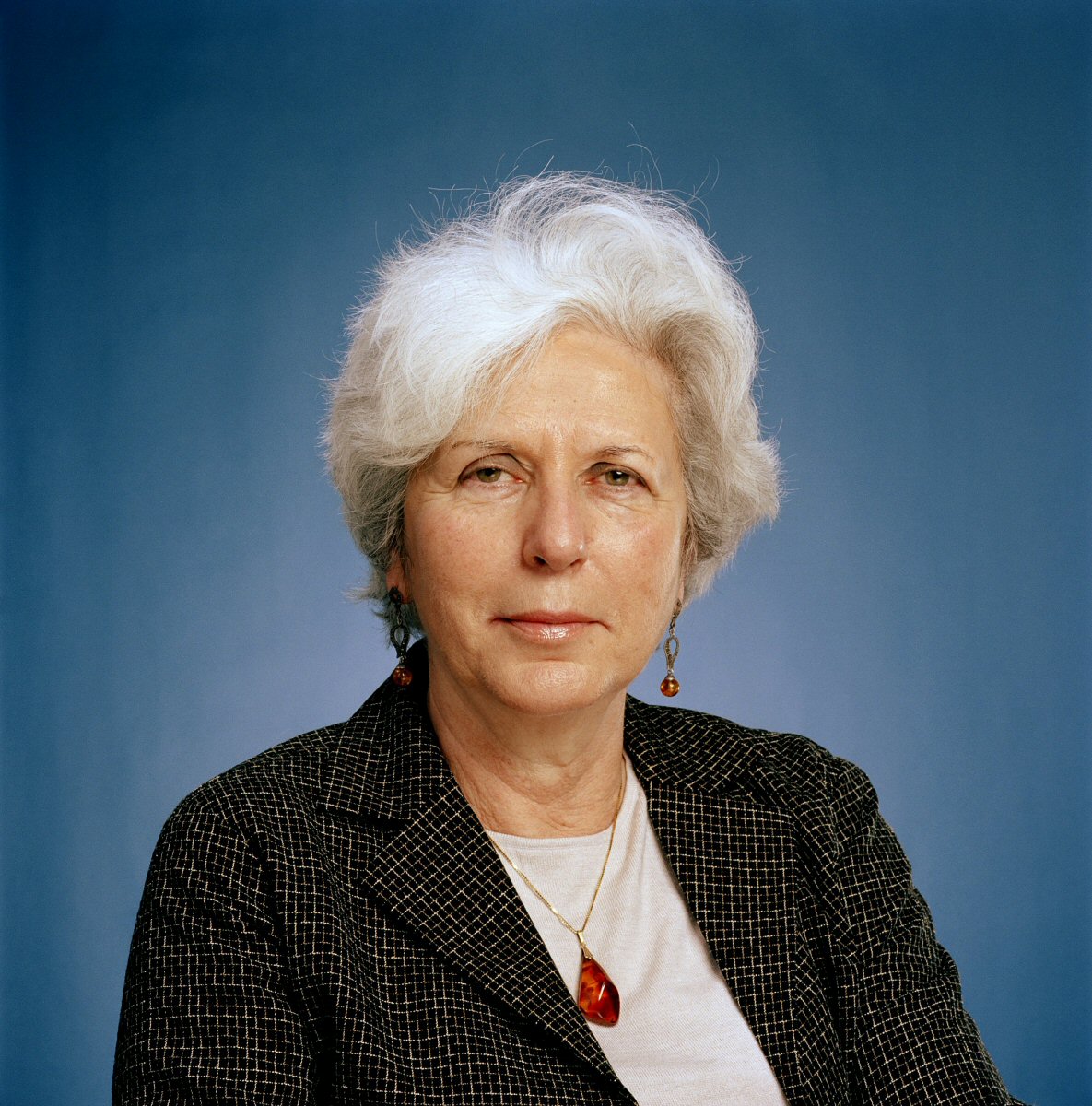
Former Senior Associate, Middle East Program
Before joining the Endowment, Ottaway carried out research in Africa and in the Middle East for many years and taught at the University of Addis Ababa, the University of Zambia, the American University in Cairo, and the University of the Witwatersrand in South Africa.
Recent Work
Marina Ottaway, Omar Hossino
Marina Ottaway
Carnegie does not take institutional positions on public policy issues; the views represented herein are those of the author(s) and do not necessarily reflect the views of Carnegie, its staff, or its trustees.

Putin’s conservative staffing policies and search for ever greater control have cemented parliament’s transformation into a bureaucratic appendage of the executive branch.

Andrey Pertsev

Ex-president Gurbanguly Berdimuhamedov remains interested in politics, but his son Serdar, Turkmenistan’s current president, is becoming increasingly independent and willing to break with his father’s legacy. If their covert rivalry goes too far, both risk losing power.

Galiya Ibragimova

A notable degree of participative democracy has firmly arrived in Europe. But to have more far-reaching impact, democratic deliberation needs to move into a radically new phase.

Richard Youngs
Today’s global democratic recession is partly rooted in a common perception that democracies have a delivery problem, with many citizens in both autocracies and democracies alike now believing that strongmen can achieve better governance outcomes. But a study of four countries in Africa reveals that democratic-leaning governments have demonstrated better governance performance than autocratic governments.


Sarah Yerkes, Natalie Triche, Amr Hamzawy
Fatima El Mansouri is the country’s first female prime minister. She’s also a privileged insider in a largely ceremonial position.
Sarah Yerkes