

Article
Леонид Гозман, Michael McFaul
{
  "authors": [
    "Michael McFaul"
  ],
  "type": "legacyinthemedia",
  "centerAffiliationAll": "dc",
  "centers": [
    "Carnegie Endowment for International Peace"
  ],
  "collections": [],
  "englishNewsletterAll": "ctw",
  "nonEnglishNewsletterAll": "",
  "primaryCenter": "Carnegie Endowment for International Peace",
  "programAffiliation": "russia",
  "programs": [
    "Russia and Eurasia"
  ],
  "projects": [],
  "regions": [
    "Caucasus",
    "Russia"
  ],
  "topics": [
    "Foreign Policy"
  ]
}
Source: Getty
Today, integration with the West is no longer a goal of Russian foreign policy. Putin instead seeks to balance his and other nations' power against that of the West and the United States in particular, reflecting a fundamental shift in Kremlin thinking about global politics and constituting new potential threats to U.S. influence.
Source: Los Angeles Times

Putin didn't name the enemy that caused the resumption of such flights after a 15-year hiatus. But only one other country has similar air capability -- the United States.
Twenty-four-hour bomber missions is one of many recent flexes of Russian military muscle. Last month, Putin presided over a joint military exercise in Russia of the Shanghai Cooperation Organization, a new club of autocratic and semi-autocratic regimes including China and most of the former Soviet republics in Central Asia.
Also in August, Georgian officials reported that Russian planes had entered Georgian airspace and launched a missile at a Defense Ministry radar. The missile did not explode.And earlier this year, the Russian leader approved a seven-year, $200-billion rearmament plan to build planes, missiles and ships.
Did the Cold War sneak back?
Thankfully, no.
Should the United States be worried about a new Russian threat?
Yes.
Early in his tenure as general secretary of the Communist Party, Mikhail S. Gorbachev moved to end Soviet isolation from the outside world by integrating his country into the West. He withdrew Soviet troops from Eastern Europe, signed arms control treaties that dramatically reduced Soviet nuclear arsenals, and allowed Soviet citizens to travel to the West. The results were profound: The Cold War ended.
Throughout the 1990s, President Boris N. Yeltsin pursued the same foreign policy goal with even greater vigor. He sought to join such Western multilateral institutions as the G-7, the World Trade Organization, the European Union and even the North Atlantic Treaty Organization.
Yeltsin's successor, Putin, also began his term cozying up to the West, a policy course that gained momentum after 9/11, when Putin placed Russia firmly on the side of the West in the global war on terrorism.
But today, integration with the West is no longer a goal of Russian foreign policy. Putin instead seeks to balance his and other nations' power against that of the West and the United States in particular. Resuming strategic-bomber missions, conducting joint military exercises with other countries and threatening U.S. allies such as Georgia reflect the fundamental shift in Kremlin thinking about global politics and constitute new potential threats to U.S. influence.
Why the turn?
First, Putin has rebuilt autocracy at home by undermining the power of regional leaders, independent media, both houses of parliament, independent political parties and civil society. At the same time, he has increased the role of the Federal Security Service, the successor to the KGB, in governing Russia and has arbitrarily politicized such state institutions as the courts, tax collectors and the police. Putin's regime also has made it increasingly difficult for U.S. business and nongovernmental organizations to operate in Russia. As Russia's retreat from democratic values increasingly becomes a source of tension between it and the West, Moscow, in turn, sees less value in trying to cooperate with NATO, the European Union and the U.S.
Second, as Russia has drifted toward autocracy and away from Western norms of governance, Putin and his government increasingly portray the United States as Russia's No. 1 enemy. If Americans watched Russian state-controlled television, they would be shocked to learn that the U.S. is surrounding Russia with military bases, fomenting pro-American revolutions in countries neighboring Russia and seizing Russian natural resources.
President Bush, of course, has many more immediate security challenges than trying to rekindle a balance-of-power game with Russia in Central Asia, Georgia or Ukraine. But the Kremlin's new need for an enemy has reframed previous Russian-U.S. efforts at cooperation -- be it joint investments in oil production; the opening of U.S. military bases in Central Asia to fight a common enemy, the Taliban; or building a shared missile defense system -- into issues of zero-sum competition between Moscow and Washington.
At times, Putin himself has described these U.S. "schemes." For instance, in April, he warned, "There is a growing influx of foreign cash used directly to meddle in our domestic affairs. . . . Not everyone likes the stable, gradual rise of our country." In May, Putin said that threats to Russia from the West "are not diminishing. They are only transforming, changing their appearance. In these new threats, as during the time of the Third Reich, are the same contempt for human life and the same claims of exceptionality and diktat in the world."
Finally, American weakness is driving Russian assertiveness. When the U.S. emerged as the world's undisputed superpower in the 1990s, Russia looked weak in the aftermath of the collapse of the Soviet Union and subsequent economic depression. Today, according to the Kremlin, fortunes have turned. The U.S. is bogged down in unwinnable wars in Afghanistan and Iraq, and morally discredited in the eyes of the international community as a unilateral, interventionist power and violator of human rights.
By comparison, Russia sees itself as stronger and more respectable. As Guantanamo remains open and Iraqi civilian casualties mount, intermittent U.S. complaints about democratic erosion inside Russia do not resonate with Russian elites or citizens. Instead, Russian leaders point to giant inflows of foreign investment, Russia's victorious bid to host the 2014 Winter Olympics and Bush's continued courtship of Putin as evidence that only hard power -- not values -- matters in international politics.
The probability of direct military conflict between Russia and the U.S. is very low. At the same time, an autocratic, anti-Western Russia poses serious trouble for America and its allies. Putin's Russia sells military equipment to Syria, Iran, China and Venezuela. It supports the development of Iranian nuclear technology and blocks Kosovo independence. It has cut off gas to Ukraine, imposed economic sanctions on Georgia and launched a cyber war against a NATO ally, Estonia. A Russia less constrained by Western values, institutions or opinion might be tempted to pursue even more provocative policies, such as deploying military power to secure independence for the territory of Abkhazia inside Georgia.
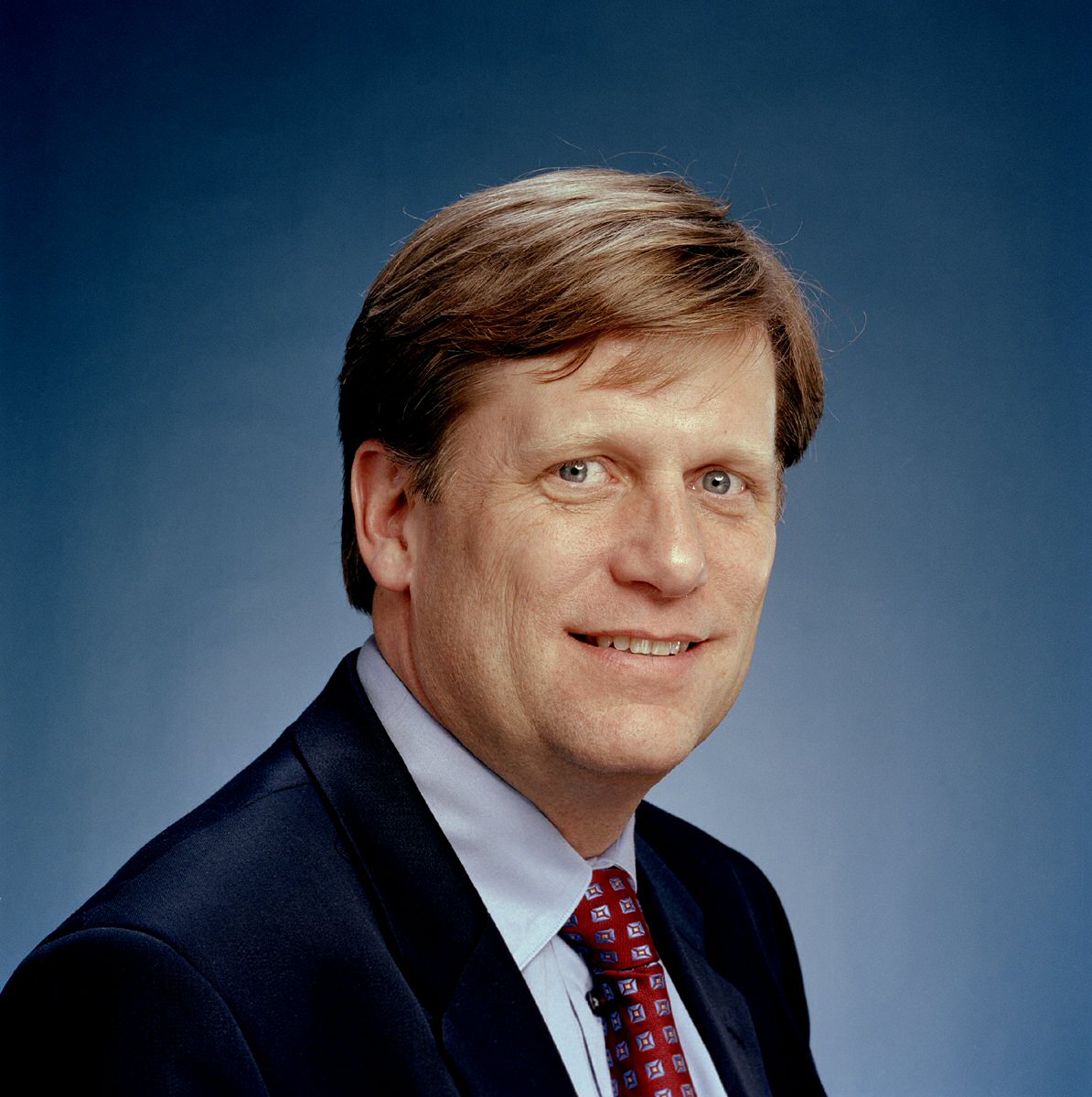
Michael McFaul is a Hoover fellow and professor of political science at Stanford University.
Click here to see the original article on the Los Angeles Times website.
Former Senior Associate
In addition to his role at Carnegie, McFaul is Peter and Helen Bing Senior Fellow at the Hoover Institution and associate professor of political science at Stanford University.
Recent Work
Леонид Гозман, Michael McFaul
Michael McFaul, Sanja Tatic
Carnegie does not take institutional positions on public policy issues; the views represented herein are those of the author(s) and do not necessarily reflect the views of Carnegie, its staff, or its trustees.

It should address the shortcomings of previous crisis communication efforts and adapt to the demands of frontier AI.

Lucy Luo
Washington’s decision to support some UN functions while letting others wither is pulling the organization apart at the seams.

Stewart Patrick, Theodore Zaritsky

Are Germany’s economic, industrial, and political struggles becoming a liability for the EU’s ability to rise to the geopolitical moment?

Rym Momtaz, ed.

Russia’s ruling party would have benefited from Putin appearing as its distant patron, but as an active frontman imposing his views on the public, he has done nothing but harm both the party’s election campaign and the ruling system overall.

Andrey Pertsev

China’s police training infrastructure construction projects provide benefits to recipient countries, promote China’s image as a major global security provider, and are likely to reinforce alignment between Beijing’s security priorities and those of countries in the Global South.


Cameron Waltz, Sheena Chestnut Greitens, Kim Nguyen, …