• Research
  • Emissary
  • About
  • Experts
Carnegie Global logoCarnegie lettermark logo
DemocracyIran
  • Donate
{
  "authors": [],
  "type": "pressRelease",
  "centerAffiliationAll": "dc",
  "centers": [
    "Carnegie Endowment for International Peace"
  ],
  "collections": [],
  "englishNewsletterAll": "menaTransitions",
  "nonEnglishNewsletterAll": "",
  "primaryCenter": "Carnegie Endowment for International Peace",
  "programAffiliation": "MEP",
  "programs": [
    "Middle East"
  ],
  "projects": [],
  "regions": [
    "Egypt"
  ],
  "topics": [
    "Political Reform"
  ]
}
REQUIRED IMAGE

REQUIRED IMAGE

Press Release

Dry Run for Legitimacy: The Egyptian Muslim Brotherhood's Political Party Platform

The production of a political platform by Egypt's Muslim Brotherhood is a sign that real developments—some encouraging, some worrying—are occurring in Egyptian politics. While the Muslim Brotherhood is prevented by the government from forming a political party,the release of a platform signaled what sort of party they would found if allowed to do so.

Link Copied
Published on Jan 22, 2008
Program mobile hero image

Program

Middle East

The Middle East Program in Washington combines in-depth regional knowledge with incisive comparative analysis to provide deeply informed recommendations. With expertise in the Gulf, North Africa, Iran, and Israel/Palestine, we examine crosscutting themes of political, economic, and social change in both English and Arabic.

Learn More

WASHINGTON, Jan 22—The production of a political platform by Egypt's Muslim Brotherhood is a sign that real developments—some encouraging, some worrying—are occurring in Egyptian politics. While the Muslim Brotherhood is prevented by Egypt's government from forming a political party—a ban unlikely to be overturned in the near future—the release of a platform signaled what sort of party they would found if allowed to do so, according to a new report from the Carnegie Endowment.

In The Draft Party Platform of the Egyptian Muslim Brotherhood: Foray Into Political Integration or Retreat Into Old Positions?, Senior Associates Nathan Brown and Amr Hamzawy analyze the draft platform's mixed signals—surprising progressive reforms; regressive, controversial stances; and the chances of achieving a consensus on the anticipated final document.

Encouragingly, the platform advances notions of freedom of religion and expression, pluralistic politics, property rights, women's enfranchisement, and state sovereignty. Yet it also called for the establishment of a council of elected senior religious scholars, effectively placing the government under the scrutiny of an extra-constitutional entity—a regression from more moderate positions upheld by the movement's leadership in recent years.

Key Conclusions:

  • The platform was designed to regain momentum following a marked increase in government restrictions on the Brotherhood after their success in the 2005 parliamentary elections. However, caught between the expectations of loyal activists, who strongly support the implementation of shari'a law, and alienating the more moderate public, disputes among Brotherhood leaders over the platform showed confusion and a lack of consensus over strategy at this critical juncture.

  • The platform fails to address how the future political party would relate to the broader social movement. The Brotherhood ignores both the experiences of Islamist parties in Morocco, Jordan, and Yemen, who advocate a functional separation between the party and the movement, and a major constitutional hurdle by failing to address opening membership to all Egyptians.
  • Public debate about the platform has focused exclusively on the major contentious issues to the exclusion of detailed economic and social positions. For example, the economic strategy advocates a strong interventionist state, yet the platform also calls for a limited social role for the state, with a larger role for civil society and NGOs.
  • While the final platform is expected to exclude women and non-Muslims from holding Egypt's top office, recent statements by key leaders indicate that the Brotherhood would accept a democratic referendum by the Egyptian people on this matter.

“Brotherhood leaders were aware from the beginning of the limits of what a platform could accomplish. At most it could show Egyptians what a Brotherhood party would look like, but the regime, the law, and now the constitution seem to be far more serious obstacles than public opinion to a Muslim Brotherhood party. The platform shows that the movement is still very much struggling with how to handle the demands of its ambition to be a normal political actor. But no amount of internal debate is likely to reassure a regime that seems unable to accept any serious political actor as a legitimate partner in Egyptian political life,” the authors concluded.

###

bullet
NOTES
  • To read this Carnegie Paper, go to www.carnegieendowment.org/middleeast
    Direct link to the PDF:
    www.carnegieendowment.org/files/cp89_muslim_brothers_final.pdf
    Direct link to the Arabic version: www.carnegieendowment.org/programs/arabic/amr_nathan_January08.pdf 
  • Nathan J. Brown, a nonresident senior associate at the Carnegie Endowment, is a professor of political science and international affairs at George Washington University where he directs the Institute for Middle East Studies.
  • Amr Hamzawy is a senior associate at the Carnegie Endowment and is a noted Egyptian political scientist who previously taught at Cairo University and the Free University of Berlin.
  • The Carnegie Middle East Program combines in-depth local knowledge with incisive comparative analysis to examine economic, socio-political, and strategic interests in the Arab world. Through detailed country studies and the exploration of key cross-cutting themes, the Carnegie Middle East Program, in coordination with the Carnegie Middle East Center, provides analysis and recommendations in both English and Arabic that are deeply informed by knowledge and views from the region. The Carnegie Middle East Program has special expertise in political reform and Islamist participation in pluralistic politics throughout the region.
  • The Carnegie Middle East Center is a public policy think tank and research center based in Beirut , Lebanon. Bringing together senior researchers from the region, the Carnegie Middle East Center aims to better inform the process of political change in the Middle East and deepen understanding of the issues the region and its people face.
  • The Arab Reform Bulletin addresses political reform in the Middle East. Sent monthly, it offers analysis from U.S.-based and Middle Eastern political experts, as well as news synopses and annotated resource guides. The Arab Reform Bulletin is published in English and Arabic.
  • Building on the successful establishment of the Carnegie Moscow Center fifteen years ago, and following its century-long practice of adapting to radically-changed global circumstances, the Endowment is undertaking a fundamental re-definition of its role and mission. In a two-day series of events to publicly launch the NEW VISION last February, the Carnegie Endowment for International Peace announced that it has added operations in Beijing, Beirut, and Brussels to its existing offices in Washington and Moscow, pioneering the idea that a think tank whose mission is to contribute to global security, stability, and prosperity requires a permanent international presence and a multinational outlook at the core of its operations. For more information on the Carnegie Endowment's NEW VISION or to watch the NEW VISION DVD online, please click here.
     
  • Press Contact: Trent Perrotto, 202/939-2372, tperrotto@ceip.org
Political ReformEgypt

Carnegie does not take institutional positions on public policy issues; the views represented herein are those of the author(s) and do not necessarily reflect the views of Carnegie, its staff, or its trustees.
More Work from Carnegie Endowment for International Peace

  • Commentary
    Carnegie Politika
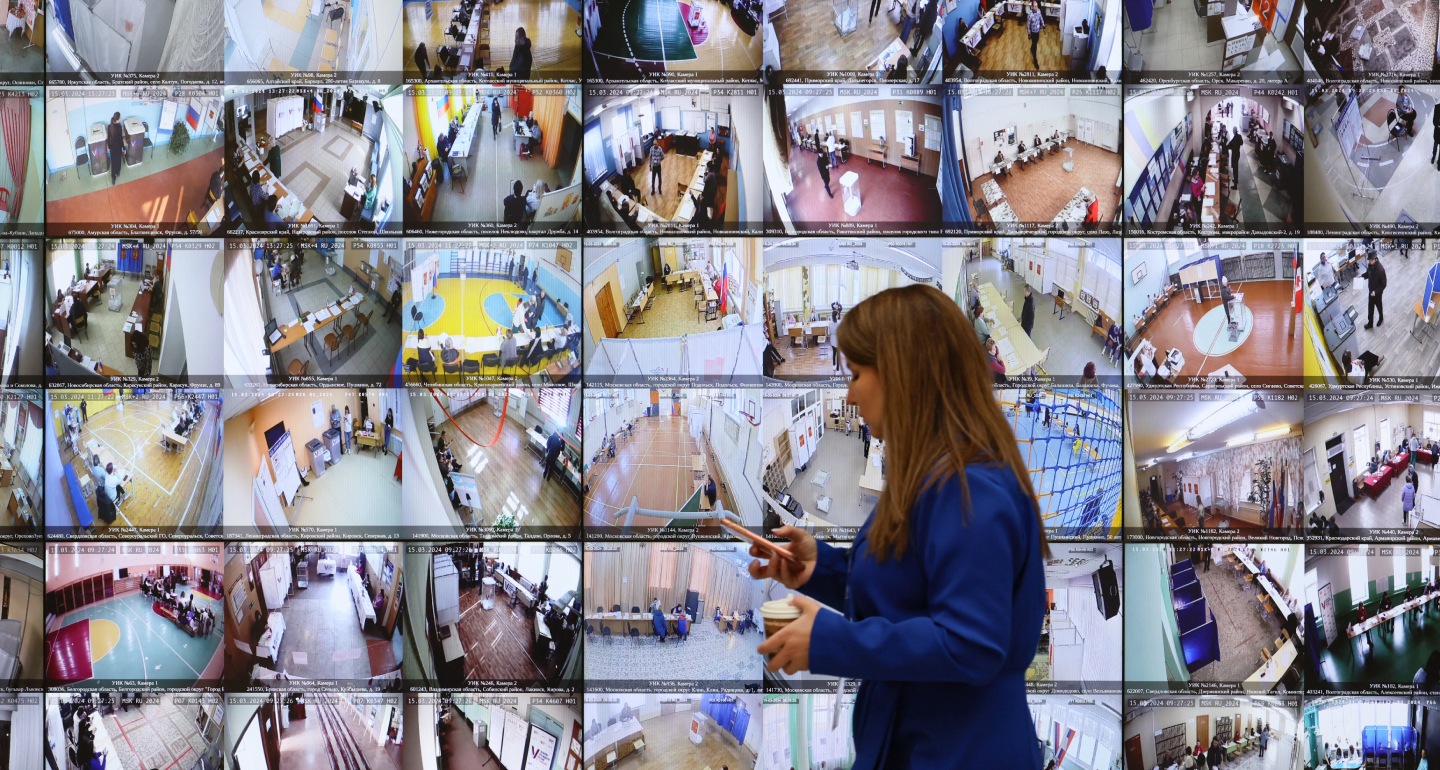
    The Kremlin Is Destroying Its Own System of Coerced Voting

    The use of technology to mobilize Russians to vote—a system tied to the relative material well-being of the electorate, its high dependence on the state, and a far-reaching system of digital control—is breaking down.

      Andrey Pertsev

  • Commentary
    Carnegie Politika
    Notes From Kyiv: Is Ukraine Preparing for Elections?

    As discussions about settlement and elections move from speculation to preparation, Kyiv will have to manage not only the battlefield, but also the terms of political transition. The thaw will not resolve underlying tensions; it will only expose them more clearly.

      Balázs Jarábik
  • U.S. and Indian flags on display.
    Paper
    Indian Americans in a Time of Turbulence: 2026 Survey Results

    A new Carnegie survey of Indian Americans examines shifting vote preferences, growing political ambivalence, and rising concerns about discrimination amid U.S. policy changes and geopolitical uncertainty.


      • +1

      Milan Vaishnav, Sumitra Badrinathan, Devesh Kapur, …
  • Commentary
    Strategic Europe
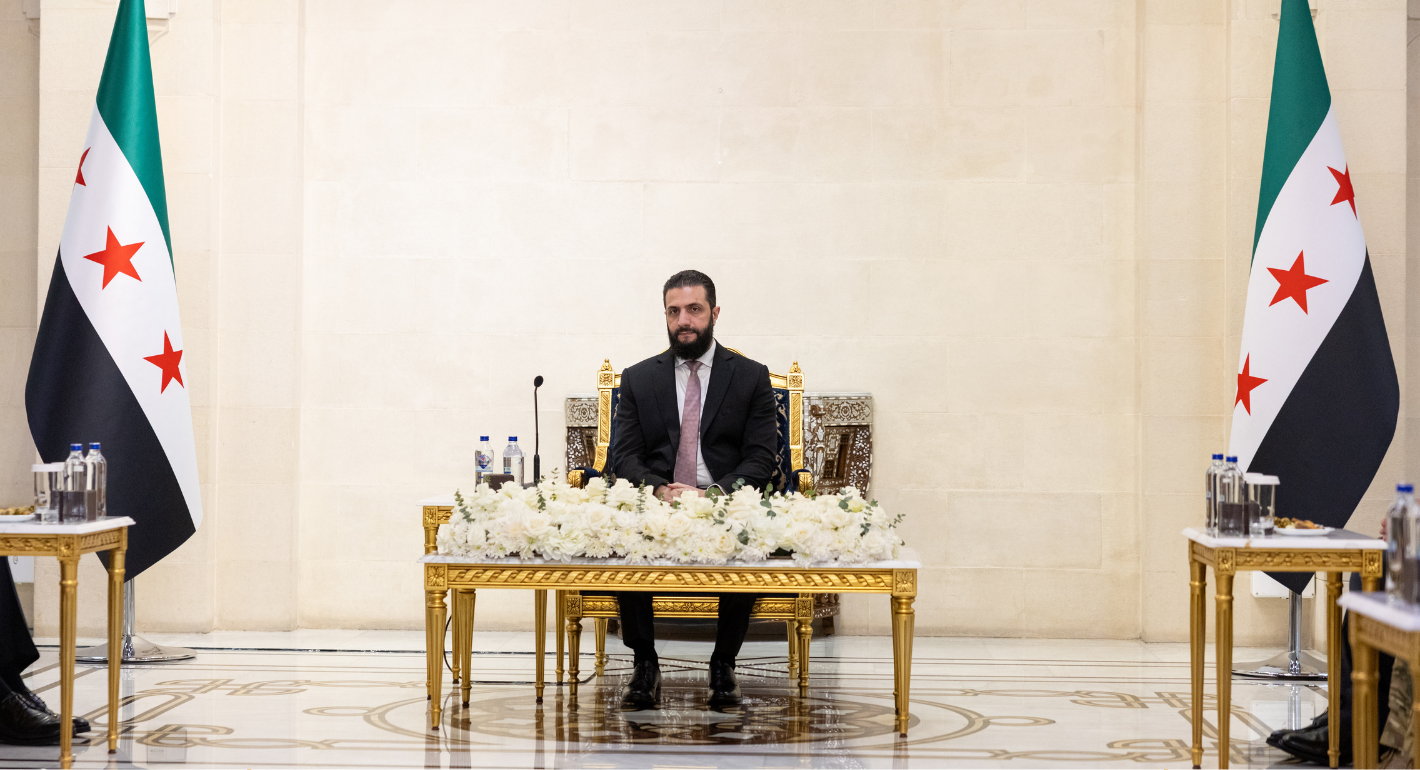
    Can Europe Still Matter in Syria?

    Europe’s interests in Syria extend beyond migration management, yet the EU trails behind other players in the country’s post-Assad reconstruction. To boost its influence in Damascus, the union must upgrade its commitment to ensuring regional stability.

      Bianka Speidl, Hanga Horváth-Sántha

  • Commentary
    Carnegie Politika
    Where Does the Split in the Ruling Tandem Leave Kyrgyzstan?

    Despite its reputation as an island of democracy in Central Asia, Kyrgyzstan appears to be on the brink of becoming a personalist autocracy.

      Temur Umarov

Get more news and analysis from
Carnegie Endowment for International Peace
Carnegie global logo, stacked
1779 Massachusetts Avenue NWWashington, DC, 20036-2103Phone: 202 483 7600Fax: 202 483 1840
  • Research
  • Emissary
  • About
  • Experts
  • Donate
  • Programs
  • Events
  • Blogs
  • Podcasts
  • Contact
  • Annual Reports
  • Careers
  • Privacy
  • For Media
  • Government Resources
Get more news and analysis from
Carnegie Endowment for International Peace
© 2026 Carnegie Endowment for International Peace. All rights reserved.