

Arms supplies from Russia to Iran will not only continue, but could grow significantly if Russia gets the opportunity.
Nikita Smagin
{
"authors": [
"Godfried van Benthem van den Bergh"
],
"type": "other",
"centerAffiliationAll": "dc",
"centers": [
"Carnegie Endowment for International Peace"
],
"collections": [
"U.S. Nuclear Policy"
],
"englishNewsletterAll": "",
"nonEnglishNewsletterAll": "",
"primaryCenter": "Carnegie Endowment for International Peace",
"programAffiliation": "NPP",
"programs": [
"Nuclear Policy"
],
"projects": [],
"regions": [
"North America",
"United States",
"East Asia",
"China",
"Caucasus",
"Russia"
],
"topics": [
"Nuclear Policy"
]
}Source: Getty
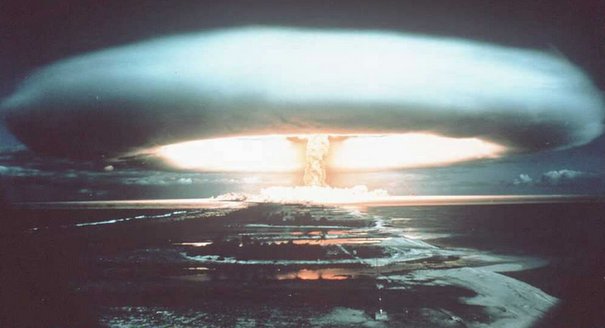
Nuclear weapons have unintended beneficial consequences, argues Godfried van Benthem van den Bergh. They can make the intended development of a more peaceful global and political order possible. The Carnegie Nonproliferation Program presents this paper in hopes of furthering international dialogue and debate on the nuclear order, including the abolition of nuclear weapons.
In this Policy Outlook Godfried van Benthem van den Bergh, an eminent Dutch scholar, argues that nuclear weapons have unintended beneficial consequences. They can make the intended development of a more peaceful global and political order possible. The Carnegie Nonproliferation Program presents this paper in hopes of furthering international dialogue and debate on the nuclear order, including the abolition of nuclear weapons.
Summary
About the Author
Godfried van Benthem van den Bergh was professor of international relations at Erasmus University, Rotterdam, and the Institute of Social Studies, The Hague. He has been a Harkness Fellow at Harvard University and the University of California at Berkeley; chairman of the Board of the Netherlands Association for International Affairs; and member of the Advisory Council for International Affairs of the Dutch Ministries of Foreign Affairs and Defense. Among his publications are The Nuclear Revolution and the End of the Cold War: Forced Restraint (Basingstoke and London, 1992) and Naar een Nucleaire Wereldorde (Amsterdam, 2008).
Godfried van Benthem van den Bergh
Carnegie does not take institutional positions on public policy issues; the views represented herein are those of the author(s) and do not necessarily reflect the views of Carnegie, its staff, or its trustees.
Arms supplies from Russia to Iran will not only continue, but could grow significantly if Russia gets the opportunity.
Nikita Smagin
On the fourth anniversary of Russia’s full-scale invasion, Carnegie experts discuss the war’s impacts and what might come next.
Eric Ciaramella, Aaron David Miller, Alexandra Prokopenko, …
The use of technology to mobilize Russians to vote—a system tied to the relative material well-being of the electorate, its high dependence on the state, and a far-reaching system of digital control—is breaking down.
Andrey Pertsev
New data from the 2026 Indian American Attitudes Survey show that Democratic support has not fully rebounded from 2020.
Sumitra Badrinathan, Devesh Kapur, Andy Robaina, …
A new draft regulation on “anthropomorphic AI” could impose significant new compliance burdens on the makers of AI companions and chatbots.
Scott Singer, Matt Sheehan










