• Research
  • Emissary
  • About
  • Experts
Carnegie Global logoCarnegie lettermark logo
DemocracyIran
  • Donate
{
  "authors": [
    "Kimberly Misher"
  ],
  "type": "other",
  "centerAffiliationAll": "dc",
  "centers": [
    "Carnegie Endowment for International Peace"
  ],
  "collections": [],
  "englishNewsletterAll": "ctw",
  "nonEnglishNewsletterAll": "",
  "primaryCenter": "Carnegie Endowment for International Peace",
  "programAffiliation": "NPP",
  "programs": [
    "Nuclear Policy"
  ],
  "projects": [],
  "regions": [
    "North Africa",
    "Egypt"
  ],
  "topics": [
    "Nuclear Policy",
    "Nuclear Energy"
  ]
}
Source: Getty

Other

Egyptian Nuclear Leadership—Time to Realign?

Egypt's role in preventing a nuclear arms race in the Middle East is especially urgent and the 2010 NPT Review Conference is the next best chance to advance its disarmament agenda.

Link Copied
By Kimberly Misher
Published on Nov 19, 2009
Program mobile hero image

Program

Nuclear Policy

The Nuclear Policy Program aims to reduce the risk of nuclear war. Our experts diagnose acute risks stemming from technical and geopolitical developments, generate pragmatic solutions, and use our global network to advance risk-reduction policies. Our work covers deterrence, disarmament, arms control, nonproliferation, and nuclear energy.

Learn More

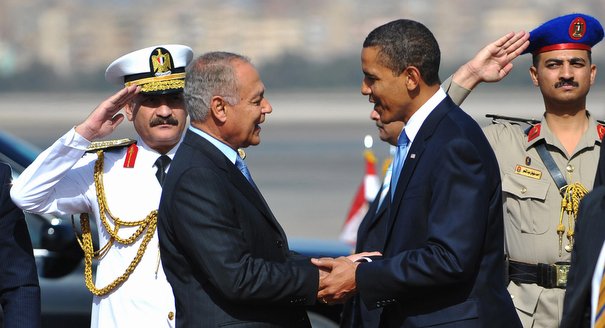
Recognizing Egypt’s critical role in the Arab world, President Obama selected Cairo for a landmark speech in June. To continue to lead the Middle East and enhance regional security, Egypt should work to strengthen the nonproliferation regime. The 2010 Non-Proliferation Treaty (NPT) Review Conference is Egypt's next best chance to advance its disarmament goals, contends a new paper by Kimberly Misher.

Key Conclusions

  • If Egypt is concerned about the possibility of one of its neighbors developing nuclear weapons, strengthening the treaty is in its best interest.
     
  • Egypt has an opportunity to further its disarmament objectives during the Review Conference as it will chair both the New Agenda Coalition and the Non-Aligned Movement.
     
  • In order for Egypt to achieve progress in a changing international climate, it should agree to incremental progress rather than demanding all-or-nothing decisions.
     
  • Egypt's regional influence could diminish if the country’s negotiating strategy is seen as preventing progress on regional disarmament and the promotion of peaceful uses of nuclear energy.
     
  • The United States should consider Egypt's proposed steps for implementing the Resolution on the Middle East.

"Egypt's role in preventing a nuclear arms race in the Middle East is especially urgent. As Iran advances its nuclear capability, Egypt increasingly faces the prospect of being politically sandwiched between two nuclear-armed states," says Misher. "By pressing for security and disarmament within the framework of the Non-Proliferation Treaty (NPT), Egypt may be able to solidify Arab perspectives on arms control and strengthen its regional leadership."

About the Author

Kimberly Misher

Former Program Manager, Nuclear Policy Program

Kimberly Misher
Former Program Manager, Nuclear Policy Program
Nuclear PolicyNuclear EnergyNorth AfricaEgypt

Carnegie does not take institutional positions on public policy issues; the views represented herein are those of the author(s) and do not necessarily reflect the views of Carnegie, its staff, or its trustees.

More Work from Carnegie Endowment for International Peace

  • Female farm labourers pick strawberries in the Kenitra province country side of Morocco as the world marks the International Women's Day on March 8, 2017.
    Article
    Climate Change, Gender, and Inequality in Morocco’s Souss-Massa Region

    For Morocco, integrating gender into climate governance is not simply a matter of social justice. It is a strategic imperative for effective adaptation.

      Fadwa Rajoauni

  • Man standing next to a pile of burned cars
    Commentary
    Emissary
    The Myriad Problems With the Iran Ceasefire

    Four Middle East experts analyze the region’s reactions and next steps.

      • Andrew Leber
      • Eric Lob
      • +1

      Amr Hamzawy, Andrew Leber, Eric Lob, …

  • Photo of a man conducting repairs in a technical center, surrounded by wires.
    Article
    Africa’s Digital Infrastructure Imperative

    The Africa Technology Policy Tracker reveals policymakers’ priorities for the continent’s digital transformation.

      Jane Munga

  • A Black man pulls a trolley. He is small in the bottom center of the frame; in the background are stacks of large, colorful shipping containers and the parts of a large crane or similar piece of equipment.
    Article
    Africa’s Global Economic Edge: Advancing Strategic Sectors

    In key sectors such as critical minerals, specialty agriculture, and fintech, Africa can become a global powerhouse by investing more in manufacturing, value-add, and scaling.

      • Kholofelo Kugler

      Kholofelo Kugler, Georgia Schaefer-Brown

  • Article
    Kenya’s Health Deal Is a Stress Test for the America First Global Health Strategy

    U.S. agreements must contend with national data protection laws to make durable foreign policy instruments.

      • A Black woman with long hair wears a black blazer

      Jane Munga, Rose Mosero

Get more news and analysis from
Carnegie Endowment for International Peace
Carnegie global logo, stacked
1779 Massachusetts Avenue NWWashington, DC, 20036-2103Phone: 202 483 7600Fax: 202 483 1840
  • Research
  • Emissary
  • About
  • Experts
  • Donate
  • Programs
  • Events
  • Blogs
  • Podcasts
  • Contact
  • Annual Reports
  • Careers
  • Privacy
  • For Media
  • Government Resources
Get more news and analysis from
Carnegie Endowment for International Peace
© 2026 Carnegie Endowment for International Peace. All rights reserved.