• Research
  • Emissary
  • About
  • Experts
Carnegie Global logoCarnegie lettermark logo
DemocracyIran
  • Donate
{
  "authors": [
    "Kimberly Misher"
  ],
  "type": "other",
  "centerAffiliationAll": "dc",
  "centers": [
    "Carnegie Endowment for International Peace"
  ],
  "collections": [],
  "englishNewsletterAll": "ctw",
  "nonEnglishNewsletterAll": "",
  "primaryCenter": "Carnegie Endowment for International Peace",
  "programAffiliation": "NPP",
  "programs": [
    "Nuclear Policy"
  ],
  "projects": [],
  "regions": [
    "North Africa",
    "Egypt"
  ],
  "topics": [
    "Nuclear Policy",
    "Nuclear Energy"
  ]
}
Source: Getty

Other

Egyptian Nuclear Leadership—Time to Realign?

Egypt's role in preventing a nuclear arms race in the Middle East is especially urgent and the 2010 NPT Review Conference is the next best chance to advance its disarmament agenda.

Link Copied
By Kimberly Misher
Published on Nov 19, 2009
Program mobile hero image

Program

Nuclear Policy

The Nuclear Policy Program aims to reduce the risk of nuclear war. Our experts diagnose acute risks stemming from technical and geopolitical developments, generate pragmatic solutions, and use our global network to advance risk-reduction policies. Our work covers deterrence, disarmament, arms control, nonproliferation, and nuclear energy.

Learn More

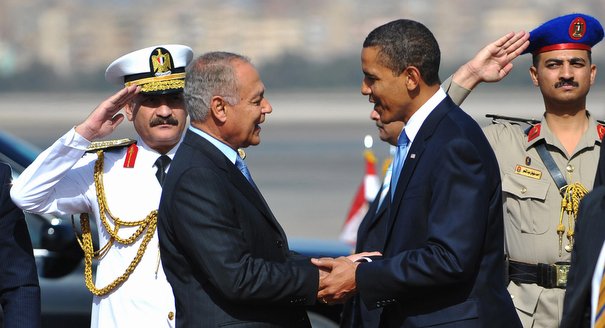
Recognizing Egypt’s critical role in the Arab world, President Obama selected Cairo for a landmark speech in June. To continue to lead the Middle East and enhance regional security, Egypt should work to strengthen the nonproliferation regime. The 2010 Non-Proliferation Treaty (NPT) Review Conference is Egypt's next best chance to advance its disarmament goals, contends a new paper by Kimberly Misher.

Key Conclusions

  • If Egypt is concerned about the possibility of one of its neighbors developing nuclear weapons, strengthening the treaty is in its best interest.
     
  • Egypt has an opportunity to further its disarmament objectives during the Review Conference as it will chair both the New Agenda Coalition and the Non-Aligned Movement.
     
  • In order for Egypt to achieve progress in a changing international climate, it should agree to incremental progress rather than demanding all-or-nothing decisions.
     
  • Egypt's regional influence could diminish if the country’s negotiating strategy is seen as preventing progress on regional disarmament and the promotion of peaceful uses of nuclear energy.
     
  • The United States should consider Egypt's proposed steps for implementing the Resolution on the Middle East.

"Egypt's role in preventing a nuclear arms race in the Middle East is especially urgent. As Iran advances its nuclear capability, Egypt increasingly faces the prospect of being politically sandwiched between two nuclear-armed states," says Misher. "By pressing for security and disarmament within the framework of the Non-Proliferation Treaty (NPT), Egypt may be able to solidify Arab perspectives on arms control and strengthen its regional leadership."

About the Author

Kimberly Misher

Former Program Manager, Nuclear Policy Program

Kimberly Misher
Former Program Manager, Nuclear Policy Program
Nuclear PolicyNuclear EnergyNorth AfricaEgypt

Carnegie does not take institutional positions on public policy issues; the views represented herein are those of the author(s) and do not necessarily reflect the views of Carnegie, its staff, or its trustees.
More Work from Carnegie Endowment for International Peace

  • Commentary
    Strategic Europe
    Taking the Pulse: Is France’s New Nuclear Doctrine Ambitious Enough?

    French President Emmanuel Macron has unveiled his country’s new nuclear doctrine. Are the changes he has made enough to reassure France’s European partners in the current geopolitical context?

      • Rym Momtaz

      Rym Momtaz, ed.

  • Commentary
    Strategic Europe
    Europe on Iran: Gone with the Wind

    Europe’s reaction to the war in Iran has been disunited and meek, a far cry from its previously leading role in diplomacy with Tehran. To avoid being condemned to the sidelines while escalation continues, Brussels needs to stand up for international law.

      Pierre Vimont

  • Teenagers hold a large banner reading "stop pollution in Gabes, stop pollution everywhere, save Gabes'' in English and Arabic
    Article
    Civil Society Restrictions in North Africa: The Impact on Climate-Focused Civil Society Organizations

    For climate-focused civil society in countries like Morocco, Algeria, and Tunisia to be most effective, organizations should work together to develop networks that extend their reach beyond their local area and connect across borders to share best practices and amplify each other’s work.

      • Sarah Yerkes

      Sarah Yerkes

  • Commentary
    Diwan
    When Football Is More Than Football

    The recent African Cup of Nations tournament in Morocco touched on issues that largely transcended the sport.

      Issam Kayssi, Yasmine Zarhloule

  • Nuclear power plant reactor construction
    Article
    Promoting Responsible Nuclear Energy Conduct: An Agenda for International Cooperation

    These principles aim to codify core responsible practices and establish a common universal platform of high-level guidelines necessary to build trust that a nuclear energy resurgence can deliver its intended benefits.

      Ariel (Eli) Levite, Toby Dalton

Get more news and analysis from
Carnegie Endowment for International Peace
Carnegie global logo, stacked
1779 Massachusetts Avenue NWWashington, DC, 20036-2103Phone: 202 483 7600Fax: 202 483 1840
  • Research
  • Emissary
  • About
  • Experts
  • Donate
  • Programs
  • Events
  • Blogs
  • Podcasts
  • Contact
  • Annual Reports
  • Careers
  • Privacy
  • For Media
  • Government Resources
Get more news and analysis from
Carnegie Endowment for International Peace
© 2026 Carnegie Endowment for International Peace. All rights reserved.