• Research
  • Emissary
  • About
  • Experts
Carnegie Global logoCarnegie lettermark logo
DemocracyIran
  • Donate
{
  "authors": [
    "Ashley J. Tellis"
  ],
  "type": "legacyinthemedia",
  "centerAffiliationAll": "dc",
  "centers": [
    "Carnegie Endowment for International Peace"
  ],
  "collections": [],
  "englishNewsletterAll": "ctw",
  "nonEnglishNewsletterAll": "",
  "primaryCenter": "Carnegie Endowment for International Peace",
  "programAffiliation": "SAP",
  "programs": [
    "South Asia"
  ],
  "projects": [],
  "regions": [
    "United States",
    "South Asia",
    "India"
  ],
  "topics": [
    "Foreign Policy"
  ]
}
Source: Getty

In The Media

U.S. and India: Singh's Visit

Prime Minister Singh's visit to Washington this week heralds a commitment to strengthening the relationship between India and the United States.

Link Copied
By Ashley J. Tellis
Published on Nov 24, 2009
Program mobile hero image

Program

South Asia

The South Asia Program informs policy debates relating to the region’s security, economy, and political development. From strategic competition in the Indo-Pacific to India’s internal dynamics and U.S. engagement with the region, the program offers in-depth, rigorous research and analysis on South Asia’s most critical challenges.

Learn More

Source: C-SPAN

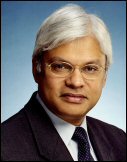
Over the past two decades, the relationship between India and the United States has been on an upswing. Trade has flourished and the countries are politically closer than ever before. Carnegie's Ashley Tellis explains the significance of Indian Prime Minister Manmohan Singh's visit to Washington this week as well as a general overview of U.S.-India relations.

About the Author

Ashley J. Tellis

Former Senior Fellow

Ashley J. Tellis was a senior fellow at the Carnegie Endowment for International Peace.

    Recent Work

  • Paper
    Multipolar Dreams, Bipolar Realities: India’s Great Power Future

      Ashley J. Tellis

  • Commentary
    India Sees Opportunity in Trump’s Global Turbulence. That Could Backfire.

      Ashley J. Tellis

Ashley J. Tellis
Former Senior Fellow
Foreign PolicyUnited StatesSouth AsiaIndia

Carnegie does not take institutional positions on public policy issues; the views represented herein are those of the author(s) and do not necessarily reflect the views of Carnegie, its staff, or its trustees.

More Work from Carnegie Endowment for International Peace

  • Pashinyan shaking hands
    Commentary
    Emissary
    At Stake in Armenia’s Election: Peace and Russian Influence

    Regardless of the outcome, there’s another path to ensuring that progress doesn’t stall.

      Zaur Shiriyev

  • Bangladesh's newly sworn-in Prime minister Tarique Rahman (2R) shakes hands with President Mohammed Shahabuddin during a swearing-in ceremony at the National Parliament building in Dhaka on February 17, 2026
    Article
    Bangladesh’s Unfinished Revolution

    Bangladesh’s February 2026 elections were the most credible in nearly two decades. But within weeks of the BNP’s return to power, the fundamental characteristics of the country’s political economy threaten to pull it back toward continuity rather than change.

      • Avinash Paliwal

      Avinash Paliwal

  • Commentary
    Emissary
    Trump and Xi Are Angling for Three Years of Stability

    But their "principal to principal" model will only be as effective as the political strength of each leader back home.

      • Damien Ma

      Damien Ma

  • Recruit polices vow as they join in the police at Beijing Public Security Bureau on February 18, 2011 in Beijing, China. (
    Paper
    China’s Police and Security Cooperation Agreements

    China’s Ministry of Public Security is often portrayed as a domestic law enforcement agency, but it is also a global security actor. This paper explores how MPS has used international law enforcement and security cooperation agreements—over 200 since 2006—to advance China’s vision of security in a changing global environment.  

      • Sheena Chestnut Greitens

      Sophie Zhuang, Sheena Chestnut Greitens, Cameron Waltz

  • Commentary
    Carnegie Politika
    Could Migrants From India and Africa Solve Russia’s Labor Shortage?

    The demands of the Kremlin’s war in Ukraine, demographic problems, and public hostility toward Central Asians mean Russia does not have enough workers.  

      Salavat Abylkalikov

Get more news and analysis from
Carnegie Endowment for International Peace
Carnegie global logo, stacked
1779 Massachusetts Avenue NWWashington, DC, 20036-2103Phone: 202 483 7600
  • Research
  • Emissary
  • About
  • Experts
  • Donate
  • Programs
  • Events
  • Blogs
  • Podcasts
  • Contact
  • Annual Reports
  • Careers
  • Privacy
  • For Media
  • Government Resources
Get more news and analysis from
Carnegie Endowment for International Peace
© 2026 Carnegie Endowment for International Peace. All rights reserved.